Executive Summary: Modern Metallurgical Engineering & OEM Wheel Manufacturing Excellence
In the rapidly evolving global automotive supply chain, selecting a qualified alloy wheel manufacturing partner requires stringent evaluation beyond visual aesthetics. Modern wheel manufacturing demands uncompromising mechanical structural integrity, ultra-precise CNC machining tolerance, advanced thermal treatment protocols, and compliance with rigorous international safety standards including VIA/JWL, TUV, and SAE J2530. As a premier global OEM/ODM enterprise, our production ecosystems integrate advanced low-pressure casting, flow-forming grain refinement, and 6061-T6 aerospace-grade forged manufacturing.
By leveraging A356.2 primary aluminum ingot metallurgy with T6 heat treatment cycles, our structural engineers optimize wheel grain density, reducing un-sprung mass while dramatically raising tensile strength (≥ 230 MPa) and yield strength (≥ 170 MPa). Whether engineering high-payload electric vehicle (EV) utility wheel systems, precision stair-climbing transport mobility hubs, or luxury golf buggy aluminum rims, our factory guarantees structural zero-defect production via automated inline X-ray inspection, dynamic cornering fatigue verification, and 720-hour salt spray corrosion resistance.
Featured Heavy-Duty Component & Specialized Vehicle Hardware
Explore our specialized OEM/ODM chassis, structural platform, and specialized wheel hub systems designed for industrial electric mobility and high-capacity transport solutions.
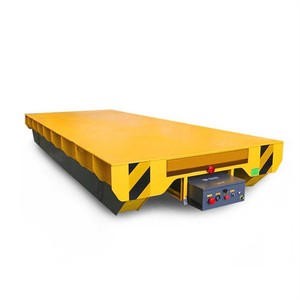
BWF Steering Wheel Electric Transfer Cart Hydraulic Lift Flat Car Transport Trolley with Rocker Wireless Remote Controller
- Precision Hydraulic Lift Geometry
- Industrial Remote Telemetry
- Heavy-Duty Alloy Hub Bearings
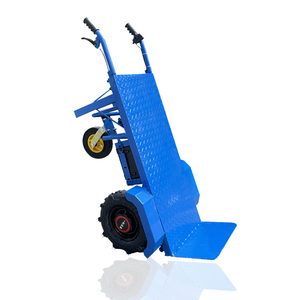
Electric 500kg Loading Capacity Stair Climbing Shopping Trolley Cart Truck With Three-Wheel OEM Customizable Structure Platform
- 500kg Structural Payload Rating
- Tri-Wheel Dynamic Torque Hub
- Customizable OEM Platform
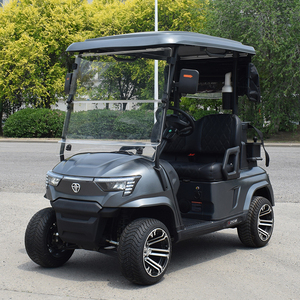
Wholesale Price Club Car Lifted Passenger Golf Cart Best Selling Off Road Golf Cart
- High-Ground Clearance Lifted Rim
- All-Terrain Alloy Wheel Fitment
- Reinforced Axle Geometry
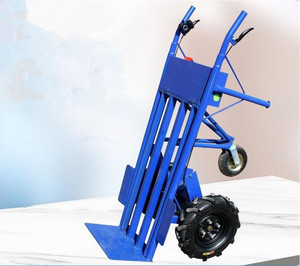
Heavy Electric Trolley Hand Truck Portable Stair Climbing Folding Cart For Sale
- High-Tensile Folding Frame
- Stair-Navigating Crawler Hubs
- Ergonomic Load Distribution
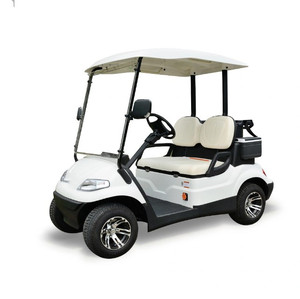
Huanxin 2 Seater Lifted Golf Cart Buggy Car with 48v AC Motor
- 48V High-Efficiency AC Powertrain
- Precision Machined Aluminum Rims
- StabiliTrak Damping System
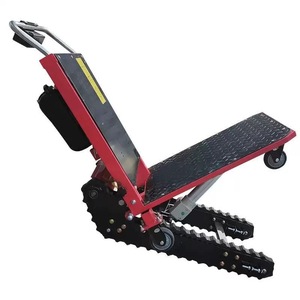
Electric Crane Truck Climbing Stairs Trolley Crawler Climbing Stairs Climbing Stairs Picker
- Integrated Crane Hoist Platform
- Crawler Track & Wheel Hybrid
- Heavy Industrial Load Capacity
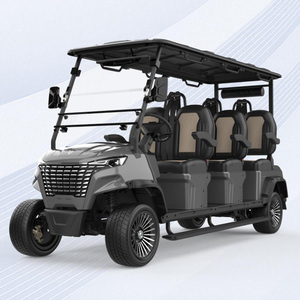
Greenrider Custom Manufacturer Wholesale 6 Seater Seat Hunting Lithium Electric Utility off Road Lifted Golf Cart for Sale
- 6-Passenger Extended Chassis
- Lithium-Ion 72V Architecture
- Beadlock-Style Custom Alloy Wheels
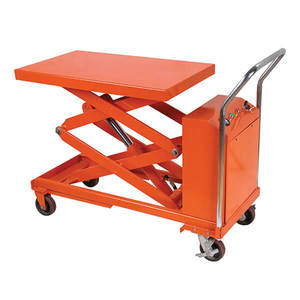
Electric Hydraulic Lift Platform ETF100 1000mm Max Lift Height 1200 610mm Large Table Dimension Cargo Cart
- 1000mm Maximum Elevation
- Large Surface Cargo Platform
- Polyurethane-On-Alloy Heavy Castors
Deep Metallurgical Analysis: Low-Pressure Casting vs. Flow Forming vs. Forging
Achieving the optimal balance between static structural load rating, rotational dynamic inertia, and fatigue resistance mandates selecting the correct manufacturing process. As a top trusted factory, our facility operates multiple specialized manufacturing tracks engineered to meet distinct automotive and industrial requirements:
Low-Pressure Permanent Mold Casting (LPDC)
By introducing clean dry nitrogen gas under controlled pressure (0.2–0.7 bar) into the molten A356 furnace bath, liquid aluminum fills the steel die cavity from the bottom up. This laminar flow suppresses air oxidation, gas entrapment, and oxide inclusion, yielding a high-density metallic matrix with superior micro-porosity ratings.
Flow Forming (Rotary Forging / Rim Spinning)
Beginning with a specialized low-pressure cast preform, hydraulic rollers apply high radial pressure to compress and elongate the outer rim barrel over a precision steel mandrel while rotating at elevated temperatures. This thermal-mechanical manipulation compresses aluminum grain structures inline, increasing tensile strength by up to 22% while reducing rim thickness by 15%.
Precision 6061-T6 Forged Engineering
Utilizing 10,000-ton hydraulic forging presses, solid aerospace-grade 6061 billet aluminum is subjected to extreme multi-axis compression. The process eliminates grain boundaries and porosity entirely, delivering unmatched structural rigidity, high impact tolerance, and dramatic un-sprung weight savings ideal for high-performance electric vehicles.
Comparative Metallurgical Matrix
| Manufacturing Parameter | Gravity Casting | Low-Pressure Casting (LPDC) | Flow Forming Technology | 6061-T6 Forged Aluminum |
|---|---|---|---|---|
| Tensile Strength (Rm) | 180 – 200 MPa | 230 – 250 MPa | 280 – 310 MPa | ≥ 340 MPa |
| Yield Strength (Rp0.2) | 120 – 140 MPa | 160 – 180 MPa | 210 – 240 MPa | ≥ 290 MPa |
| Elongation at Break (A5) | 2.5% - 4.0% | 6.0% - 9.0% | 10.0% - 14.0% | ≥ 12.0% |
| Grain Structure Density | Standard / Micro-porous | Dense / Refined | Highly Compounded Flow Lines | Ultra-Dense Directional Grain |
| Un-Sprung Weight Efficiency | Baseline (100%) | 88% - 92% Weight Refinement | 78% - 82% Lightened Barrel | 65% - 72% Ultra-Lightweight |
Future Sourcing & Procurement Trends in the Global Automotive Wheel Industry
As global original equipment manufacturers (OEMs) and aftermarket distributors pivot toward sustainable mobility and electrifying vehicle architectures, wheel design criteria have experienced a fundamental shift. Sourcing departments must evaluate dynamic technological shifts shaping wheel procurement through 2030:
1. EV-Specific Aerodynamic Optimization & Load Ratings
Electric vehicles (EVs) exhibit higher curb weights due to battery energy density, requiring minimum wheel static load capacities of 850 kg to 1,250 kg per corner. Concurrently, aerodynamic drag reduction is critical to extending driving range. Modern OEM alloy wheel manufacturing incorporates aero-insert technology, enclosed spoke geometries, and computational fluid dynamics (CFD) modeling to reduce coefficient drag ($C_d$) by up to 3.5% without compromising brake thermal dissipation.
2. Closed-Loop Recycled Aluminum Alloys & Carbon Footprint Reduction
Global automotive OEMs require comprehensive ESG compliance. Primary aluminum smelting is energy-intensive; consequently, leading wheel factories integrate secondary high-purity recycled aluminum blends (utilizing up to 70% post-industrial scrap) refined through rotary degassing and flux purification. This reduces carbon emissions from ~18 kg $CO_2$/kg of virgin aluminum down to less than 4 kg $CO_2$/kg, fulfilling stringent European Green Deal standards.
3. Smart Wheel Sensors & Integrated Telematics
Future commercial and industrial wheel hubs are evolving into digital assets. Machine-embedded RFID tags, integrated TPMS sensor pockets, and vibration-frequency strain monitoring points allow fleet operators to track thermal cycles, stress limits, and service intervals real-time via telematics networks.
Why Partner With Our Factory: OEM/ODM Technical Competence
Our state-of-the-art manufacturing campus spans over 150,000 square meters, equipped with fully automated CNC machining cells, robotic helium leak testers, dynamic balancing stations, and automated powder coating lines. We maintain total vertical integration—from initial 3D CAD stress simulation to final export container packaging.
100% Quality Assurance & FEA Simulation
Before physical tooling begins, our engineering team executes finite element analysis (FEA) to simulate radial dynamic fatigue, cornering bending moments, and 13-degree / 90-degree dynamic strike impacts. Every production wheel undergoes inline 100% X-ray inspection to guarantee complete zero micro-porosity.
Custom PCD, Offset & Finish Customization
We accommodate low-volume specialized batches and high-volume OEM production runs. Customization capabilities include CNC diamond-cut facing, physical vapor deposition (PVD) chrome, multi-stage matte/gloss powder clear coating, and bespoke hub bore PCD machining tailored to specific vehicle specifications.
Global Export Logistics & Compliance
With extensive experience exporting across North America, Europe, Asia-Pacific, and the Middle East, our logistics division manages seamless customs clearance, ISPM-15 compliant timber palletizing, protective cloth rim covers, and anti-corrosion VCI film packaging for global sea freight shipment.
Frequently Asked Questions (FAQ) for OEM B2B Sourcing
What aluminum material grades are utilized in your alloy wheel production?
We primarily utilize primary virgin A356.2 aluminum-silicon-magnesium alloy ingots for low-pressure and flow-forming cast lines. For our fully forged wheel collections, we exclusively use aerospace-grade 6061-T6 aluminum billets, ensuring maximum strength-to-weight structural ratios and superior grain density.
What quality certifications and compliance standards does your factory hold?
Our manufacturing facility is fully certified under IATF 16949 (Automotive Quality Management System) and ISO 9001:2015. All production wheel designs undergo strict structural validation testing to achieve compliance with Japan's VIA/JWL, Germany's TÜV, and the US SAE J2530 specifications.
What is your typical Minimum Order Quantity (MOQ) and production lead time?
For standard low-pressure cast wheels, our base MOQ is typically 60 to 100 units per spec/PCD. For flow-formed and custom forged wheels, we accept low-volume orders starting from 4 to 20 units. Standard production lead times range from 30 to 45 days after 3D engineering sign-off and deposit receipt.
How does your factory ensure surface coating corrosion resistance in harsh environments?
Our automated coating facility features a 9-stage pre-treatment wash including zirconium conversion coating, followed by electro-deposited primer, water-based base color, and acrylic/powder clear coat. Every batch undergoes a continuous 720-hour Copper-Accelerated Acetic Acid Salt Spray (CASS) test to prevent micro-flaking or filiform corrosion.
Can you provide OEM/ODM custom branding, center cap engineering, and private label boxes?
Yes, we offer complete turn-key ODM engineering services. We custom-engrave your corporate logo into the wheel lip or hub bore, engineer bespoke CNC aluminum center caps, and produce custom-printed corrugated packaging boxes featuring your company's branding and barcoding requirements.
Initiate Your Custom Wheel & Mobility Engineering Order
Connect directly with our senior metallurgical engineers and B2B export specialists today. Receive comprehensive technical drawings, FEA stress analysis, and factory-direct wholesale pricing within 24 hours.