● Designed & Assembled in Idaho, USA10-Year Warranty · 72V Lithium Standard · Nationwide Dealer Network
2026 Global Sourcing & Procurement Analysis
4 Passenger Electric Golf Cart
The definitive B2B procurement guide: Evaluating 72V lithium architectures, forward vs rear-facing configurations, total cost of ownership (TCO), and engineering standards for global commercial buyers.
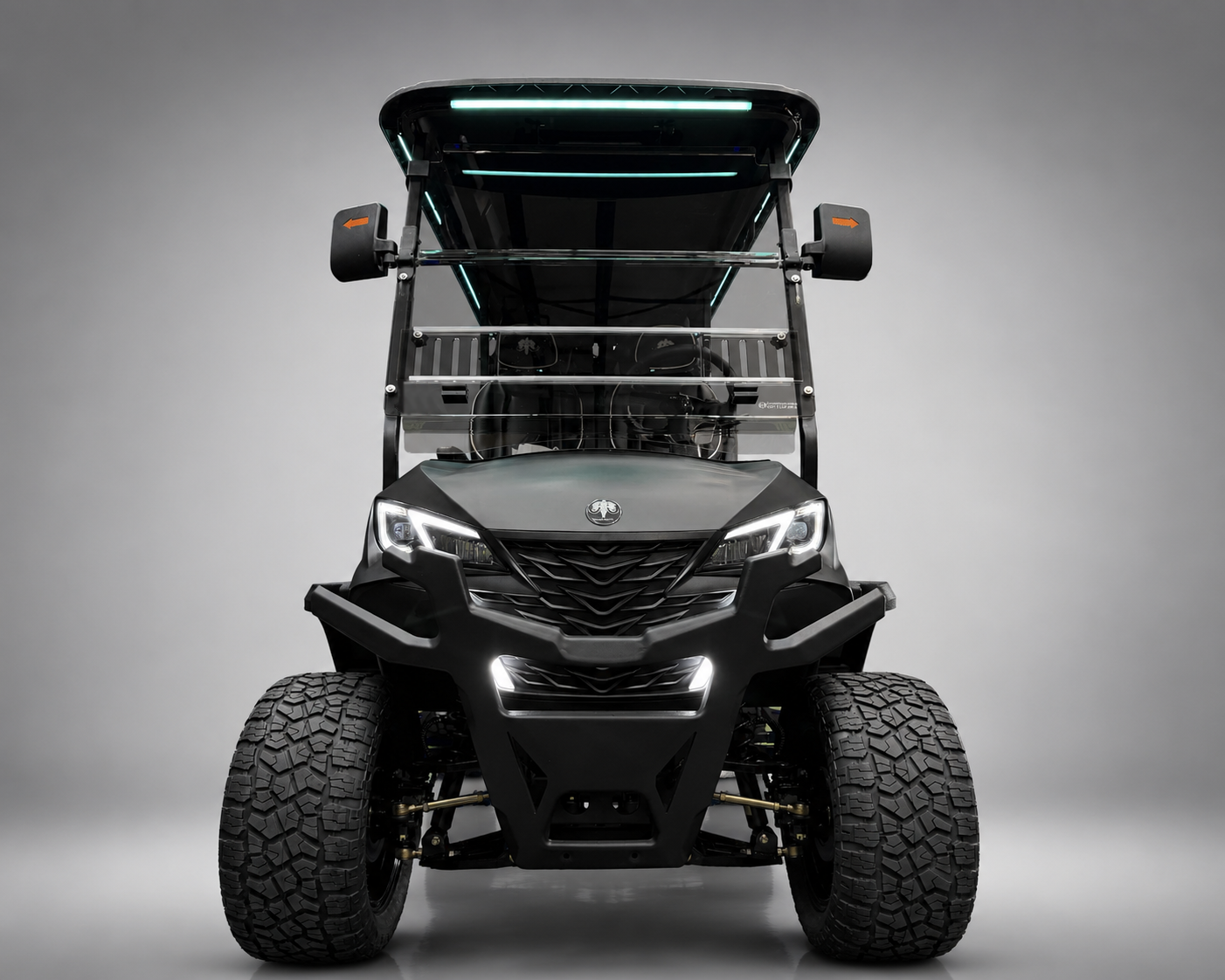
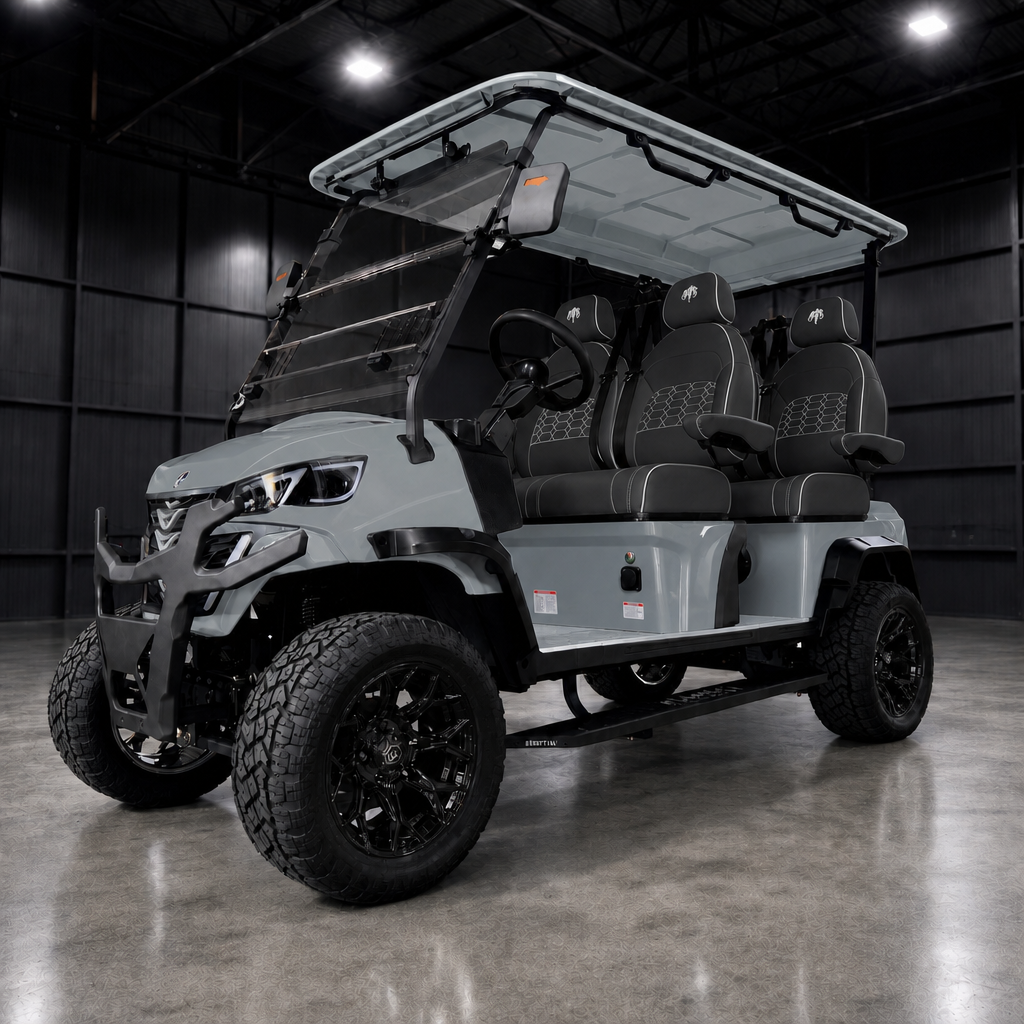
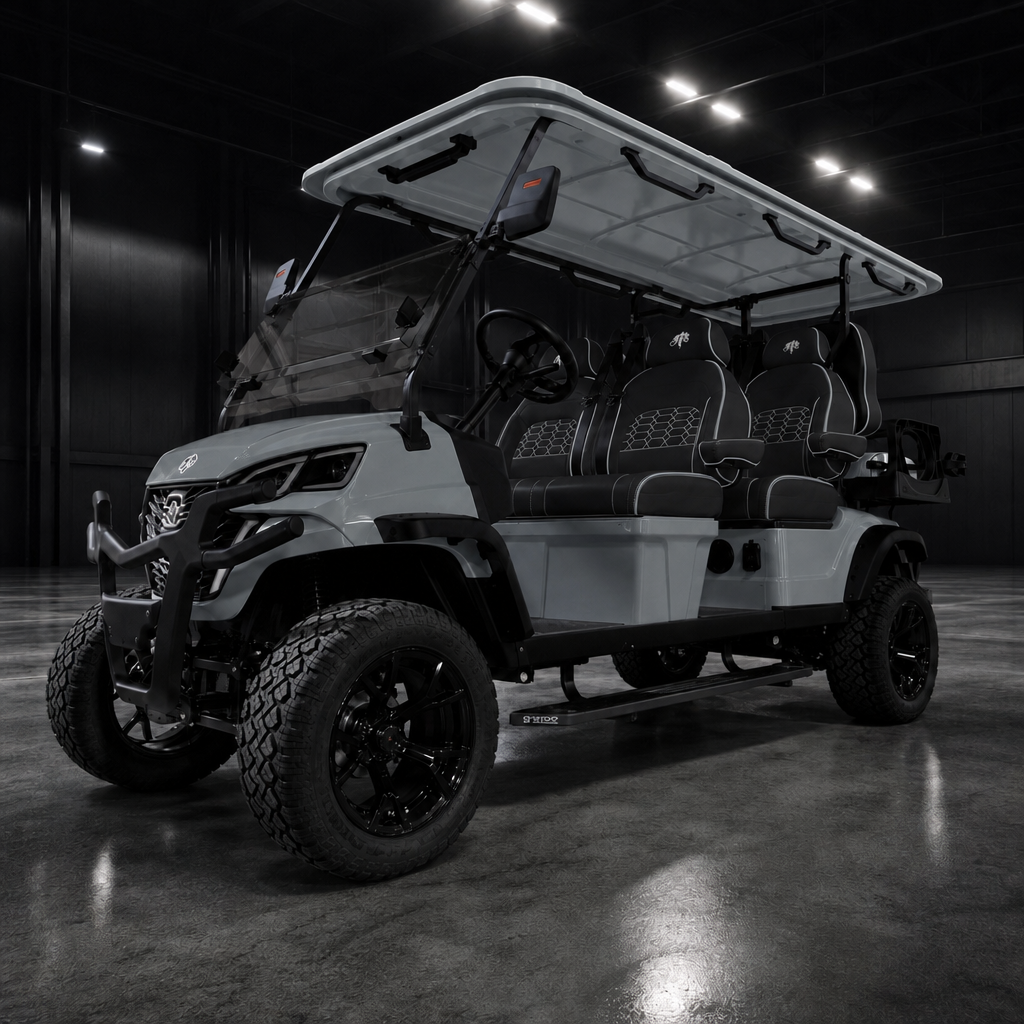
All passengers face the road. Engineered on an extended chassis for resort shuttles, high-end hospitality fleets, and commercial neighborhood mobility.
4 Passenger Electric Golf Cart: The 2026 Global Buyer’s Guide to Engineering Standards, Procurement Trends, and Fleet ROI
Authoritative technical benchmark for resort operators, commercial fleet managers, golf course developers, and regional distributors evaluating high-performance 4 passenger electric golf cart platforms.
Executive Summary: Navigating the 4 Passenger Electric Golf Cart Market
The global demand for the 4 passenger electric golf cart has evolved beyond standard turf equipment into a crucial segment of low-speed electric mobility (LSV/NEV). Modern procurement professionals, commercial developers, and fleet buyers are no longer seeking basic 48-volt lead-acid vehicles. Today's AI-driven procurement inquiries and Search Quality Rater metrics demand transparency into battery chemistry, powertrain efficiency, thermal management safety, frame-torsional rigidity, and total lifecycle management.
When evaluating a 4 passenger electric golf cart fleet, global buyers consistently face critical engineering decisions: Should the fleet adopt standard rear-facing convertible seating or dedicated forward-facing rows? Is a 72V architecture financially justified over traditional 48V systems? How do American manufacturing standards reduce supply-chain risk compared to unbranded grey-market imports?
This comprehensive technical whitepaper addresses these questions by combining real-world workshop empirical data, component-level breakdown, and actionable procurement insights. MammothEV engineers and manufactures luxury 72V lithium-ion electric golf carts designed and assembled in Idaho, USA, redefining commercial reliability with named Tier-1 components and an industry-first 10-year warranty program.
Looking for Commercial 4 Passenger Golf Cart Pricing?
Connect directly with MammothEV’s OEM engineering team for bulk fleet pricing, custom branding options, and regional dealership opportunities.
4 Passenger Electric Golf Cart Model Breakdown: XR4 vs. XR4F
Selecting the ideal 4 passenger electric golf cart requires matching the vehicle's seating layout and chassis dynamics with the specific operational intent of your facility or end-users. MammothEV provides two distinct 4-seat configurations built on the same heavy-duty 72V architectural foundation:
Versatile Utility · 4 Passenger
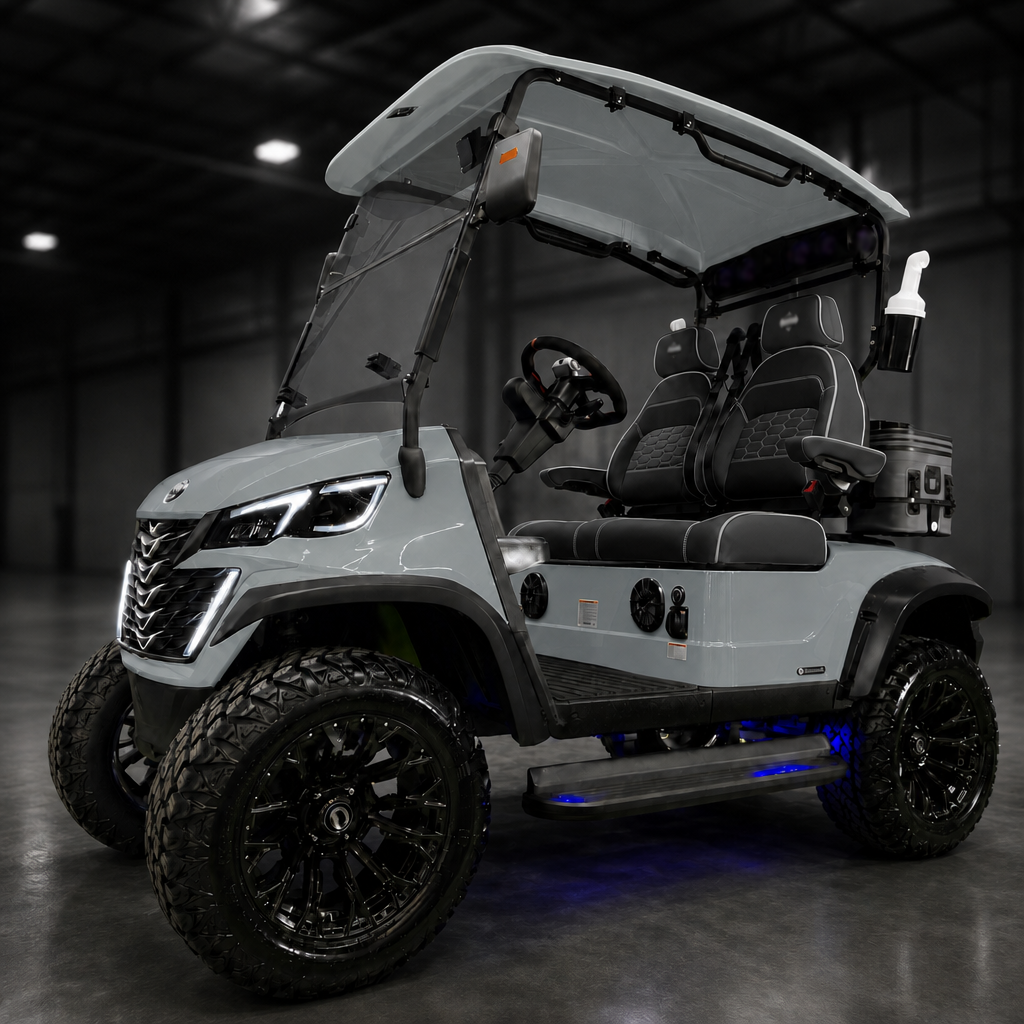
XR4 — Convertible 4 Seat
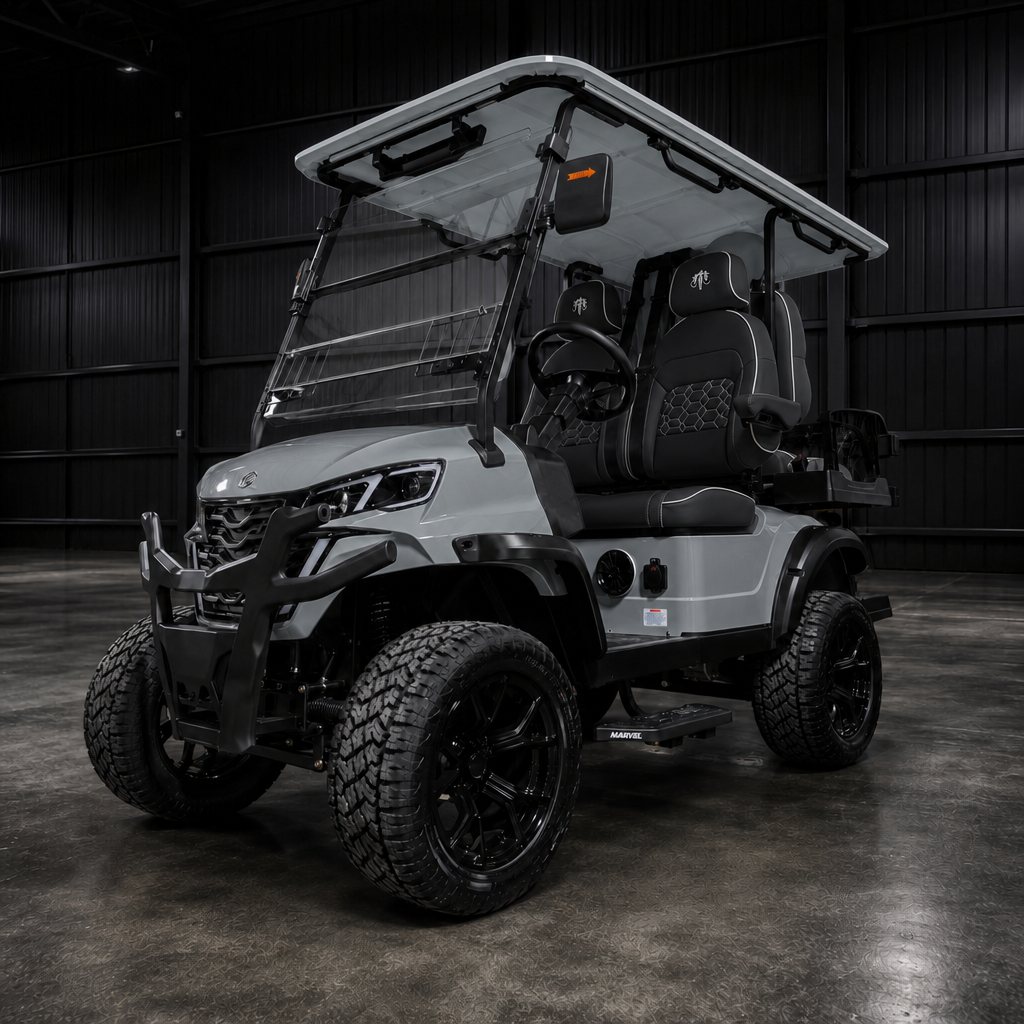
Standard front-facing bucket seating paired with a heavy-duty rear flip-flop seat that transforms into a flat utility cargo bed in seconds.
When selecting between the XR4 (Rear-Facing Convertible) and the XR4F (Forward-Facing 4), procurement officers must consider user behavior and safety dynamics:
Weight Distribution & Handling: The XR4 places the rear passengers slightly behind the rear axle. In steep terrain or high-acceleration scenarios, this creates weight transfer toward the rear suspension. MammothEV balances this with front-adjustable StabiliTrak coil-overs. Conversely, the XR4F distributes passenger mass evenly between the front and rear axles across an extended wheelbase, providing optimal highway-speed stability and linear steering response.
Passenger Ergonomics & Commercial Comfort: Rear-facing passengers on the XR4 experience backward movement, which is suitable for short community trips and neighborhood errands. However, for commercial hospitality, luxury eco-tours, and corporate VIP shuttles, the XR4F forward-facing layout provides an automotive passenger experience where all occupants view the road ahead.
Utility & Cargo Multi-Functionality: The rear seat of the XR4 flips open into a composite cargo deck with perimeter tie-down points, turning the 4 passenger vehicle into an immediate light cargo carrier capable of hauling 400 lbs of luggage, turf maintenance equipment, or golf gear.
Technical Specification Matrix: 4 Passenger Electric Golf Cart Engineering
Information gain requires absolute clarity on mechanical and electrical parameters. Below is the standardized technical specification matrix for MammothEV 4 passenger electric golf cart platforms:
Technical Insight: Why 72V Architecture Supersedes 48V Systems
According to Ohm's Law ($P = V \times I$), delivering 7.5kW of peak power at 48 volts requires 156.25 amperes of current. At 72 volts, that same 7.5kW requires only 104.16 amperes. By lowering the current draw by 33.3%, a 72V system drastically reduces $I^2R$ resistive thermal losses in wire harnesses, controller MOSFETs, and motor windings. This translates to lower operating temperatures, increased range efficiency under heavy passenger payloads, and extended component operational life.
2026–2030 Global Procurement Trends for 4 Passenger Electric Golf Carts
Global procurement strategy for low-speed electric vehicles is undergoing a structural paradigm shift driven by technological convergence, regulatory changes, and total cost of ownership (TCO) optimization. Procurement directors evaluating 4 passenger electric golf carts must align their purchasing strategies with four dominant industry trends:
1. The Universal Transition to High-Voltage Lithium-Iron-Phosphate (LiFePO4)
Lead-acid batteries are obsolete for commercial fleet applications. The transition to LiFePO4 chemistry is driven by cycle life and zero-maintenance operational profiles. Traditional flooded lead-acid batteries degrade after 500 to 800 charge cycles, require bi-weekly distilled water topping, off-gas explosive hydrogen during charging, and suffer heavy capacity degradation in hot or cold environments.
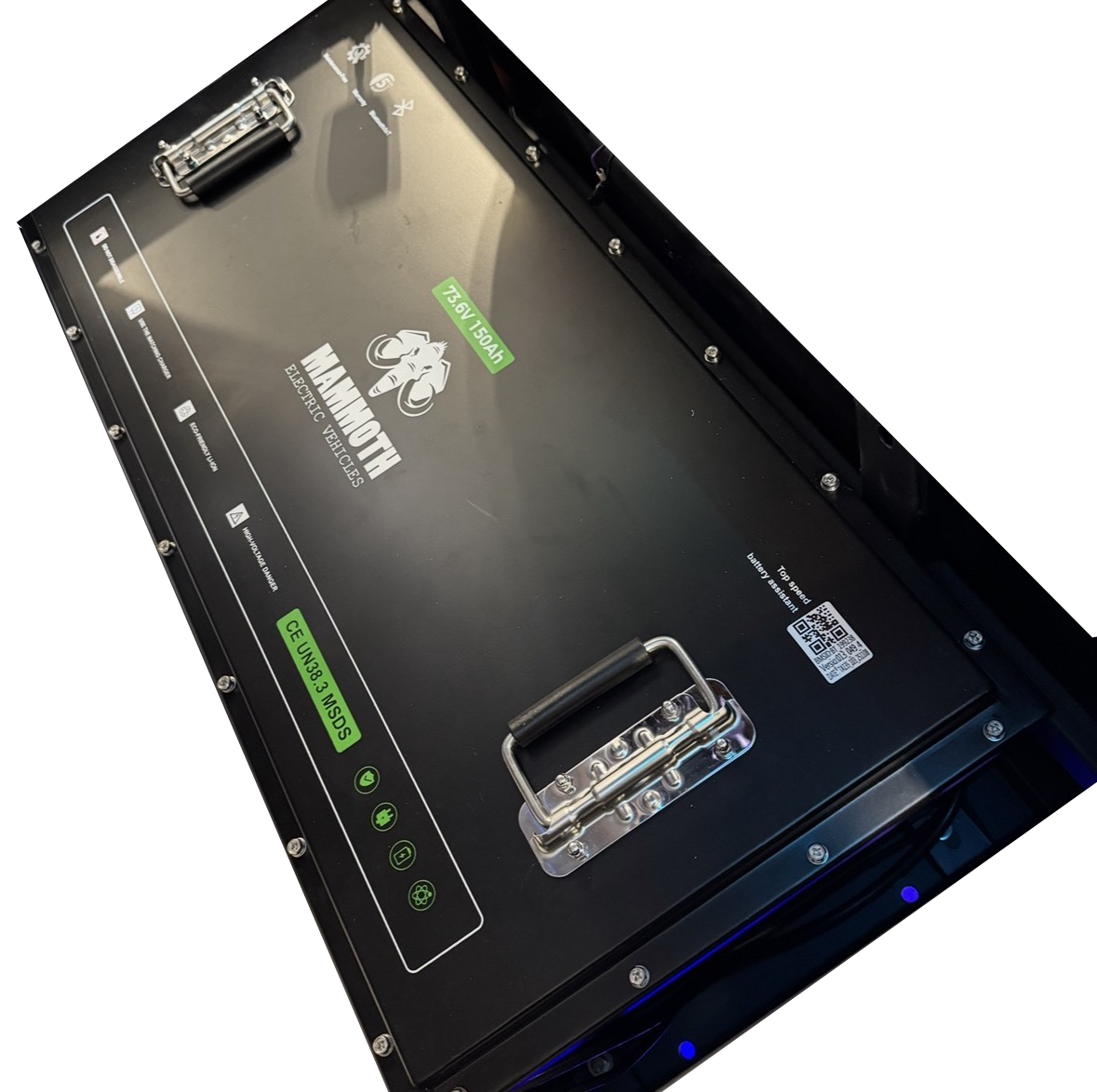
In contrast, MammothEV’s standard 72V 150Ah LiFePO4 battery pack delivers over 3,500 to 5,000 deep discharge cycles to 80% DOD (Depth of Discharge). Lithium-iron-phosphate chemistry eliminates thermal runaway risks inherent in cobalt-based chemistries, eliminates maintenance labor, and accepts high-amperage fast charging—allowing 4 passenger carts to operate multiple shifts daily.
2. Smart Telemetry, App-Based Controller Tuning, and Fleet Connectivity
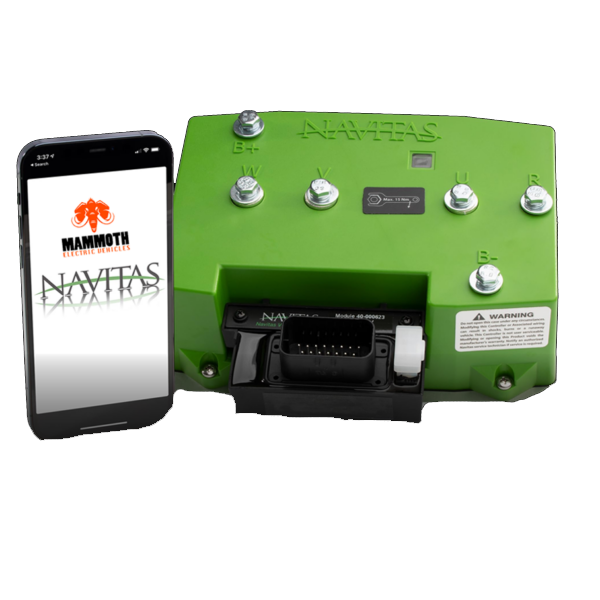
Modern fleet managers require real-time diagnostics and remote parameter configuration. Through our partnership with Navitas Vehicle Systems, every MammothEV 4 passenger electric golf cart incorporates Bluetooth and CAN-bus telemetry. Maintenance managers can adjust acceleration curves, top speeds (from 12 mph turf speed up to 25+ mph street legal mode), regenerative braking strength, and torque limits directly via mobile application or dealer diagnostic software.
3. Strict Compliance with Street-Legal LSV / NEV Safety Mandates
Across North America, Europe, and Australia, municipalities are expanding low-speed vehicle (LSV) access on public roadways posted at 35 mph or less. As a result, commercial buyers require vehicles manufactured with built-in safety hardware that complies with FMVSS 500 standards. Standard equipment on MammothEV 4 passenger models includes DOT-certified automotive safety glass windscreens, 3-point seat belts for all four seating positions, LED high/low beam headlights, turn signals, hazard flashers, side mirrors with integrated indicators, and four-wheel hydraulic disc braking.
Unbranded white-label imported electric carts pose severe operational risks due to non-standard proprietary parts, lack of technical documentation, and long lead times for repair components. Strategic procurement now prioritizes manufacturers that utilize open-architecture, Tier-1 branded components (such as Navitas motors and controllers) combined with domestic assembly. MammothEV’s Idaho facility maintains comprehensive replacement parts inventory, ensuring warranty claims and repair components ship nationwide within 24 to 48 hours.
Total Cost of Ownership (TCO): 72V Lithium vs. Traditional 48V Lead-Acid
For commercial fleets operating 10 to 100 units across golf courses, master-planned communities, or resort properties, the initial purchase price represents less than 40% of the total 10-year lifetime operating cost. Below is an empirical TCO comparison between a MammothEV 72V Lithium 4 Passenger Cart and a conventional 48V Lead-Acid 4 Passenger Cart over a 10-year operational horizon:
Cost Category (Per Vehicle / 10-Year Period)
MammothEV 72V 150Ah Lithium (XR4)
Traditional 48V Lead-Acid Cart
Initial Acquisition Cost (Base Unit)
$13,500
$9,800
Battery Replacement Costs (10 Years)
$0 (Covered by 10-Year Warranty)
$5,400 (3 replacements @ $1,800)
Battery Maintenance Labor & Distilled Water
$0 (Sealed Maintenance-Free Pack)
$2,400 ($240/yr labor & fluid)
Electrical Charging Efficiency Losses
$950 (95% Lithium Charge Efficiency)
$1,750 (75% Lead-Acid Efficiency)
Brake Maintenance (Pad vs Drum Shoe Replacement)
$300 (Hydraulic Discs + Regen Braking)
$900 (Frequent Mechanical Drum Adjustments)
Drivetrain & Motor Replacement Risk
$0 (Covered by 10-Year Warranty)
$1,600 (Out-of-warranty motor failure)
Total 10-Year Cost of Ownership
$14,750
$21,850
NET SAVINGS PER VEHICLE
$7,100 Net Savings per 4 Passenger Cart (+32.5% Cost Reduction)
In a 30-vehicle commercial fleet deployment, choosing MammothEV 72V lithium 4 passenger carts yields over $213,000 in net operational savings across a decade, while simultaneously eliminating vehicle downtime and customer complaints regarding drained batteries on steep inclines.
Why Global Buyers Choose MammothEV: Engineering Authority & Transparency
MammothEV was founded by electric vehicle technicians and mobility engineers frustrated by the widespread compromise in low-speed electric vehicle manufacturing. Most market offerings rely on weak 48V powertrains, lightweight stamped steel frames prone to rust, and generic unbranded electronics. MammothEV’s production philosophy centers on four pillars of engineering rigor:
01 — 72V LiFePO4 Power02 — Navitas Telemetry03 — 7.5kW AC Motor04 — StabiliTrak System
Manufacturing Pillars
Built to Outperform. Backed for 10 Years.
01
Factory-Matched Navitas Powertrain
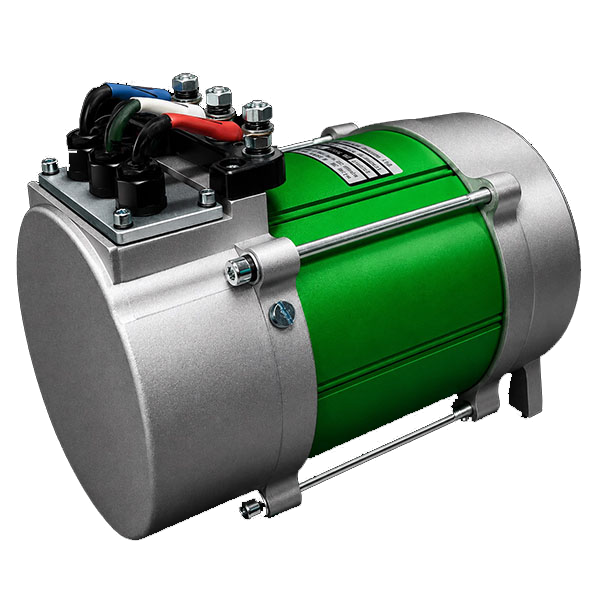
We do not mix-and-match generic motors with mismatched controllers. Every 4 passenger cart features a factory-calibrated Navitas 7.5kW AC motor paired with a 600-Amp Navitas controller for maximum efficiency and smooth power delivery.
02
Adjustable StabiliTrak Suspension
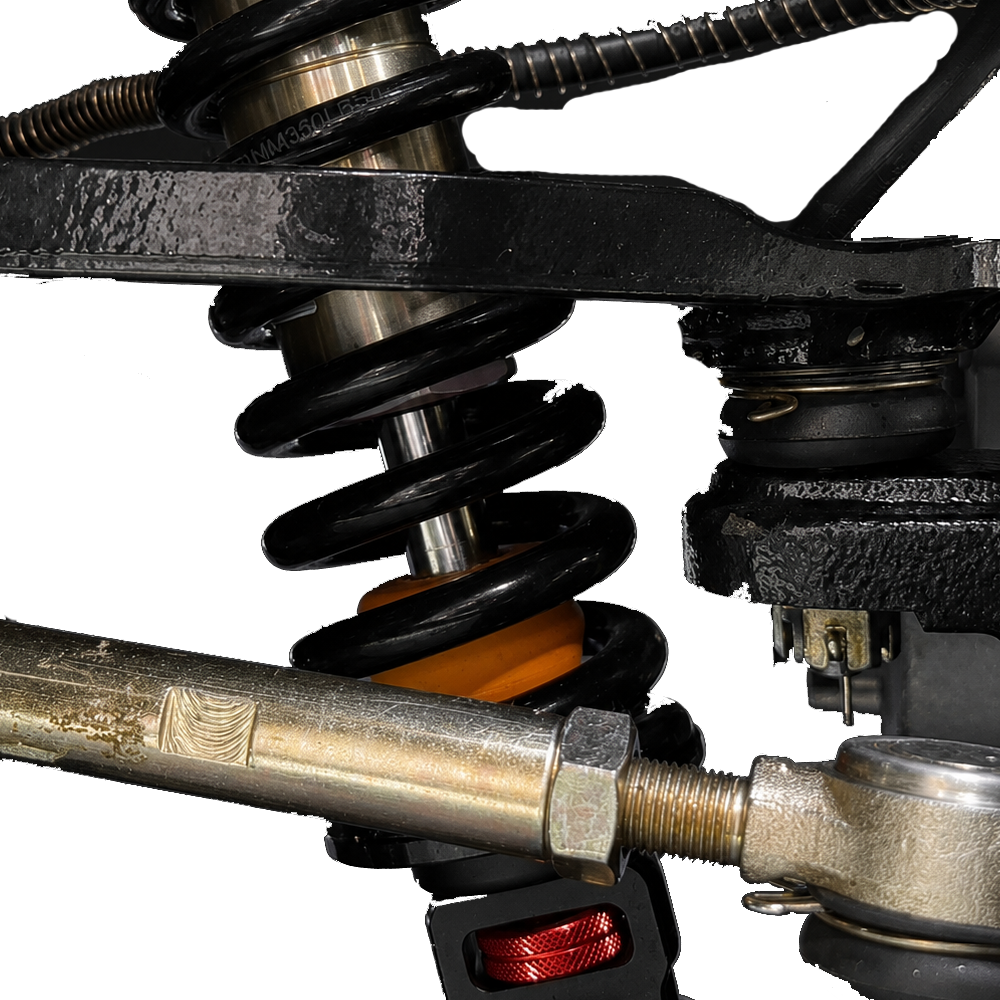
Independent front double A-arm suspension with adjustable coil-over shocks and heavy-duty rear springs prevents sway and body roll under full 4-passenger loading.
03
Four-Wheel Hydraulic Disc Brakes
Automotive-grade braking power standard on all models. Provides short stopping distances and zero brake fade during continuous resort mountain downhills.
04
Final Assembly & Testing in Idaho, USA
Chassis assembly, high-voltage wiring harness installation, wheel alignment, suspension calibration, and road testing are conducted at our Idaho production facility under strict QC protocols.
Comprehensive 4 Passenger Electric Golf Cart Procurement FAQ
Below are technical and operational answers to the questions most frequently submitted by procurement managers, resort directors, and prospective dealership partners:
Under standard operating conditions (mixed flat and inclined terrain with a full payload of four adult passengers), the standard 72V 150Ah LiFePO4 battery pack (10.8 kWh capacity) delivers 45 to 65 miles (72 to 104 km) on a single charge. Range varies based on driving speed, terrain grade, ambient temperature, and selected drive mode settings via the Navitas app.
A 72V system operating with a 7.5kW motor and 600A controller delivers significantly higher continuous torque than a 48V system. When climbing 20% to 30% grades with four passengers, standard 48V carts slow down drastically to 5–8 mph due to voltage sag and high amp draw thermal limits. MammothEV 72V carts maintain strong momentum (18–25+ mph depending on governor settings) without overheating the controller or tripping thermal circuit breakers.
MammothEV vehicles come standard with an onboard smart charger compatible with standard 110V AC household outlets or 220V/240V AC circuits. From a 20% state-of-charge (SOC) to 100% full charge, charging takes approximately 4.5 to 6 hours on standard AC power. Rapid charging options are available for commercial fleet charging stations.
Every MammothEV 4 passenger cart comes factory equipped with essential street-legal hardware, including: a DOT-stamped automotive safety glass windscreen, 3-point lap/shoulder seat belts for all occupants, automotive-grade LED headlights with high/low beams, daytime running lights, LED taillights, brake lights, turn signals, emergency flashers, dual side mirrors with integrated LED signals, an electronic horn, and a digital speedometer display. Local state and municipal registration rules apply.
MammothEV’s 10-year warranty program covers the lithium battery pack, electric motor, controller, frame, and main drivetrain components. Warranty service is administered directly through our authorized regional dealer and service center network. Replacement parts are maintained in stock at our Idaho central facility and dispatched via express air freight to minimize vehicle downtime.
Yes. Fleet administrators can program top speed caps (e.g. locking speed to 15 mph for rental/resort use or 25 mph for neighborhood commuting), adjust acceleration response profiles, and fine-tune regenerative braking aggressiveness through the password-protected Navitas Dealer Dashboard app.
For commercial purchases and fleet orders of 5 or more units, MammothEV provides custom body paint color matching, custom embroidered headrests, branded vinyl wraps, specialized tire/wheel packages, and custom enclosure curtains to align with resort, corporate, or municipal branding standards.
Direct Factory Procurement
Ready to Elevate Your Fleet with 72V 4 Passenger Electric Golf Carts?
Speak directly with a MammothEV commercial specialist to receive detailed technical specifications, request fleet pricing discounts, check inventory delivery schedules, or submit a dealership application.