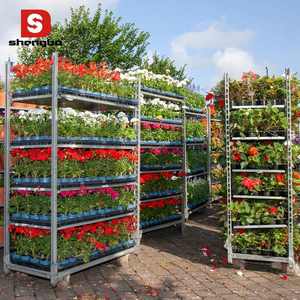
 Agricultural
Customized Danish Greenhouse Trolley Steel Frame Nursery Plant Cart
- 100kg+ Load Rating Per Shelf
- Hot-Dip Galvanized Finish
- Adjustable Detachable Shelves
Engineered with precision robot laser cutting, automated CNC bending, and certified AWS D1.1 structural welding for harsh operational environments.
Agricultural
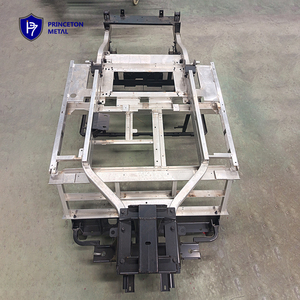 Automotive
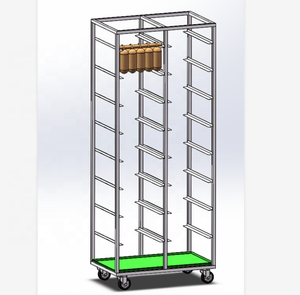 Food Grade
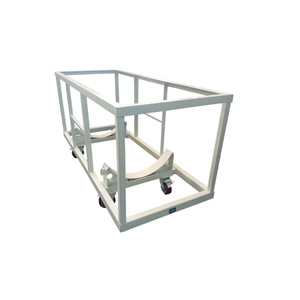 Heavy Industrial
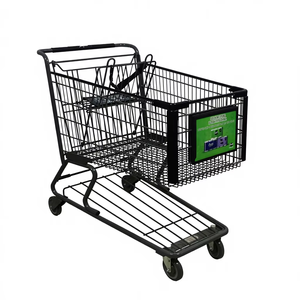 Commercial
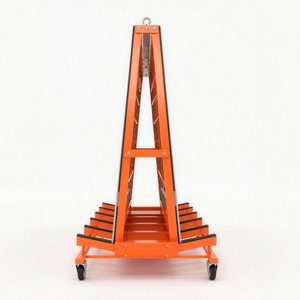 Logistics
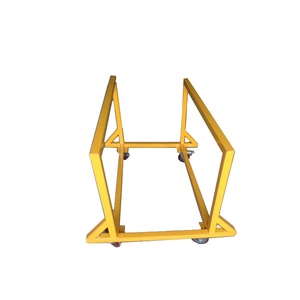 Warehousing
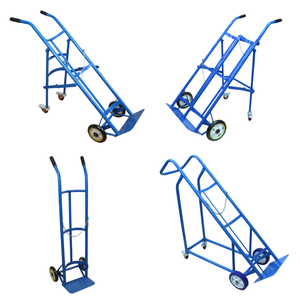 Hazmat / Safety
As global supply chains demand heightened durability, structural efficiency, and custom geometric adaptability, China’s industrial cart frame manufacturing sector has evolved from low-cost stamping into advanced precision engineering. Modern material handling, horticulture, food services, automotive logistics, and heavy stone transport rely on sub-assemblies built with stringent fatigue resistance and exact physical tolerance limits.
A cart frame serves as the foundational skeleton of any mobile system. Whether supporting a 1,500kg granite slab or navigating automated factory floors as a guided chassis component, the structural integrity of the frame directly dictates operational safety, dynamic load distribution, and product lifecycle longevity.
Selecting the appropriate alloy and profile configuration is crucial to achieving optimal payload efficiency. The table below outlines the industrial material selection matrix deployed across our manufacturing lines:
| Material Alloy | Yield Strength (MPa) | Corrosion Resistance | Primary Industrial Application | Structural Finishing Options |
|---|---|---|---|---|
| Q235B Carbon Steel | 235 MPa | Moderate (Requires Coating) | Industrial Trolleys, Logistics Hand Carts | Powder Coating, E-Coating, Galvanizing |
| Q355B High-Strength Steel | 355 MPa | Moderate (Requires Coating) | Heavy Slab Transport, Gas Cylinder Frames | Hot-Dip Galvanizing (80µm+) |
| 6061-T6 Aluminum | 276 MPa | High (Self-Passivating) | Golf Cart Chassis, EV Neighborhood Vehicles | T6 Heat Treatment, Anodizing |
| 304 / 316 Stainless Steel | 205 - 290 MPa | Exceptional (Acid/Alkali) | Food Service Trolleys, Cleanroom Carts | Electro-Polishing, Satin #4 Polish |
To ensure global compliance and interchangeable fit for OEM orders, structural component fabrication requires tight dimensional tolerances ($\pm 0.5\text{mm}$). Our facilities integrate automated processing equipment to minimize human error during high-volume production runs.
Enables ultra-clean edge cuts on carbon steel up to 25mm and stainless steel up to 16mm, eliminating post-cut deburring requirements.
Multi-axis rotary draw bending creates tight-radius bends in round and square tubing without structural necking or cross-sectional flattening.
Six-axis robotic arms ensure uniform weld seam penetration, eliminating cold welds and structural failure risks under dynamic loads.
As global logistics and industrial manufacturing transition toward automation, sustainability, and supply chain transparency, procurement executives must adapt to several technical macro-trends when sourcing cart frames from China:
With ocean freight volatility and shipping container space efficiency remaining top concerns for international buyers, traditional fully welded bulky cart frames are rapidly being replaced by Completely Knocked Down (CKD) modular frames. By utilizing high-tensile structural fasteners, laser-interlocking tabs, and precision-matched bolt holes, CKD designs boost 40ft HQ container loading capacity by up to 300%, drastically reducing freight cost per unit.
Energy efficiency demands in electric utility carts, golf carts, and manual warehouse push-trolleys are driving a material shift from traditional carbon steel toward extruded 6061-T6 aluminum and high-yield micro-alloyed steels (such as Q460 or DOM steel tubing). Lightweight frames reduce payload dead weight, extend electric vehicle battery range per charge, and diminish operator physical strain in manual handling operations.
Smart factories require cart frames designed with standardized optical reflector mounts, RFID sensor brackets, and precision-machined castor mounting plates. Frames must maintain tighter squareness tolerances ($\le 0.3\text{mm}$) to integrate seamlessly with automated tugger systems and robotic lifters without causing docking misalignment.
Environmental regulations worldwide are tightening around VOC emissions and heavy metal runoff. Top China exporters are phasing out solvent-based paints in favor of closed-loop solvent-free electrostatic powder coats and chromium-free passivation processes, satisfying European REACH and RoHS environmental standards.
Building high-performance structural frames requires deep engineering capability, transparent quality systems, and robust OEM supply chain integration. We provide end-to-end support from initial CAD DFM consultation through mass production and export documentation.
Our engineering team reviews SolidWorks / STEP files within 24 hours, delivering optimized Design for Manufacturability (DFM) feedback and physical prototypes in under 10 working days.
Every batch undergoes Coordinate Measuring Machine (CMM) inspection, weld ultrasonic flaw testing, static load deflection verification, and coating thickness audits.
Custom steel palletization, plastic wrap shrink sealing, and corner edge guards protect finish integrity during transit, ensuring zero sea-freight oxidation upon delivery.
Answers to common structural design, manufacturing lead time, quality assurance, and international trade questions from global procurement officers.
We accept 3D CAD models in STEP, IGES, or SLDPRT formats, alongside 2D PDF engineering drawings specifying critical dimensions, hole locations, material grades, welding standards (e.g., AWS D1.1), surface finishes, and tolerance boundaries ($\pm\text{mm}$).
Our engineering team performs digital Finite Element Analysis (FEA) simulations to identify stress concentrations. Once physical prototypes are fabricated, we conduct static overload testing (typically 1.5x to 2.0x rated load) and dynamic cycle vibration testing to verify structural compliance without permanent deformation.
For outdoor agricultural or stone transport applications, Hot-Dip Galvanizing (HDG) conforming to ISO 1461 provides maximum zinc-alloy cathodic protection. For chemical or food cleanrooms, electropolished 304 or 316-grade stainless steel is recommended. For aesthetic industrial applications, an automotive-grade E-coat primer paired with UV-resistant powder coat provides superior resistance to chipping and rust.
Standard OEM MOQs depend on frame complexity and profile availability, typically ranging from 50 to 100 units for heavy industrial frames and 200+ units for standard commercial carts. Prototype development requires 7–14 days, while full container load production runs are completed within 25–35 days.
Yes. Our DFM team specializes in converting rigid, fully welded frame assemblies into modular, bolt-together CKD structures. By designing precision tab-and-slot alignments with structural grade-8.8 fasteners, container packing density can be increased by up to 300% without compromising final assembled rigidity.
We employ certified welding inspectors (CWI) and automated robotic welding cells. Weld seams undergo routine Non-Destructive Testing (NDT), such as dye penetrant inspection (DPI) and ultrasonic testing (UT), ensuring complete root penetration and zero internal porosity or weld cracking.