Featured OEM/ODM Electric Cart Powertrains & Vehicles
Engineered for extreme torque density, IP67 environmental sealing, precision steering integration, and maximum duty-cycle efficiency across commercial platforms.
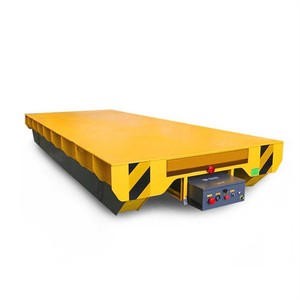
BWF Steering Wheel Electric Transfer Cart Hydraulic Lift Flat Car Transport Trolley
- Motor Type AC Brushless Dual
- Control System Wireless Rocker RF
- Lift Payload Hydraulic 5T-50T
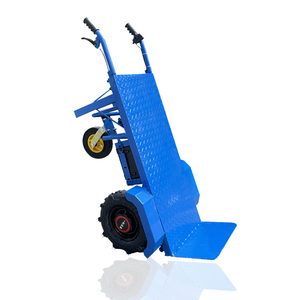
Electric 500kg Loading Capacity Stair Climbing Shopping Trolley Cart Truck
- Motor Power 1200W High Torque
- Stair Mechanism 3-Wheel Crawler
- Customization OEM Chassis/Platform
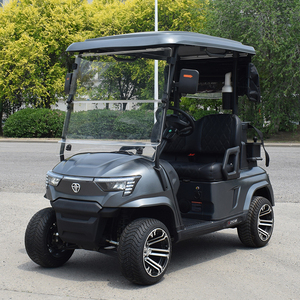
Wholesale Price Club Car Lifted Passenger Golf Cart Best Selling Off Road Cart
- Motor Tech 72V 7.5kW PMSM
- Controller 600A Programmable
- Suspension StabiliTrak Lifted
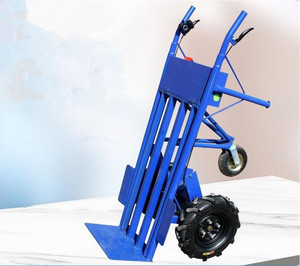
Heavy Electric Trolley Hand Truck Portable Stair Climbing Folding Cart
- Drive Motor BLDC Planetary Gear
- Battery Integration Lithium-Ion Quick Swap
- Frame Foldable Alloy Steel
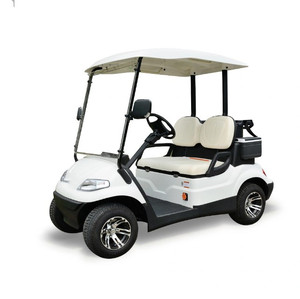
Huanxin 2 Seater Lifted Golf Cart Buggy Car with 48v AC Powertrain System
- System Voltage 48V AC Asynchronous
- Peak Power 5kW Constant Thermal
- Braking Regenerative Electromagnetic
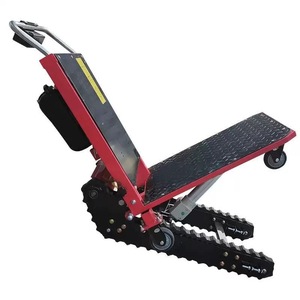
Electric Crane Truck Climbing Stairs Trolley Crawler Stairs Picker Unit
- Actuation Dual Motor Crawler
- Crane Module Electro-Hydraulic Boom
- Duty Rating S1 Continuous Heavy
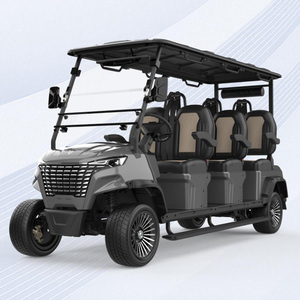
Greenrider Wholesale 6 Seater Hunting Lithium Electric Utility Off Road Cart
- Powertrain 72V 150Ah LiFePO4
- Motor Tech Navitas 7.5kW High-Rpm
- Drivetrain Helical Differential Gear
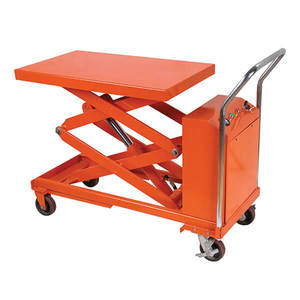
Electric Hydraulic Lift Platform ETF100 1000mm Max Height Cargo Cart
- Lift Height 1000mm Precision Servo
- Table Size 1200x610mm Heavy Deck
- Motor Rating 24V/48V DC Integrated
1. Engineering Architecture of Modern Cart Powertrains
In the rapidly expanding ecosystem of electric mobility, automated material handling, and custom utility transport, selecting the optimal OEM/ODM Cart Motor is the foundational variable governing vehicle performance, operational uptime, and total cost of ownership (TCO). As a premier global manufacturer and system integration partner, we engineer custom electromagnetic motor topologies tailored specifically for low-speed electric vehicles (LSEVs), heavy industrial transfer carts, stair-climbing utility platforms, and luxury neighborhood electric vehicles (NEVs).
Traditional legacy cart motors relied heavily on brushed Series DC architecture, which exhibited severe thermal bottlenecks, high commutator maintenance, low energy efficiency (typically below 75%), and susceptibility to environmental ingress. Modern OEM/ODM procurement demands advanced traction mechanics: AC Induction Motors (ACIM) and Permanent Magnet Synchronous Motors (PMSM / BLDC).
Thermal Management & Environmental Protection (IP65 - IP67)
Thermal dissipation dictates continuous power density. Our OEM motor manufacturing processes incorporate Class H (180°C) copper magnet wire winding coupled with high-thermal-conductivity resin vacuum pressure impregnation (VPI). Enclosures feature precision CNC-machined die-cast aluminum heat-sink fins, optimized for passive convection or forced air/liquid cooling pathways. Double-lip skeleton oil seals and silicone gasket mating surfaces ensure complete dustproofing and pressure-wash water resistance, fulfilling IP65 to IP67 standards for outdoor agricultural, marine, and wet industrial environments.
| Specification Parameter | 48V AC Induction Motor System | 72V PMSM (Brushless DC) System | Heavy-Duty Industrial Transaxle Motor |
|---|---|---|---|
| Target Application | Standard Golf Carts & Light Utility | High-Speed NEV & Lifted Off-Road Buggies | Heavy Transfer Carts & Industrial AGVs |
| Peak System Efficiency | 88% - 91% | 94% - 96.5% | 90% - 93% |
| Peak Output Torque | 35 Nm - 65 Nm | 75 Nm - 140 Nm | 120 Nm - 350+ Nm |
| Thermal Insulation Class | Class F (155°C) / Class H | Class H (180°C) Standard | Class H (180°C) Heavy Duty |
| Speed Control Method | FOC (Field Oriented Control) Vector | FOC with Flux Weakening Algorithm | Closed-Loop Servo / CAN-bus Vector |
| Maintenance Interval | Maintenance-Free (50,000 Hours) | Maintenance-Free Sealed Bearing | Periodic Transaxle Fluid Inspection |
2. Tailored OEM/ODM Engineering & Customization Workflow
No two industrial applications possess identical duty cycles. As a specialized OEM/ODM cart motor supplier, our engineering team works directly with Tier-1 original equipment manufacturers, system integrators, and fleet designers to customize every electrical and mechanical interface:
Our proprietary finite element analysis (FEA) software simulates electromagnetic flux density, thermal dissipation maps, and structural stress points long before physical prototyping. This reduces initial prototype development lead times to under 3 weeks, guaranteeing that performance matches simulation metrics down to ±1.5%.
3. Strategic Future Procurement Trends in Cart Motor Powertrains
Strategic sourcing executives and powertrain engineering managers must evaluate key technological shifts currently transforming the industrial electric cart and commercial utility vehicle landscape:
Trend 1: Migration to High-Voltage 72V/96V Lithium-Ion Architecture
The market is rapidly sunsetting 36V/48V flooded lead-acid battery packs in favor of 72V and 96V Lithium Iron Phosphate (LiFePO4) systems. High-voltage platforms significantly reduce current draw (Amperes) for equivalent power output ($P = V \times I$), drastically minimizing $I^2R$ copper resistive heat losses, allowing thinner wire harness copper gauges, and boosting total vehicle range by up to 28%. Motors engineered for 72V+ systems demand enhanced inter-turn insulation dielectrics and specialized corona-resistant wire enamels.
Trend 2: Autonomous Mobile Robots (AMR) & Precision AGV Steering Motors
Modern factory logistics rely heavily on Automated Guided Vehicles (AGVs) and AMRs. Procurement requirements have shifted from basic open-loop propulsion to dual-drive steer-by-wire differential motor assemblies with absolute position feedback encoders. These specialized motors deliver sub-millimeter positioning accuracy, zero-backlash planetary reduction, and smooth ultra-low RPM torque stability.
Trend 3: Smart Telematics & IoT Predictive Maintenance Diagnostics
Next-generation OEM cart motors feature integrated smart sensor modules connected via CAN-bus to cloud telematics systems. Real-time monitoring of phase winding temperatures, vibration frequency spectra (detecting bearing wear prior to catastrophic failure), and total duty-cycle thermal stress enables predictive maintenance schedules, avoiding costly facility downtime in high-throughput warehouse logistics.
Trend 4: Rare-Earth Reduction & Sustainable Magnetics
To mitigate global rare-earth element price volatility and supply chain vulnerabilities, OEM motor manufacturers are actively developing Synchronous Reluctance Motors (SynRM) and Advanced Ferrite-Assisted Synchronous Reluctance Motors (Fe-SynRM). These designs eliminate heavy rare-earth metals like Dysprosium and Terbium while maintaining over 92% peak efficiency.
4. Enterprise Manufacturing Rigor & Proven Quality Assurance
Backing our OEM/ODM motor production is an unyielding commitment to world-class quality control, traceable manufacturing standards, and rigorous validation protocol. Operating under ISO 9001:2015, ISO 14001, and IATF 16949 automotive-grade quality management systems, our state-of-the-art facility features fully automated robotic coil winding, dynamic rotor balancing, and automated VPI insulation lines.
5. Frequently Asked Questions (Procurement & Technical FAQ)
Detailed technical responses addressing common engineering and global purchasing questions when sourcing OEM/ODM cart motors:
Partner With a Premier OEM/ODM Cart Motor Supplier
Ready to elevate your electric cart, utility vehicle, or AGV platform with custom-engineered motor technology? Contact our powertrain technical team today for immediate design support, CAD drawings, and volume pricing quotes.