Featured OEM Hydraulic Braking Assemblies
Explore our tier-1 direct factory customized hydraulic brake kits, calipers, drum assemblies, and high-pressure rubber hoses engineered to international OEM standards.
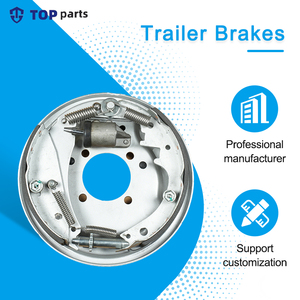
9 Inch Hydraulic Brake Kit with Galvanized Drum & Auto-Adjust for RV Camper
Heavy-duty galvanized trailer drum brake assembly featuring self-adjusting shoes, optimized for salt-spray resistance and camper/travel trailer applications.
- Diameter: 9 Inch (228.6mm)
- Finish: Hot-Dip Galvanized
- Rating: 3,500 lbs Axle
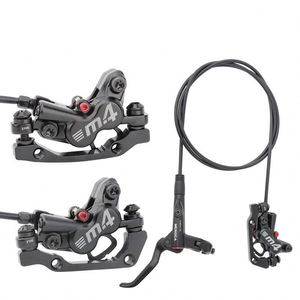
High Quality MTB & Road Cycle Hydraulic Disc Brake Set for E-Bikes
High-precision dual-piston hydraulic disc braking system designed for mountain bikes and high-speed electric bikes. Includes metallic heat-sink pads.
- Piston Count: Dual Piston
- Fluid Type: Mineral Oil
- Material: 6061-T6 Alloy
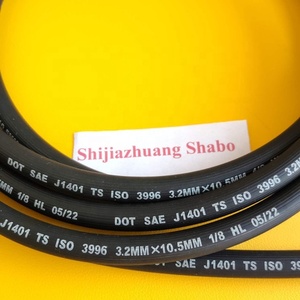
SAE J1401 1/8 Inch 3.2*10.5mm Hydraulic Rubber Hose for Auto Systems
Multi-layer reinforced EPDM hydraulic brake hose compliant with SAE J1401 and DOT standards. Exceptional volumetric expansion control under high pressure.
- Inner Diam.: 3.2mm (1/8")
- Burst Press.: > 70 MPa
- Standard: SAE J1401 / DOT
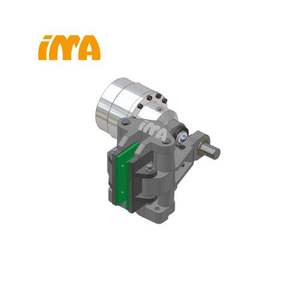
Professional Industrial Hydraulic Disc Brakes & Tool Accessories
Heavy industrial caliper units constructed with Italian-quality quality assurance protocols. Designed for extreme duty cycles in manufacturing and marine equipment.
- Clamping Force: Up to 45 kN
- Seal Material: Viton / FKM
- Duty Rating: Continuous Heavy
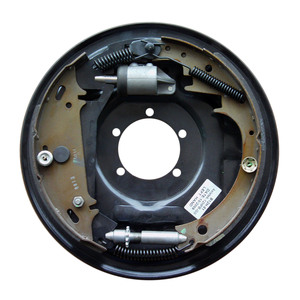
Factory Direct Sale Hydraulic Brake Assembly for RV & Heavy Trailers
Complete OEM backing plate assembly featuring zinc-coated hardware and high-friction non-asbestos brake linings for utility and recreational vehicles.
- Axle Match: 6,000 - 7,000 lbs
- Mounting: 5-Bolt Standard
- Actuation: Hydraulic Surge
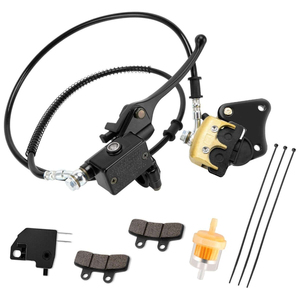
OEM/ODM Front Hydraulic Brake Kit with Master Cylinder & Caliper
Integrated front hydraulic system featuring an ergonomic master cylinder, pre-bled steel braided lines, and high-stopping-power forged calipers.
- Bore Size: 14mm / 16mm
- Tubing: Braided Stainless
- Customization: Logo / Anodizing
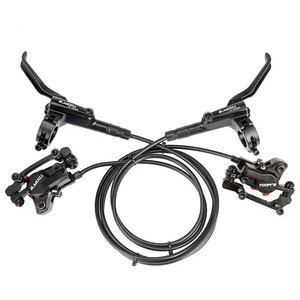
Mountain Bike Dual Disc Oil Hydraulic Brake Set for Cycle Racing
Ultra-lightweight hydraulic disc brake set utilizing low-viscosity synthetic fluid for instant modulation and linear lever pressure during racing conditions.
- Lever Type: 2-Finger Alloy
- Rotor Size: 160mm / 180mm
- Weight: < 620g / Pair
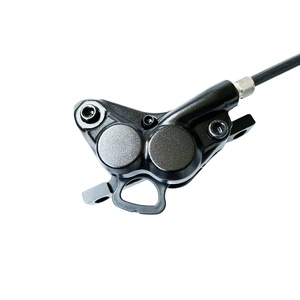
4-Piston Hydraulic Disc Brake with Power Cut-Off Sensor for E-Bikes
Engineered for heavy-duty electric bikes and Bafang mid-drive systems. Features integrated waterproof reed switches for immediate motor cut-off upon braking.
- Pistons: 4 Ceramic Pistons
- Sensor: Waterproof 2-Pin
- Application: Cargo & E-MTB
Industry Whitepaper: Engineering & Manufacturing Principles of Modern Hydraulic Brakes
As a premier OEM hydraulic brake manufacturer and contract supplier, our production processes combine fluid mechanics, high-grade metallurgy, and computer-aided manufacturing to engineer braking components that withstand extreme mechanical shock, high thermal stress, and corrosive environments. Hydraulic braking systems operate on Pascal’s Principle, where fluid pressure applied within a closed system translates directly into linear mechanical clamping force at the caliper or drum cylinder.
Technical Insight for Procurement Directors: The thermal performance of custom hydraulic brakes is directly dictated by rotor mass, caliper fluid routing, and pad friction materials. Our engineering labs utilize Finite Element Analysis (FEA) to eliminate micro-flex in calipers under extreme hydraulic line pressures exceeding 15 MPa (2,175 PSI).
1. Hydraulic Fluid Dynamics & Caliper Piston Kinematics
In high-performance automotive, e-mobility, and industrial applications, braking modulation depends on precise piston displacement and low-expansion fluid lines. Standard single or dual-piston calipers can exhibit pad taper under continuous load. To solve this, our custom 4-piston hydraulic calipers utilize differential piston diameters (e.g., 14mm trailing and 16mm leading pistons) to equalize pad contact pressure and eliminate uneven friction wear.
| Braking Technology | Typical Operating Pressure | Thermal Dissipation Capacity | Fluid Compatibility | Target OEM Application |
|---|---|---|---|---|
| 2-Piston Mechanical/Hydraulic | 3.5 - 6.0 MPa | Moderate (< 250°C) | DOT 4 / Mineral Oil | Standard City E-Bikes, Light Trailers |
| 4-Piston Forged Aluminum | 8.0 - 16.0 MPa | High (< 450°C) | High-Temp Synthetic Mineral Oil | Cargo E-Bikes, E-MTB, ATV/UTV |
| Hydraulic Drum (Auto-Adjust) | 5.0 - 10.0 MPa | Extreme Duty Cycle | DOT 3 / DOT 4 | RV Campers, Utility Trailers (3k-7k lbs) |
| Industrial Heavy Duty Disc | 12.0 - 25.0 MPa | Ultra-High (< 650°C) | Synthetic Hydraulic Fluid / Glycol | Heavy Industrial Machinery, Mining, Marine |
2. Advanced Metallurgy and Anti-Corrosion Surface Treatments
Hydraulic braking components operate under harsh outdoor and marine conditions where exposure to road salts, humidity, and chemical deicers causes rapid oxidation. Our factory direct manufacturing lines integrate specialized electroplating and metallurgy protocols:
For trailer drum systems, backing plates are stamped from high-tensile structural steel (Q235B / Cold-Rolled SPCC) and subject to hot-dip galvanization or black e-coating yielding over 720 hours of salt spray chamber endurance under ASTM B117 standards. Hydraulic caliper bodies are forged from aerospace-grade 6061-T6 or 7075-T6 aluminum alloy, followed by CNC milling and hard-anodizing to maintain tight dimensional tolerances (+/- 0.005mm) across bore surfaces.
3. Hydraulic Hose Integrity: SAE J1401 & DOT FMVSS 106 Compliance
The weakest point in any hydraulic system under emergency actuation is volumetric hose expansion. Our SAE J1401 rubber brake hoses utilize a 5-layer construction consisting of an inner EPDM core, double-braided high-tenacity synthetic yarn reinforcement, and an ozone/weather-resistant outer EPDM cover. For race-grade cycle and high-speed motor applications, we offer stainless steel braided PTFE lines that exhibit near-zero volumetric expansion, delivering instantaneous lever feel and crisp brake engagement.
Future Procurement & Hydraulic Brake Industry Trends (2026-2035)
Strategic insights for OEM buyers, engineering managers, and enterprise procurement teams navigating global technological shifts.
1. Electronic Cut-Off Integration & Smart Telematics
With the rapid expansion of light electric vehicles (LEVs) and commercial cargo e-bikes, hydraulic brake levers must integrate IP67-rated waterproof magnetic sensors or electronic power cut-off microswitches. Future procurement demands master cylinders that communicate directly with motor controllers (such as Bafang, Bosch, or Navitas platforms) to instantly interrupt motor drive power and activate regenerative braking upon pressure detection.
2. Eco-Friendly Zero-Copper Friction Materials
Global environmental regulations (including California SB 346 and Washington SSB 6557) mandate the reduction of copper content in brake pads to less than 0.5% by weight. Our OEM manufacturing facility leads the industry in developing advanced ceramic-matrix and semi-metallic composite friction linings that achieve high friction coefficients ($\mu \ge 0.45$) with zero asbestos and zero heavy metals, drastically reducing brake dust particulate emissions.
3. Modular Pre-Bled Kit Assemblies for Assembly Line Efficiency
OEM vehicle assembly lines require plug-and-play components to shorten takt times. The industry is moving away from bulk component purchasing toward fully pre-bled, sealed hydraulic brake kits equipped with quick-connect dry-break couplings. This enables rapid vehicle assembly without requiring fluid bleeding routines on the production floor.
4. Automotive-Grade Testing Standards in Micro-Mobility
As light electric vehicles reach higher speeds (45-80 km/h), micro-mobility brake testing is converging with automotive standards. Industrial buyers now require ISO 4210, DIN EN 15194, and SAE J1401 validation protocols, including high-frequency dynamometer fatigue testing over 100,000 continuous cycle stops.
Why Partner with Our Custom OEM Hydraulic Brake Manufacturing Plant
Selecting an OEM supplier requires evaluating manufacturing depth, engineering compliance, and quality control systems. Our factory operates as a vertically integrated manufacturer specializing in custom hydraulic braking solutions from conceptual CAD design to full-scale mass production.
Full-Spectrum OEM / ODM Customization Workflow
We work directly with automotive tier-1 buyers, trailer manufacturers, and electric bike brand engineers. Our customization services cover:
- Custom Piston & Bore Architecture: Tuning master cylinder bore diameters (10mm to 19mm) and caliper piston counts (2-piston, 4-piston, or multi-piston industrial clamps) to achieve target leverage ratios.
- Metallurgical Selection: Die-cast aluminum ADC12, cold-forged 6061-T6, nodular cast iron for brake drums, and stainless steel AISI 420 for heat-treated disc rotors.
- Branding & Aesthetic Finishes: Laser-etched OEM logos, custom anodized caliper colors (Stealth Black, Racing Red, Anodized Gold), and private-label packaging.
- Flexible Hose Lengths & Fittings: Custom routed rubber or braided steel lines with 0°, 20°, or 90° stainless steel or brass banjo fittings.
Stringent Quality Assurance & Testing Facility
Every hydraulic brake component shipped from our factory undergoes 100% high-pressure helium leak detection and hydraulic pressure chamber testing. Our in-house test lab is equipped with:
- Automated Inertia Dynamometers for continuous friction coefficient ($\mu$) and fade resistance measuring.
- Coordinate Measuring Machines (CMM) ensuring micro-scale precision across caliper bores and mounting tabs.
- High-Frequency Impulse Testing Rig for hydraulic hoses up to 50 MPa burst threshold verification.
- Salt Spray Testing Chambers (ASTM B117) validating electroplating and coating longevity.
Frequently Asked Questions for OEM Hydraulic Brakes Procurement
Detailed answers to critical engineering, manufacturing, minimum order quantity, and compliance questions.
What is your Minimum Order Quantity (MOQ) for custom OEM hydraulic brake manufacturing?
Our standard Minimum Order Quantity for customized hydraulic brake kits (with specific caliper colors, custom hose lengths, or branded laser etching) is typically 500 sets. For standard off-the-shelf catalog models, we accept initial trial orders starting at 100 units to support product testing and sample validation.
Which hydraulic brake fluid (DOT 4 vs. Mineral Oil) is recommended for light electric vehicles?
Mineral oil is widely preferred for light electric vehicles and e-bikes because it is non-corrosive to painted frames, hydrophobic (does not absorb moisture from ambient air), and provides a long service interval without frequent system flushes. However, for extreme thermal applications like automotive trailers or racing motorcycles, synthetic DOT 4 or DOT 5.1 fluid is specified due to its higher dry boiling point (> 260°C).
How do you ensure anti-corrosion performance on trailer hydraulic brake drums?
Our trailer brake drums and backing plates undergo hot-dip galvanization or specialized electro-deposition (E-coating) processes. This surface treatment is tested in accordance with ASTM B117 salt spray standards for over 720 hours without red rust formation, making them ideal for marine boat trailers and travel campers frequently exposed to saltwater or harsh road salts.
Can you produce custom hydraulic brake pads with zero-copper friction formulas?
Yes. We manufacture fully compliant zero-copper and low-copper ceramic and semi-metallic friction materials that meet USA NSF-316 environmental guidelines and European REACH standards. Our friction formulations provide smooth modulation, low noise (NVH suppression below 65 dB), and minimal rotor wear.
What quality certifications do your hydraulic brake factories hold?
Our manufacturing facilities operate under strict ISO 9001:2015 and IATF 16949 quality management systems. Individual product lines comply with SAE J1401, DOT FMVSS 106, CE standards, and ISO 4210 safety requirements for bicycle and micro-mobility braking systems.
What is the typical production lead time for bulk OEM orders?
Initial prototype samples engineered to your custom CAD drawings are delivered within 15 to 25 calendar days. Once sample validation is approved by your engineering team, full-scale mass production lead time is approximately 30 to 45 days, depending on batch quantity and surface finish requirements.
Request a Custom OEM/ODM Hydraulic Brake Quote Today
Partner with a trusted tier-1 factory direct supplier. Our engineering team is ready to evaluate your technical drawings, supply sample prototypes, and deliver competitive volume pricing for your production line.
Contact Us