Engineering Lineup: Custom OEM Cart & Vehicle Integration
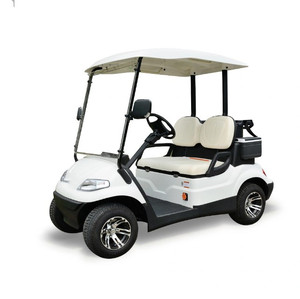
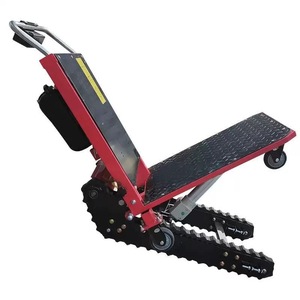
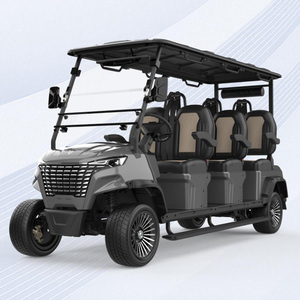
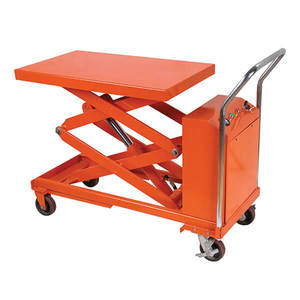
Explore our specialized industrial cart platforms, motorized hand trucks, and custom electric vehicle chassis equipped with factory-integrated OEM drive controllers, wireless telemetry, and high-torque AC/DC brushless power management systems.
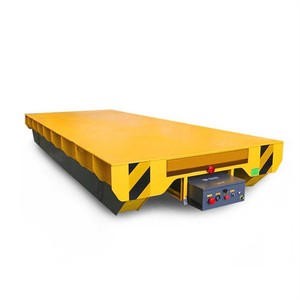
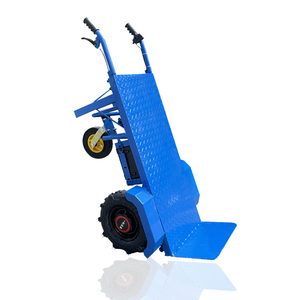
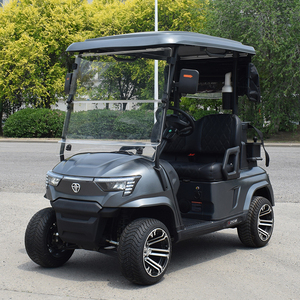
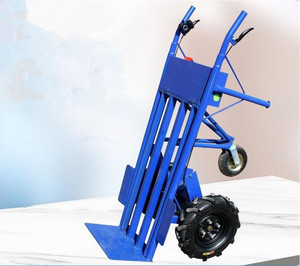
Industrial Whitepaper: The Evolution of Custom OEM Cart Controllers
In modern industrial logistics, automated material handling, and custom electric mobility platforms, the drive controller serves as the central nervous system. As global supply chains transition away from off-the-shelf, low-voltage legacy motor drives, specialized Custom OEM Cart Controller Factories have emerged as pivotal technological partners for Original Equipment Manufacturers (OEMs) and System Integrators worldwide.
A cart controller is no longer merely a basic pulse-width modulation (PWM) speed regulator. Contemporary industrial applications—ranging from 500kg motorized stair-climbing hand trucks to 72V multi-passenger off-road utility vehicles and heavy-duty hydraulic transfer platforms—demand fully dynamic micro-controllers capable of real-time Field-Oriented Control (FOC), multi-axis synchronisation, regenerative braking management, and secure CAN-bus communication.
FOC Vector Drive Algorithms
Advanced digital signal processors (DSPs) execute field-oriented control algorithms to optimize motor torque output across variable incline gradients and payload distributions, minimizing heat dissipation in MOSFET arrays.
Adaptive Thermal Throttling
Integrated temperature sensors continuously monitor power silicon junctions. Dynamic current-limiting algorithms maintain maximum operational uptime without thermal shutdown or hardware degradation.
CAN-Bus & Wireless Handshakes
Isolated CAN 2.0B interfaces enable seamless protocol handshakes between telemetry modules, wireless remote joysticks, hydraulic actuators, and BMS hardware for unified vehicle diagnostics.
Engineering Insights: Why Generic Controllers Fail Specialized Applications
Procurement teams often confront severe reliability bottlenecks when attempting to integrate standard off-the-shelf controllers into customized electric cart designs. Specialized industrial vehicles possess unique physical torque curves and inertial profiles that generic drives cannot accommodate:
1. Incline Start-Assist & Anti-Rollback Security: Industrial transport trolleys and heavy stair-climbing platforms require immediate static torque holding. Custom OEM controllers utilize zero-speed position-lock algorithms coupled with automatic electromagnetic brake actuation, preventing catastrophic rollback when stopped on steep ramps or stair treads.
2. Hydraulic & Motion Signal Synchronization: Multi-function equipment—such as hydraulic lift flatcars and electric crane crawlers—demand dual-channel microprocessors that concurrently modulate traction motor speed while executing proportional valve timing for smooth material elevation.
3. Vibration Resistance & Thermal Dissipation: Heavy-duty off-road utility carts and stair-climbing hand trucks subject internal electronics to intense mechanical shock and harmonic vibration. OEM manufacturing standards dictate heavy-gauge aluminum extruded heat sinks, full silicone potting (IP67 protection), and automotive-grade solid capacitors capable of enduring up to 20G mechanical vibration shock profiles.
Future Procurement Trends in Cart Controller Manufacturing (2026–2030)
As enterprise procurement managers optimize global supply chain strategies, the specification requirements for custom controller hardware are shifting rapidly. Organizations seeking a competitive market edge should align their OEM manufacturing partnerships with these critical macro-trends:
Transition to 72V High-Efficiency Architecture
While 36V and 48V systems remain prevalent in legacy fleets, premium utility vehicles, golf buggies, and heavy transport trolleys are accelerating toward 72V high-voltage LiFePO4 battery platforms. Higher operating voltages reduce current draw ($I^2R$ power loss), allowing narrower copper wiring harnesses, cooler operating temperatures, and up to 25% greater range per charge cycle.
Cloud Telematics & Over-The-Air (OTA) Tuning
Modern B2B fleet buyers require centralized monitoring capabilities. Next-generation OEM controller factories are integrating Bluetooth low energy (BLE) and cellular IoT transceivers directly onto the control board. Maintenance teams can adjust acceleration curves, speed governors, and perform firmware diagnostics remotely via mobile applications without opening the electronic chassis.
Product Development Roadmap: Smart Motion Control Technologies
Product developers and mechanical engineers are currently focusing on key technological vector improvements to elevate user safety and operational performance across commercial environments:
• Smart Stair-Climbing Algorithmic Assist: Tri-wheel and crawler stair-climbing trolleys rely on real-time gyroscopic feedback. OEM controllers dynamically calculate wheel resistance and step angles to balance 500kg payloads dynamically, ensuring effortless manual maneuvering up multi-story staircases.
• Wireless Rocker & Remote Teleoperation: High-risk material transfer—such as heavy hydraulic flatcar loads—requires wireless industrial remotes. Custom controllers integrate frequency-hopping spread spectrum (FHSS) receivers to eliminate signal interference in high-density factory environments.
• Regenerative Braking Optimization: Energy recovery software profiles allow heavy electric hand trucks and passenger utility carts to recharge lithium packs during downhill deceleration, recovering up to 18% of kinetic energy while reducing mechanical brake wear.
Enterprise OEM/ODM Manufacturing & Engineering Capabilities
Our state-of-the-art manufacturing facilities bridge advanced electrical engineering with rigorous quality control standards. Engineered and assembled within specialized production facilities, our power electronics, drive controllers, and electric cart assemblies adhere to stringent global standards.
Rigorous SMT Assembly Lines
High-speed surface-mount technology (SMT) lines feature automated optical inspection (AOI) and X-ray testing to guarantee flawless solder joints on dense multi-layer PCB assemblies, preventing field failures under high current strain.
Full Load Simulation & Burn-In
Every custom controller undergoes 100% dynamic load testing within environmental stress chambers. Units are cycled through full power loads at elevated temperatures to eliminate infant mortality risks prior to mass shipping.
End-to-End OEM Customization
From initial schematic capture and firmware flashing to custom aluminum housing extrusion and harness engineering, we deliver bespoke solutions tailored precisely to your vehicle platform specifications.
B2B Procurement & Custom Engineering FAQ
We accommodate flexible initial pilot runs for custom prototyping (typically 50-100 units). For full custom PCB layout and proprietary housing molds, standard production MOQs range from 500 to 1,000 units per batch, backed by sample validation engineering protocols.
Yes. Our software engineering team specializes in mapping custom motor inductance, back-EMF constants, and Hall sensor offset angles for Permanent Magnet Synchronous Motors (PMSM), AC Induction Motors, and Brushless DC (BLDC) systems.
Our IP67-rated controller enclosures utilize CNC-machined aluminum bases with perimeter silicone gaskets and waterproof Amphenol or Deutsch automotive connectors. Internal electronics are treated with conformal coating or full structural epoxy potting to withstand submersion and high-pressure washdowns.
Our production facilities operate under ISO9001:2015 quality management systems. Product lines comply with CE, RoHS, FCC Part 15, and UL2271 standards for industrial battery power electronics and electric vehicle safety.
Engineering sample prototypes are generally delivered within 3 to 5 weeks following final schematic approval. Mass production lead times range between 4 to 6 weeks depending on component sourcing lead times and customized housing finish requirements.
Partner with a Premier Custom OEM Controller Factory
Accelerate your electric vehicle development timeline. Contact our engineering team today to review your technical specifications, request technical whitepaper documentation, or obtain custom sample quotations.