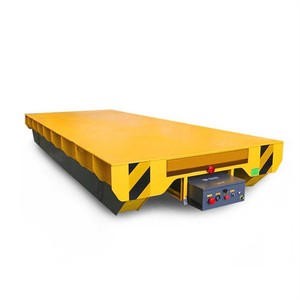
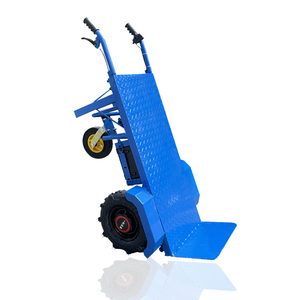
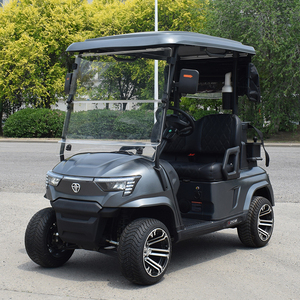
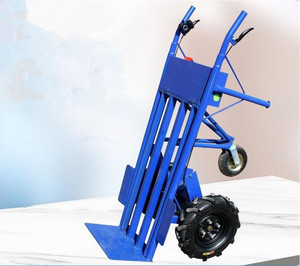
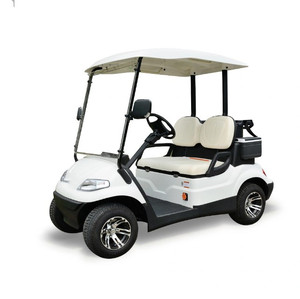
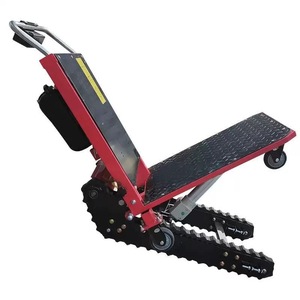
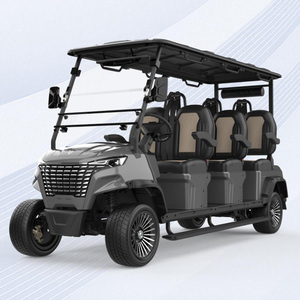
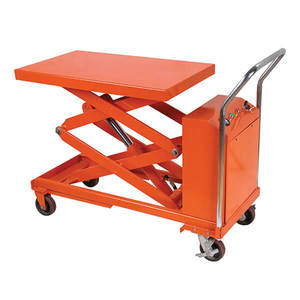
Heavy-Duty OEM Electric Cart & Transport Lineup
Integrated with standard adaptive charging platforms, CAN-bus integration, and multi-chemistry algorithm capabilities.
Engineering High-Efficiency Industrial Cart Battery Chargers
A technical executive overview of custom power electronics, thermal dynamics, dynamic charge curves, and CAN-bus system integration for commercial low-speed vehicles (LSV) and industrial automated carts.
Wide Bandgap Semiconductor Architecture (GaN/SiC)
By transitioning from traditional Silicon MOSFETs to Gallium Nitride (GaN) and Silicon Carbide (SiC) switching components, our custom OEM chargers achieve switching frequencies exceeding 500 kHz. This reduces planar transformer volumetric footprint by 40% while pushing power conversion efficiency beyond 99% under peak load conditions.
Multi-Chemistry Adaptive Firmware
Modern commercial cart fleets operate across heterogeneous battery chemistries—ranging from traditional flooded Lead-Acid and AGM/GEL to advance Lithium Iron Phosphate (LiFePO4) and Lithium Nickel Manganese Cobalt (NMC). Our proprietary micro-controllers store pre-programmed multi-stage charging curves (CC/CV/Float) tailored for zero thermal runaway risk.
Ruggedized Structural & Thermal Enclosures
Designed to thrive in severe operating environments—from coastal golf courses exposed to high salt spray humidity to extreme temperature industrial foundries. Featuring die-cast aluminum heat sinks filled with thermal conductive epoxy resin, achieving certified IP67 ingress protection and vibration tolerance meeting MIL-STD-810G standards.
When engineering low-speed electric vehicles (NEVs, utility carts, stair-climbing hand trucks, and aerial scissor lifts), the battery charger is not merely an accessory—it is the primary guardian of cell health and fleet uptime. OEM procurement teams frequently suffer from off-the-shelf chargers characterized by excessive thermal throttling, high Total Harmonic Distortion (THD), and premature component failure caused by dirty grid power spikes.
As a specialized custom OEM cart charger manufacturer, our research and engineering facilities address these operational bottlenecks directly. By implementing Active Power Factor Correction (APFC) with a power factor greater than 0.99, our chargers extract maximum usable power from standard AC wall sockets (90V–264V universal input) without tripping branch circuit breakers, stabilizing DC output voltage down to millivolt ripple precision.
OEM Engineering Specification & Platform Options
| Nominal Output | Voltage Range | Peak Output Current | Communication Bus | Ingress Rating | Primary Target Applications |
|---|---|---|---|---|---|
| 24V Platform | 18V – 32V DC | 15A / 25A / 40A | CAN-bus 2.0B / RS485 | IP66 / IP67 | Stair climbing carts, electric hand trucks, hydraulic lift platforms |
| 36V Platform | 27V – 48V DC | 20A / 30A / 50A | CANOpen / Custom UART | IP67 Sealed | Commercial utility buggies, industrial material handlers |
| 48V Platform | 36V – 65V DC | 25A / 35A / 60A | Isolated CAN 2.0B / J1939 | IP67 Aluminum Die-Cast | 2, 4, and 6-passenger golf carts, neighborhood electric vehicles (NEVs) |
| 72V High-Voltage | 54V – 98V DC | 18A / 30A / 45A | Dual CAN / IoT Telematics | IP67 Heavy Industrial | Off-road lifted buggies, high-speed passenger transports, heavy warehouse cranes |
Future Procurement Trends in Cart Charger Sourcing (2026–2032)
Navigating global supply chain shifts, regulatory efficiency mandates, and smart infrastructure integration in large-scale vehicle assembly procurement.
1. Transition to Embedded IoT Telematics & Remote Diagnostics
Procurement directors are shifting away from passive charging bricks toward smart chargers integrated with wireless connectivity (Bluetooth, Wi-Fi, 4G/5G Cellular). Modern fleet managers demand real-time visibility into State of Charge (SoC), State of Health (SoH), temperature logs, and energy consumption analytics. Future-ready OEM chargers transmit predictive maintenance flags directly to central management dashboards long before cell degradation occurs.
2. Mandates for Dynamic Bidirectional Power (V2X / V2L)
As utility golf carts and heavy transport platforms deploy larger 72V 150Ah+ lithium banks, the market is prioritizing bidirectional charger designs. Vehicle-to-Load (V2L) capability allows utility carts deployed in agriculture, resort management, or emergency municipal response to serve as mobile power hubs, operating high-draw power tools directly from the cart's traction battery via onboard charger invert paths.
3. Stricter Energy Star 3.0 & CEC Efficiency Compliance
Regulatory frameworks across North America (California Energy Commission - CEC) and Europe (EU Ecodesign Directive) now penalize low-efficiency standby power draw. Future OEM procurement contracts explicitly require standby power dissipation below 0.5W and active charge cycle efficiency over 94%. Chargers lacking active power factor correction are increasingly banned from enterprise bids.
Next-Gen Product Development Trends in OEM Charger Manufacturing
How cutting-edge power electronics engineering is reshaping continuous operating life, charge speeds, and total system weight.
The electric mobility landscape is undergoing a massive transformation. The traditional paradigm of treating charging infrastructure as an external, bulky, cast-iron component is obsolete. Modern industrial designers and vehicle manufacturing teams require chargers that seamlessly integrate into the vehicle chassis architecture. Key technological developments include:
-
Ultra-Fast 1-Hour Opportunity Charging
Industrial logistics operations cannot afford 8-hour overnight downtime window locks. Next-generation 72V chargers incorporate pulse-charge algorithms combined with real-time BMS feedback, enabling safe 1C-rate opportunity charging during shift breaks without inducing lithium plating or elevated cell thermal stress. -
Unified Powertrain Integration (Motor Controller + Charger Combos)
To optimize internal spatial layouts in compact platforms (such as stair-climbing trolleys and electric hydraulic lift tables), development teams are coalescing the AC motor controller (e.g., Navitas 600A units) and the high-efficiency charger into a unified, shared-cold-plate enclosure. This reduces cabling harness complexity, lowers EMI radiation interference, and cuts overall bill-of-materials (BOM) cost. -
Resonant LLC Soft-Switching Topology
Zero Voltage Switching (ZVS) and Zero Current Switching (ZCS) topologies are now standard in high-end OEM charger designs. By eliminating hard-switching stress on semiconductor junctions, thermal dissipation requirements drop dramatically, allowing for completely fanless, passively cooled IP67 enclosures that eliminate dust ingress failure vectors.
Frequently Asked Questions (FAQ) for OEM Sourcing Managers
Clear, definitive technical answers covering custom tooling, certification compliance, integration protocols, and order logistics.
Why Tier-1 EV Manufacturers Partner With Our Factory
Combining decades of high-voltage power conversion mastery with rigorous automated quality control infrastructure.
Precision Automated SMT & PCBA Fabrication
Our ISO9001-certified production facility utilizes high-speed automated Surface Mount Technology (SMT) lines equipped with 3D Automated Optical Inspection (AOI) and Solder Paste Inspection (SPI) systems, eliminating soldering defects and guaranteeing board-level reliability.
Full-Load Automated Aging & Burn-In Chambers
Zero defects allowed. Every single charger leaving our assembly line is subjected to a rigorous 4-hour continuous 100% full-load burn-in test inside elevated temperature chambers (45°C ± 5°C) with dynamic load cycling to stress-test thermal resistance before packaging.
Dedicated After-Sales & Rapid Spares Support
We maintain regional spare parts warehouses and dedicated field application engineer support. With long-term component supply agreements, we guarantee spare parts availability and drop-in platform continuity for a minimum of 10 years following product phase-out.
Accelerate Your Vehicle Lineup With Custom OEM Chargers
Consult directly with our senior power electronics engineering team today. We provide full technical proposals, custom circuit schematics, thermal simulations, and prototype samples for qualifying OEM assembly projects.
Contact Us