Featured Electric Carts & Specialized Vehicle Systems
Precision-engineered electric mobility platforms featuring customizable dashboards, CAN-bus instrumentation, and advanced motor controls.
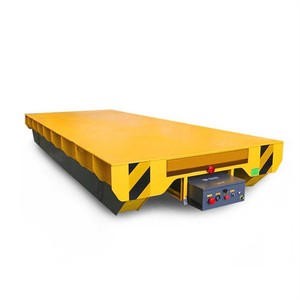
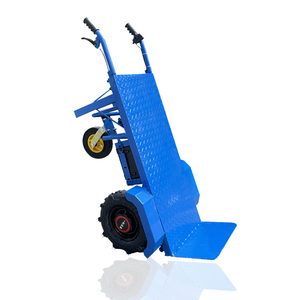
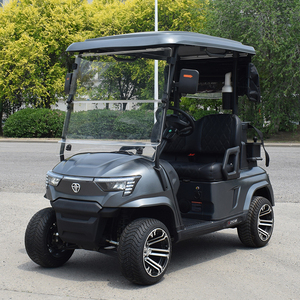
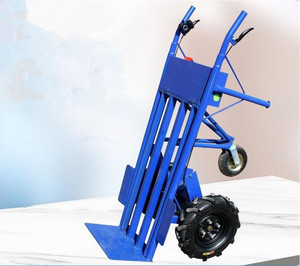
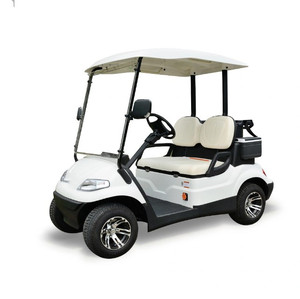
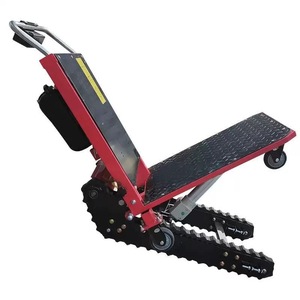
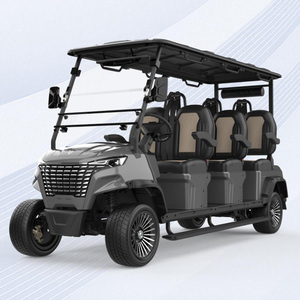
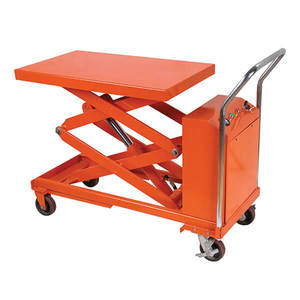
China Cart Dashboard Engineering Whitepaper: Technical Architecture & OEM/ODM Manufacturing Standards
As global demand accelerates for Neighborhood Electric Vehicles (NEVs), low-speed commercial utility vehicles (LSEVs), high-capacity electric transfer flatcars, and lifted golf carts, the instrument cluster and dashboard assembly have evolved from simple aesthetic enclosures into the central neurological node of the modern vehicle cockpit. Positioned at the intersection of human-machine interaction (HMI), CAN-bus vehicle telematics, and rugged outdoor material science, China’s tier-1 OEM dashboard manufacturers set the global benchmark for technical innovation, structural durability, and functional integration.
Information Gain Insight: Modern golf cart and electric utility vehicle dashboards are no longer passive vacuum-formed plastic covers. High-performance dashboard assemblies integrate IP67-rated TFT LCD instrumentation, automotive-grade CAN communication (J1939 / CANopen), embedded infotainment nodes, anti-UV injection-molded polymers, and high-wattage fast-charging USB/Type-C ports directly into a single unified dashboard module.
1. Advanced Polymer Composition and Environmental Resistance
Electric carts operate under extreme environmental stress—ranging from prolonged UV exposure on tropical golf courses to high-humidity marine resorts and dust-heavy industrial warehousing environments. Premier Chinese manufacturing facilities utilize automotive-grade Injection-Molded ABS (Acrylonitrile Butadiene Styrene) modified with high-impact Polycarbonate (PC) blends and specialized Anti-UV Stabilizer Additive packages (UV-grade 8+ rating).
- Thermal Stability: Operating ambient range engineered from -30°C (-22°F) up to +80°C (+176°F) without structural warping, color fading, or brittle cracking.
- Vibration & Impact Strength: Reinforced mounting boss ribs designed to withstand constant off-road surface vibration (IK08 mechanical impact rating compliance).
- Hydrophobic & Chemical Coating: Outer surfaces feature tactile soft-touch elastomeric coatings or hydrophobic grain textures resistant to sunscreen oils, cleaning solvents, and battery acid vapor exposure.
2. Electronic Instrument Cluster Integration & CAN-Bus Telematics
The centerpiece of next-generation dashboard assemblies is the digital instrument display. Leading Chinese exporters specialize in direct interface integration with popular AC motor controllers (including Navitas, Curtis, Enpower, and Zapi systems). Standard analog indicators have been systematically replaced by vibrant, sunlight-readable liquid crystal displays (LCD) and thin-film transistor (TFT) multi-color touchscreens.
| Dashboard Parameter | Legacy Analog Dashboards | Smart Digital LCD Dashboards (2026+ Standard) |
|---|---|---|
| Display Hardware | Mechanical needle gauges & LED segment meters | 7" to 10.5" Automotive-Grade IPS LCD Screen (1000+ nits brightness) |
| Protocol Compatibility | Direct point-to-point analog wiring harnesses | Isolated CAN 2.0B, CANopen, J1939 & RS485 Communication Nodes |
| Ingress Protection | IP54 (Basic splash resistance, prone to fogging) | IP67 Full Hermetic Enclosure (Optically Bonded Anti-Glare Glass) |
| Real-Time Telematics | Basic battery voltage readout | Precise LiFePO4 SoC %, Cell Voltages, Motor RPM, Speed, Fault Diagnostic Codes |
| Infotainment & Control | Separate key switch & mechanical switches | Bluetooth 5.2 Audio, Keyless NFC / Push-Button Start, Integrated Lighting Controls |
Future Procurement Trends in Utility & Electric Cart Dashboards (2026–2030)
Navigating global supply chain shifts requires international buyers, original equipment manufacturers (OEMs), and aftermarket brands to align their procurement strategies with technical advancements. As golf cart manufacturers transition rapidly from legacy 48V lead-acid powertrains to high-voltage 72V 150Ah Lithium-Ion platforms, dashboard specifications must evolve synchronously.
Trend 1: Modular Plug-and-Play Dashboard Architecture
Global distributors are increasingly seeking modular dashboard tooling platforms. Rather than tooling a completely unique injection mold for every vehicle variant (which requires substantial capital expenditure and 60+ days of tooling lead time), top Chinese factories offer universal base dashboard housings with interchangeable modular insert plates. This allows OEMs to fit different display sizes (e.g., standard digital speedometer vs. 10.5-inch touch screen), customized switch cutouts, lockable glove compartments, or wireless smartphone charging cradles onto a single underlying vehicle frame.
Trend 2: Seamless IoT Telematics & Fleet Management Hardware
Commercial fleet operators—such as multi-vehicle rental outfits, luxury golf resorts, airport baggage transfer terminals, and industrial logistics plants—demand real-time vehicle intelligence. Modern dashboard assemblies exported from China now incorporate integrated IoT gateway sockets. These accommodate embedded GPS tracking modules, remote Geofencing interlocks, remote battery health monitoring, and over-the-air (OTA) firmware update nodes directly within the dashboard enclosure.
Cost Efficiency
Standardized modular inserts reduce tooling amortization costs by up to 65% for custom B2B cart runs.
High-Voltage Integration
Engineered to handle 48V, 72V, and up to 96V DC step-down power distribution directly across the busbar.
Automotive Safety Standards
Complies with FMVSS 500 Low-Speed Vehicle requirements, including integrated windscreen defrost ducting & horn cutouts.
Trend 3: Ergonomic Luxury & Consumer Cockpit Experience
The boundary between low-speed neighborhood vehicles and mainstream passenger automobiles is blurring. Consumer expectations for luxury lifted 4-seater and 6-seater golf buggies now match modern SUV interiors. Procurement trends reveal massive surges in orders for dashboards featuring:
- Ambient RGB LED Accent Lighting: Integrated light-guides controllable via dashboard touch interfaces.
- Integrated Marine-Grade Audio Systems: Waterproof Bluetooth stereo units, pre-wired horn switches, and dual tweeter speaker grilles molded into the upper cowl.
- Double Cup Holders & Deep Lockable Storage: Injection-molded dual beverage holders lined with non-slip silicone pads and key-locked passenger gloveboxes.
Industry & Technology Development: From Basic Shells to Smart Automotive Cockpits
To evaluate China's dominant position as the primary exporter of electric cart dashboard components, one must examine the technological trajectory of industrial vehicle manufacturing over the past three decades.
Phase I: The Vacuum-Forming Era (1995 – 2005)
During the early expansion of electric golf carts and simple industrial flatbed trolleys, dashboards were treated purely as cosmetic covers to hide raw steering columns and basic wiring harnesses. Manufactured primarily via thin-gauge thermal vacuum forming, these early units suffered from low structural strength, yellowing under sunshine, and poor dimensional tolerance repeatability. Functional features were limited to a basic key switch hole and a mechanical forward/reverse rocker switch.
Phase II: Precision Injection Molding & Mold Tooling (2006 – 2018)
As Chinese manufacturers invested heavily in massive 1,500-ton to 3,200-ton high-precision injection molding presses, dashboard production transitioned entirely to heavy-wall engineering plastics. The introduction of 3D CAD modeling and Computer-Aided Engineering (CAE) mold flow analysis eliminated sink marks and allowed structural mounting points to be cast directly into the inner dashboard shell. This period established standardized multi-gauge ports, cup holders, and sealed glove compartments.
Phase III: Smart Connected Cockpit Assemblies (2019 – Present)
Today’s landscape represents a total convergence of automotive electronics, smart software, and multi-material physical design. Modern Chinese dashboard factories do not merely mold plastic; they operate certified SMT (Surface Mount Technology) cleanrooms for PCB assembly, optical bonding clean benches for display modules, and automated wire-harness crimping lines. Today's dashboard assemblies ship to international vehicle assembly plants as 100% pre-tested, plug-and-play cockpit modules ready for instant drop-in installation onto the vehicle chassis frame.
Comprehensive B2B Procurement FAQ for Global Buyers & OEM Engineers
Below are detailed technical answers addressing the most crucial questions raised by purchasing managers, OEM vehicle designers, and global distributors sourcing cart dashboard assemblies from China.
For standard golf carts and neighborhood electric vehicles (NEVs), an ABS+PC blend with UV-stabilizer additives is optimal due to its ideal balance of surface finish, color fastness, and impact resistance. For severe industrial environments—such as heavy electric transfer carts, hydraulic lift flatcars, or stair-climbing material pickers—high-density Polypropylene (PP) with 15-20% talc or glass-fiber reinforcement is recommended to maximize flexural modulus, drop impact strength, and chemical resistance to industrial lubricants.
Tier-1 factories maintain extensive software protocol libraries for leading controller brands including Navitas, Curtis, Zapi, Kelly, and Enpower. During the engineering review stage, buyers supply their controller model and CAN baud rate (typically 250kbps or 500kbps) along with the specific CAN-matrix file (.DBC format). The factory’s embedded software engineers program the dashboard MCU (Microcontroller Unit) to decode speed, RPM, battery State of Charge (SoC), thermal alerts, and fault error codes natively without requiring external conversion boxes.
For custom dashboard designs requiring exclusive steel mold tooling (P20 or 718H mold steel), T1 sample production typically requires 35 to 45 calendar days following 3D CAD approval and mold-flow simulation. Standard minimum order quantities (MOQ) for custom toolings range from 500 to 1,000 sets, whereas existing stock mold dashboards with customized color compounding, logo branding, or custom switch cutouts carry low MOQs starting at 50 to 100 units.
All outdoor dashboard displays undergo rigorous IP67 hermetic sealing validation. This includes full dust-chamber exposure (24 hours under vacuum differential) and water immersion testing at a depth of 1 meter for 30 minutes. Furthermore, anti-fogging thermal cycle tests (-40°C to +85°C chamber transitions) ensure the display screen lens remains clear of internal condensation under rapid temperature drops.
Yes. Supplying fully populated, sub-assembled dashboard modules is a core competitive advantage of premier Chinese exporters. Dashboards can be delivered pre-wired with automotive-grade flame-retardant wiring harnesses (AVSS / FLRY wires), waterproof Deutsch or Amphenol connectors, integrated fuse block modules, ignition key switches, indicator rockers, and USB charging sockets—reducing main assembly line labor by up to 25 minutes per vehicle.
Export-ready dashboard electronic systems undergo formal laboratory testing to achieve CE, FCC, RoHS, and REACH certifications. For electric carts registered for public road use (DOT / EEC low-speed vehicle standards), instrument clusters meet E-Mark (ECE R10) electromagnetic compatibility requirements, preventing high-frequency controller noise or power electronics interference from causing screen flickering or false sensor readings.
Manufacturer Capabilities & Enterprise Competitive Advantage
Partnering directly with a premier Chinese cart dashboard manufacturer and exporter provides global OEMs and distributors with end-to-end technical support, stringent quality assurance, and unrivaled manufacturing scalability. Our state-of-the-art production complex unites tool design, plastic injection, surface finishing, and electronic sub-assembly under one single rigorous quality management system certified to IATF 16949 automotive standards.
1. Complete In-House Engineering & Tooling Workshop
From initial hand sketch and 3D ergonomics modeling to Mold-Flow Analysis (MFA) and CNC mold machining, our engineering team manages the complete product lifecycle. Utilizing high-speed 5-axis CNC machining centers, mirror EDM machines, and precision coordinate measuring machines (CMM), we guarantee precise dimensional tolerances within ±0.1mm, ensuring seamless alignment with windshield frames and steering column covers.
2. Automated Electronic SMT & Optical Assembly Cleanrooms
Electronic display modules and cluster controllers are manufactured in Class 100,000 dust-free cleanroom environments. Automated Surface Mount Technology (SMT) lines feature high-speed Yamaha pick-and-place machinery, 3D Automated Optical Inspection (AOI), and conformal coating spray robots that seal PCB assemblies against moisture, dust, and corrosive sulfur gases.
3. Rigorous Quality Testing & Global Logistics Execution
Every completed dashboard batch undergoes exhaustive quality verification before ocean container loading:
- Vibration Testing: Multi-axis sweep vibration testing simulating 100,000 kilometers of rough off-road terrain.
- Thermal Shock & UV Chamber: Accelerated 1,000-hour UV weathering exposure and rapid thermal shock cycles.
- 100% End-of-Line Electrical Audit: Computerized automated testing fixtures inspect every switch contact, LCD pixel, CAN message frame, and USB voltage output before final protective film application and export boxing.
Transform Your Vehicle Cockpit With China's Leading Dashboard Experts
Whether you require custom OEM dashboard tooling, upgraded CAN-bus digital displays, or low-cost high-volume utility cart assemblies, our engineering team is standing by to bring your technical specifications to life.
Inquire Now