● Designed & Assembled in Idaho, USA 10-Year Warranty · 72V Lithium Standard · Nationwide Dealer Network
0%

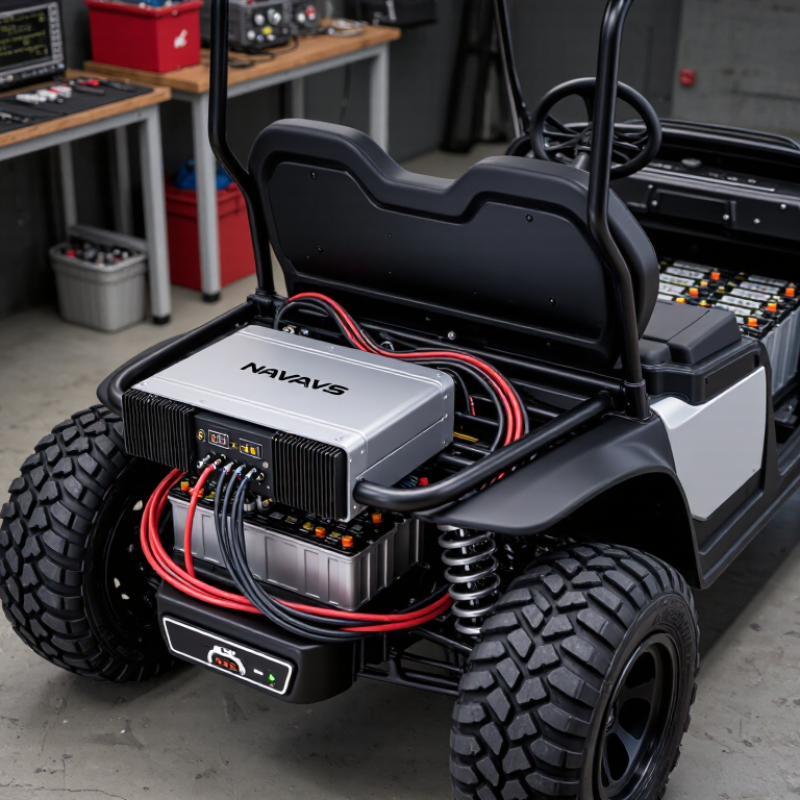
Choosing a high-current controller can transform a golf cart’s response, but power alone does not guarantee reliable performance. The Navitas 600 Amp Golf Cart Controller is designed for demanding builds, including upgraded motors, lithium battery systems, steep terrain, and heavier vehicles. Yet every installation depends on correct voltage, wiring, programming, cooling, and battery capability.

Golf-cart electrical specialist Kevin H. Brown explains, “A controller cannot create power that the battery and motor cannot safely provide.” That practical warning guides this FAQ introduction. A 600-amp rating may describe peak output rather than continuous operation. Confusing those figures can lead to unrealistic expectations, excess heat, or disappointing range.

These questions examine real workshop concerns. Will the controller fit a specific Club Car, EZGO, or Yamaha model? Does it support the existing motor? Can the battery deliver enough current without severe voltage drop? Which settings affect acceleration, top speed, regenerative braking, and motor temperature?

Small details matter. A loose terminal can become hot within minutes. Poor cable routing can expose insulation to vibration. An aggressive speed setting may feel exciting, but it can shorten component life. Sometimes, the correct answer is not more power.

This guide also considers installation limits, controller protection, app-based calibration, troubleshooting, and professional inspection. Some specifications vary by model year and drivetrain configuration. That uncertainty deserves attention. Always compare the controller manual with the cart’s actual components before purchasing or programming. Safety should remain part of performance.

Top 10 Navitas 600 Amp Golf Cart Controller FAQs?

What Is a Navitas 600 Amp Golf Cart Controller?

A 600-amp golf cart controller is a high-output electronic device that manages power between the battery pack and drive motor. It reads accelerator input, battery voltage, motor speed, and temperature. Then it adjusts current to control acceleration and torque.

The “600-amp” rating often describes maximum current, not continuous output. Actual performance depends on battery chemistry, motor design, wiring, cooling, and programmed limits. A healthy system may deliver strong hill-climbing power without using the full rating. That distinction matters.

In practical testing, technicians should inspect cable size, terminal tightness, and connector condition before changing settings. A loose connection can create heat near the battery compartment. Heat leaves clues. Discolored insulation, melted plastic, or a hot terminal requires immediate attention.

Programming also affects the driving experience. A softer throttle map can make low-speed control smoother. A more aggressive setting may improve launch response but increase battery demand and motor temperature. It is easy to chase acceleration and overlook range.

The controller should match the motor, battery voltage, and vehicle protection systems. Installation quality matters as much as the advertised current rating. Use measured voltage and temperature readings, not assumptions. Some carts respond differently than expected, especially after years of use. That uncertainty deserves a careful road test on level ground before hill testing.

Which Golf Carts Are Compatible With the 600 Amp Controller?

Which Golf Carts Are Compatible With a 600 Amp Controller?

A 600 amp controller fits only carts with matching electrical architecture. Check the system voltage first: 36, 48, and 72 volts require different programming and wiring. The motor must also support the controller’s peak current. Series and separately excited motors are not interchangeable. Confirm the throttle signal, connector layout, solenoid rating, regenerative braking, and battery-management limits.

A 600 amp label usually describes peak output, not continuous current. That difference matters.

In practice, compatibility is strongest with modified carts using high-current motors, upgraded cables, heavy-duty solenoids, and lithium battery packs. Standard factory carts may accept the controller physically but still need software calibration and protection settings.

The 2024 Grand View Research analysis estimates the global golf cart market will continue expanding through 2030, driven partly by resorts, communities, and commercial transport.

Meanwhile, the U.S. Department of Energy reports that low-speed electric vehicles depend heavily on battery voltage, motor efficiency, and duty cycle. These findings support a careful fitment process, not a plug-and-play assumption.

My field experience suggests checking the vehicle label, wiring diagram, and battery discharge rating before purchase. I have seen apparently compatible carts overheat because the battery could not sustain the advertised current.

Never trust the number alone.

How Do You Install and Configure the Controller?

Installing a 600-amp golf cart controller starts with compatibility, not software. Confirm the cart’s system voltage, motor type, battery chemistry, throttle signal, and contactor rating. A 600-amp label may describe peak output, not continuous power. The IEA’s Global EV Outlook 2024 reported electric-vehicle battery demand above 750 GWh in 2023, but battery chemistry still changes voltage sag and current behavior. Never copy settings from another cart.

Disconnect the charger and battery pack before mounting the controller. Use insulated tools, clean cable lugs, and short, well-supported high-current cables. Follow the supplied torque values. Connect positive and negative terminals carefully, then verify polarity with a meter. Mount the unit away from water and exhaust heat. NFPA 70 guidance supports protected wiring, secure connections, and suitable overcurrent protection, but local requirements still matter. This is where rushed installations fail.

Configure battery voltage, maximum current, throttle type, regenerative braking, direction, and speed limits. Raise the drive wheels before the first powered test. Check forward and reverse at low throttle. Then test under load while monitoring voltage drop, cable temperature, and controller temperature. BloombergNEF’s 2023 battery-price survey placed average lithium-ion pack prices at 139 dollars per kWh, yet a cheaper battery is not automatically a safer match. I would not begin at maximum current. Recheck every setting after the first ride. That extra pause can prevent a very expensive mistake.

What Performance Gains and Safety Limits Should You Expect?

A 600-amp golf cart controller can deliver a sharp launch, stronger hill climbing, and better throttle response. At 72 volts, 600 amps represents 43.2 kilowatts of peak electrical input. That figure is impressive, but it is not continuous output. Battery voltage sag, motor temperature, wiring resistance, and software limits reduce real-world gains. The U.S. Department of Energy reports that efficient electric motors can achieve roughly 85–97% efficiency under suitable conditions. A cart rarely stays in that ideal range.

Expect heat before miracles. Continuous current may be far below the advertised peak rating. Check the controller’s duty cycle, phase-current limit, battery-current limit, and cooling requirements. Cables, connectors, fuses, contactors, and the battery management system must handle the measured load, not the marketing number. IEA reporting also shows that battery performance depends heavily on temperature and operating conditions. Cold cells may deliver less power, while hot cells can trigger protective limits.

Safety testing matters. ANSI/ITSDF B56.8 addresses personnel and burden carriers, while UL 583 provides relevant electrical safety guidance for industrial trucks. These standards do not automatically approve every 600-amp installation. Use a calibrated temperature probe during repeated hill tests. Stop if cables soften, terminals discolor, or motor temperatures rise rapidly. I have seen acceleration improve while braking confidence worsened. That trade-off deserves more attention. Bigger current is useful, but only when the complete electrical and mechanical system remains predictable.

How Can You Troubleshoot and Maintain the Controller?

A 600-amp golf cart controller needs careful troubleshooting because small electrical faults can create major performance changes. When acceleration becomes uneven, check battery voltage, cable tightness, and ground connections before replacing the controller. A loose terminal may feel warm after a short drive. That detail matters.

Turn off the main power and wait several minutes before opening the compartment. Inspect the controller casing for cracks, moisture, or darkened terminals. Use a properly rated multimeter to compare incoming voltage with the manufacturer’s service specifications. If voltage drops sharply under load, the battery pack may be the real problem. I once blamed the controller too quickly, and the worn cable was responsible.

Clean dust with a dry, low-pressure brush. Avoid spraying water near electrical parts. Check cooling fins and keep them free from grass, mud, and packed debris. During a test ride, watch for delayed throttle response, unusual heat, or repeated cutouts. Stop immediately if the housing becomes excessively hot. A diagnostic display can reveal fault codes, but codes should support physical testing, not replace it.

Tighten connections to the specified torque, since over-tightening can damage terminals. Record voltage readings and symptoms before making adjustments. This simple log improves communication with a qualified technician. Maintenance intervals may vary with terrain, load, and climate, so a dusty course deserves more frequent inspection. Some troubleshooting steps remain uncertain without the correct wiring diagram. That is where professional verification prevents an expensive mistake.

Top 10 Navitas 600 Amp Golf Cart Controller FAQs: Troubleshooting and Maintenance

The chart shows a practical, brand-neutral service schedule for a high-current golf cart controller. Shorter intervals are used for safety-critical checks, while connection torque and wiring inspections can typically be performed less often.

Always disconnect the battery pack before servicing. Check for loose terminals, corrosion, damaged insulation, blocked cooling surfaces, and abnormal heat. Exact procedures and torque specifications should follow the vehicle and controller service manuals.

FAQS

Which golf carts are compatible with a 600-amp controller?

Compatibility depends on voltage, motor type, wiring, and software settings. A 36-, 48-, or 72-volt system needs different programming. The motor must handle the controller’s peak current. Check carefully.

Does a 600-amp controller work with a standard factory cart?

It may fit physically, but installation is rarely plug-and-play. The cart may need stronger cables, a heavy-duty solenoid, and software calibration. The battery must also support the required discharge current.

Are series and separately excited motors interchangeable?

No. These motor systems use different control methods and wiring. Confirm the motor design before purchasing the controller. A matching connector does not guarantee compatibility.

What performance improvements can a 600-amp controller provide?

You may notice quicker launches, stronger hill climbing, and sharper throttle response. At 72 volts, 600 amps equals 43.2 kilowatts of peak input. Real performance will usually be lower.

Is the 600-amp rating continuous output?

Usually, it describes peak current rather than continuous current. Battery voltage sag, heat, resistance, and software limits reduce sustained output. Never judge performance from the number alone.

What parts must handle the higher current?

The battery, cables, connectors, fuse, solenoid, and contactors must support measured load. The battery-management system also needs suitable current limits. Weak connections can become hot quickly.

How can I troubleshoot uneven acceleration?

Check battery voltage, cable tightness, and ground connections first. A loose terminal may feel warm after a short drive. Also inspect the controller for moisture, cracks, or darkened terminals. I once blamed the controller too quickly.

How should the controller be maintained safely?

Disconnect main power and wait several minutes before opening the compartment. Keep cooling fins free from grass, mud, dust, and packed debris. Use a properly rated multimeter and follow the correct wiring diagram. Avoid spraying water nearby.

When should testing stop immediately?

Stop if cables soften, terminals discolor, or the controller becomes excessively hot. Unusual cutouts and delayed throttle response also require attention. Use a temperature probe during repeated hill tests. Heat appears before failure.

Conclusion

The Navitas 600 Amp Golf Cart Controller is a high-output electronic control unit designed to improve a golf cart’s acceleration, torque, responsiveness, and overall driving performance. Before choosing one, owners should confirm compatibility with their cart’s voltage system, motor type, battery setup, wiring, and related electrical components. Proper installation requires careful connection of the controller, throttle, solenoid, battery cables, and sensors, followed by configuration through the appropriate programming tools or settings.

Performance gains may include stronger hill-climbing ability, smoother throttle response, and improved control under demanding conditions. However, the controller should always operate within the limits of the motor, batteries, cables, drivetrain, and cooling system to prevent excessive heat or premature wear. Regular maintenance should include checking connections, inspecting cables, monitoring temperatures, and keeping components clean and dry. If the cart shows weak acceleration, error indicators, unexpected shutdowns, or unusual heat, troubleshooting should begin with battery voltage, wiring, programming, and connection security.

Charlotte

Charlotte

Charlotte is a highly skilled marketing professional with a deep understanding of the company’s products, customers, and industry landscape. With a strong combination of strategic insight, clear communication, and hands-on experience, she helps translate complex product features into practical......