Choosing China’s top Navitas 7.5kW Motor Golf Cart manufacturer requires more than comparing online prices. A reliable supplier should demonstrate practical engineering experience, stable production, and clear technical documentation. The Navitas 7.5kW Motor Golf Cart must match the vehicle’s battery voltage, controller settings, axle ratio, and expected terrain. A motor that performs well on a flat test track may struggle on steep paths or loose ground.
Look for evidence from real installations. Ask for motor efficiency data, continuous power ratings, thermal test results, and controller compatibility details. Photos of machining, winding, assembly, and final inspection can reveal useful information. Factory visits are better. So are independent reports. A responsible manufacturer should explain warranty coverage, replacement procedures, and quality-control checkpoints without vague promises. It should also support safe installation and provide traceable product specifications for international buyers.
Still, no supplier is perfect. Catalog figures may not reflect daily operating conditions, especially under heavy loads, high temperatures, or repeated hill climbs. That matters. Buyers should request samples, verify serial numbers, and test acceleration, noise, heat, and energy consumption before placing a large order. Communication quality is another practical test; delayed answers can become expensive after shipment. This article examines manufacturers through experience, technical capability, production reliability, customer support, and transparent business practices. The goal is not to praise the loudest factory. It is to identify a dependable partner for golf carts, utility vehicles, and customized low-speed mobility applications. Some conclusions may require further verification. That is the honest part.
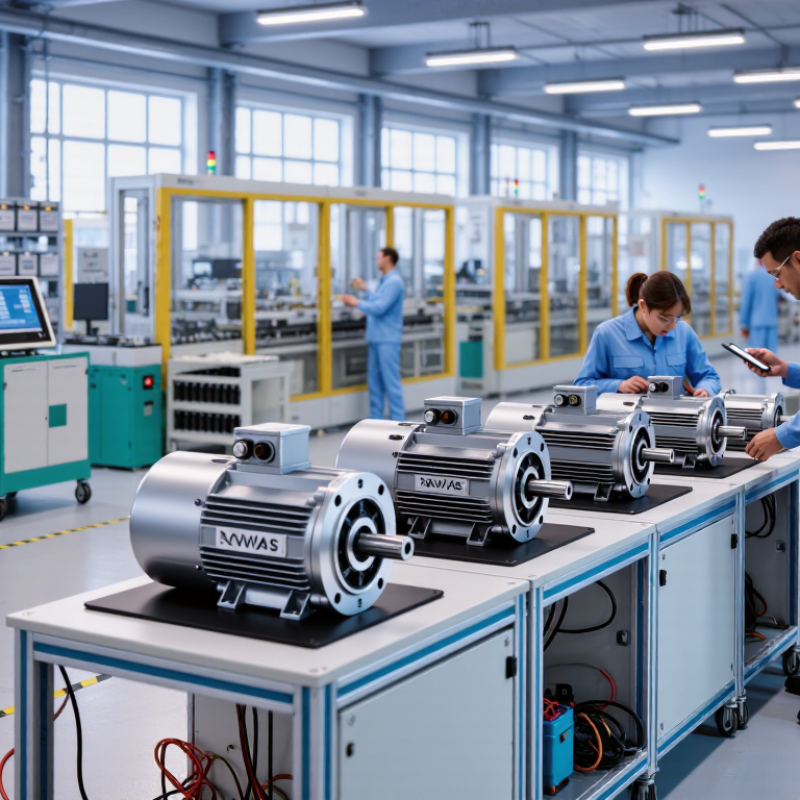
A 7.5kW motor is an electric drive unit rated to deliver 7.5 kilowatts of mechanical power. It converts battery energy into wheel movement through a controller and drivetrain. In a golf cart, this output can support stronger launches, steadier climbs, and useful speed on private courses or utility routes. However, the rating is not a promise of constant performance. Battery voltage, current limits, gear ratio, tire size, and vehicle weight all matter.
The motor works as part of a complete system. A suitable controller regulates current and responds to throttle input. A healthy battery must supply enough power without excessive voltage drop. During practical inspections, technicians should check cable temperature, terminal tightness, and motor housing heat after hill tests. Short tests can mislead. A cart may feel powerful for five minutes, then lose performance when heat builds.
Installation also requires careful matching. Confirm the mounting pattern, shaft dimensions, rotation direction, and controller compatibility before purchase. Regenerative braking settings deserve attention, especially on slopes. They can improve control, but incorrect settings may create harsh braking or extra heat. The 7.5kW figure is useful for comparison, not a complete specification. Real-world results vary, and that limitation should remain visible when selecting a motor.
A 7.5 kW electric motor can give a golf cart stronger hill-climbing ability and smoother acceleration. Rated power matters, but peak torque often decides performance on grass, ramps, and uneven paths. A 48 V or 72 V electrical system is common for this output. Higher voltage can reduce current demand and wiring heat. However, the battery, controller, and motor must be matched carefully. More power alone does not guarantee better driving.
Key specifications should include continuous power, peak torque, motor efficiency, operating voltage, controller capacity, and thermal protection. A practical system may support speeds around 25–35 km/h, depending on programming, load, and terrain. Regenerative braking can help control downhill movement and recover limited energy. Battery capacity also deserves close attention. An 80–120 Ah lithium battery may provide useful daily range, but passengers, tire pressure, temperature, and slopes change the result. Real routes are messier.
A reliable manufacturer should provide dynamometer reports, temperature test records, wiring diagrams, and clear maintenance guidance. Ask how the motor performs after repeated hill climbs, not only during a short showroom test. Sealed connectors and suitable dust protection improve durability in wet grass and dusty paths. Warranty terms should identify coverage for the motor, controller, battery, and charger separately. Some specifications look impressive on paper. They still need independent verification.
Chinese manufacturers build 7.5 kW golf-cart motors around three priorities: torque, heat control, and repeatable assembly. The U.S. Department of Energy’s Motor Systems Market Assessment estimates that motor-driven systems consume about 25% of U.S. electricity. This explains the focus on efficient windings, low-resistance copper, and carefully balanced rotors.
Production usually begins with CNC-machined housings and laminated electrical steel. Engineers test air gaps before pressing the stator into place. Automated winding machines improve consistency, but manual inspection still catches loose wires and uneven varnish. Many factories use load benches, thermal cameras, vibration meters, and end-of-line software. A typical test records starting current, continuous temperature, noise, and torque under simulated slopes.
The International Energy Agency reported that global electric car sales exceeded 17 million in 2024. Golf-cart manufacturers are smaller, yet they face the same pressure for efficient electric drive systems. Chinese suppliers often adapt automotive quality methods, including traceable components and batch-level testing. ISO 9001 certification helps, but it does not guarantee perfect field performance. Dust, steep paths, and repeated stop-start use remain difficult variables. One weakness is real-world validation. Some motors pass factory tests but receive limited long-term testing on rough courses. Buyers should request test curves, waterproofing results, controller compatibility, and warranty-failure data before approving production.
This chart shows the theoretical constant-power relationship between speed and torque for a 7.5 kW golf cart traction motor. Torque is calculated using T = 9550 × P ÷ n, where T is torque in N·m, P is power in kW, and n is rotational speed in rpm. Actual motor performance varies with voltage, controller settings, efficiency, cooling, and drivetrain design.
How to Evaluate a Top Chinese 7.5kW Motor Manufacturer
A 7.5kW golf cart motor needs more than a convincing catalogue. Check rated torque, peak torque, voltage range, cooling design, and controller compatibility. The U.S. Department of Energy reports that efficient electric motors commonly reach 85–95% efficiency under suitable operating conditions. Ask for test curves, not rounded claims. A reliable manufacturer should provide torque-speed charts, thermal test records, and sample inspection data.
Production consistency matters equally. Review ISO 9001 certification, incoming-material controls, winding records, and final-load testing. The International Energy Agency reported nearly 14 million electric car sales worldwide in 2023, representing about 18% of new car sales. This growth increases demand for dependable electric drive components, but golf-cart motors face different loads. Repeated starts, slopes, wet grass, and low-speed heat can expose weak designs.
Request at least one complete sample unit. Test it on a loaded cart, not only on a bench. Measure current, temperature, acceleration, braking response, and noise after repeated hill climbs. A small detail matters: ask how replacement parts are identified. My early evaluation checklists focused too heavily on efficiency figures. That was incomplete. Service response, documentation quality, and warranty evidence often reveal more about long-term reliability. Independent laboratory reports are stronger than factory photographs. Prices can also mislead. A cheaper motor may require a better controller, heavier cables, or earlier maintenance.
| Evaluation Dimension | Recommended Benchmark for a 7.5 kW Golf Cart Motor | Why It Matters | Verification Method | Suggested Weight |
|---|---|---|---|---|
| Rated Output Power | 7.5 kW continuous or rated output, with the test conditions clearly stated. | Prevents a supplier from presenting short-term peak power as continuous motor capacity. | Review the nameplate, performance curve, duty rating, test report, and thermal test conditions. | 15% |
| System Voltage Compatibility | Confirm the required nominal battery voltage, commonly 48 V, 72 V, or another vehicle-specific voltage. | The controller, wiring, battery pack, insulation system, and motor must operate as one matched system. | Check the voltage range, maximum current, controller requirements, and wiring recommendations. | 12% |
| Current Requirement | Approximate ideal electrical current at rated power: 156 A at 48 V, 104 A at 72 V, or 78 A at 96 V, before efficiency and losses. | Higher current increases demands on the controller, cables, connectors, fuses, and battery pack. | Compare the motor efficiency map with the controller's continuous and peak current ratings. | 10% |
| Torque and Speed Curve | Require continuous torque, peak torque, base speed, maximum speed, and torque-speed curves; at 3,000 rpm, 7.5 kW corresponds to approximately 23.9 N·m. | Golf carts require strong low-speed launch performance, hill-climbing ability, and controlled high-speed operation. | Request dynamometer data under the intended voltage, cooling, load, and temperature conditions. | 15% |
| Efficiency and Thermal Performance | Require an efficiency map and temperature-rise data at continuous rated load; the supplier should state the cooling method and duty cycle. | Lower losses improve driving range and reduce overheating during repeated starts, slopes, and heavy loads. | Conduct a loaded endurance test and record winding, housing, bearing, and controller temperatures. | 12% |
| Mechanical Fit and Installation | Confirm mounting pattern, shaft diameter, shaft length, keyway, rotation direction, flange dimensions, mass, and allowable misalignment. | A motor with the correct power rating may still require costly vehicle-frame or drivetrain modifications. | Approve a dimensioned drawing and inspect a production sample before bulk purchasing. | 10% |
| Environmental Protection | Select an enclosure rating suitable for the vehicle environment, with the claimed ingress rating supported by a test report. | Golf carts may encounter rain, dust, mud, wash-down water, vibration, and road debris. | Verify the stated IP test basis, connector sealing, cable glands, corrosion protection, and drain design. | 8% |
| Quality Management | Prefer a documented quality management system, traceable inspection records, incoming-material checks, and end-of-line testing. | Consistent production quality is more important than a single successful prototype. | Audit certificates, sample inspection records, calibration records, corrective-action reports, and process controls. | 8% |
| Testing and Documentation | Require datasheets, drawings, wiring diagrams, operating limits, test procedures, inspection reports, and maintenance instructions. | Complete documentation reduces integration errors and speeds up troubleshooting. | Use a document checklist and require controlled revisions for every approved specification. | 5% |
| Supply Capability | Evaluate production capacity, lead time, minimum order quantity, spare-parts availability, packaging, and export experience. | A technically suitable motor is not commercially suitable if replenishment is unreliable. | Request a production schedule, capacity statement, sample lead time, and written after-sales process. | 3% |
| Warranty and Total Cost | Compare warranty scope, exclusions, service response, packaging, freight, spare parts, and failure-replacement procedures. | The lowest purchase price may create higher costs through installation changes, downtime, or premature failure. | Obtain a written quotation and warranty document with measurable acceptance criteria. | 2% |
A 7.5kW motor suits larger golf carts, resort shuttles, utility vehicles, and light-duty maintenance carts. It can provide stronger hill performance and steadier acceleration than smaller motors. Real performance depends on vehicle weight, battery voltage, controller settings, tire size, and road conditions. A heavy cart may still feel slow on steep terrain.
Compatibility requires careful checking. Confirm the motor voltage, mounting pattern, shaft size, rotation direction, controller rating, and wiring layout. Some motors fit common drivetrains, but “universal” often needs verification. Ask the manufacturer for dimensional drawings, test data, efficiency curves, and thermal limits. I would also request sample production records, warranty terms, and replacement-part availability. A low purchase price can become expensive when technical support is weak.
Tips: Match the motor with a suitable controller and battery system. Test loaded acceleration, climbing ability, motor temperature, and braking performance. Do not judge quality from appearance alone. Inspect insulation, bearings, connectors, and sealing details. Ask whether the motor was tested under realistic load conditions. If possible, order one sample before a larger shipment. This extra step takes time, but it can reveal vibration, noise, or mounting problems early. Supplier claims may be accurate, yet independent testing remains worthwhile.
It can provide stronger hill climbing and smoother acceleration. Torque matters on ramps, grass, and uneven paths. More power alone is not enough.
Common systems use 48 V or 72 V. Higher voltage can reduce current and wiring heat. The battery, controller, and motor must match.
Check continuous power, peak torque, efficiency, voltage range, controller capacity, and thermal protection. Request torque-speed charts and temperature records.
Some systems reach about 25–35 km/h. Actual speed depends on programming, load, tires, and terrain. An 80–120 Ah battery may support useful daily travel, but routes vary.
Test a complete sample on a loaded cart. Measure current, temperature, acceleration, braking response, vibration, and noise after repeated hill climbs. A bench test is not enough.
Request production records, inspection data, wiring diagrams, and independent test reports. Review material controls and final-load testing. Paper claims can still mislead.
Confirm voltage, mounting pattern, shaft size, rotation direction, controller rating, and wiring layout. “Universal” may not fit every drivetrain. Measure twice.
Ask about sealed connectors, dust protection, cooling, replacement parts, and separate warranty coverage. Weak technical support can make a cheap motor expensive. I once focused too much on efficiency. That was incomplete.
A Navitas 7.5kW Motor Golf Cart system is designed to provide strong acceleration, efficient hill climbing, and reliable performance for electric golf carts and other low-speed vehicles. Its key features may include high torque output, efficient energy use, responsive speed control, durable construction, and compatibility with suitable battery, controller, and drivetrain configurations. The correct motor selection should match the vehicle’s weight, tire size, operating terrain, and intended travel speed.
Leading Chinese manufacturers typically combine precision machining, controlled assembly, performance testing, and quality inspections to produce dependable 7.5kW motor systems. When evaluating a supplier, buyers should consider manufacturing experience, material quality, testing capabilities, customization support, production consistency, warranty terms, and communication efficiency. Compatibility is equally important, including mounting dimensions, voltage requirements, controller matching, wiring, and installation support. Careful comparison of technical specifications, sample performance, certifications, delivery capacity, and after-sales service can help buyers choose a reliable solution for commercial, recreational, and utility golf cart applications.