Choosing a 6 Passenger Electric Golf Cart is no longer only about carrying more people. Buyers now expect comfort, dependable range, safe handling, and sensible operating costs.
Mark Wagner, a former Club Car president and golf-cart industry veteran, has offered a practical buying principle: “The best vehicle is the one that fits the customer’s real routine.” That idea matters here. A cart used around a private community faces different demands than one carrying guests across a large property.
Our Top 6 Passenger Electric Golf Carts to Buy in 2026 guide examines those differences closely. Each model deserves attention beyond its advertised seating capacity. We consider battery chemistry, charging time, payload limits, turning radius, suspension quality, braking response, and warranty support. These details become obvious on uneven paths, steep driveways, or crowded resort lanes.
Small details matter.
A 48-volt system may suit lighter daily travel, while newer lithium-powered models can reduce charging weight and maintenance. Still, published range figures often assume smooth surfaces, moderate loads, and favorable temperatures. Real use can be less generous. That is worth remembering.
We also look at weather protection, step-in height, seat cushioning, storage space, and visibility for every passenger. Some carts appear spacious but feel cramped when six adults board with bags. Others ride quietly yet compromise on climbing ability.
This guide is not a promise that one cart fits everyone. It is a practical comparison for homeowners, resorts, communities, and property managers seeking a safer, more comfortable electric transport option in 2026.
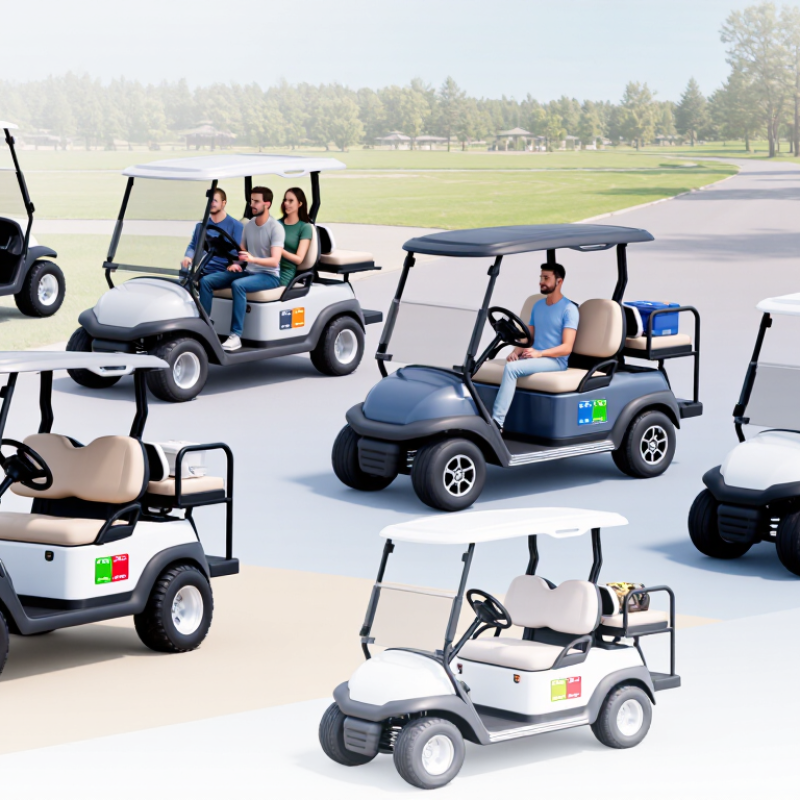
What Defines a Passenger Electric Golf Cart in 2026?
Top 6 Passenger Electric Golf Carts to Buy in 2026
What Defines a Passenger Electric Golf Cart in 2026?
A passenger electric golf cart is no longer simply a four-seat vehicle with a quiet motor. In 2026, buyers should examine seating design, battery chemistry, braking, visibility, and charging behavior together. Grand View Research estimates that the global golf cart market will continue expanding through the decade, supported by resorts, planned communities, and private transport demand. Mordor Intelligence also identifies electric models as the leading powertrain segment, though market estimates differ by methodology.
Passenger capacity is the practical dividing line. Four seats suit short neighborhood trips, while six seats improve family usability but reduce legroom and cargo space. Seats are not enough. Look for reinforced frames, grab handles, stable steps, automotive-style seat belts, and a controllable speed profile. A lithium battery can reduce weight and simplify daily charging, yet its real range changes with passengers, hills, temperature, and tire pressure. Published range is not a promise.
The National Golf Foundation reports continued growth in golf participation and off-course golf activity, creating wider demand for low-speed electric mobility. That trend matters for passenger design. A useful 2026 model should offer smooth starts, predictable braking, bright lighting, weather protection, and a dashboard that shows battery status clearly. Buyers should inspect the charger, battery warranty, service access, and replacement costs before choosing. A six-seat layout sounds ideal, but it can feel cramped. Test every seat, including the rear row, before purchase.
Top 6 Passenger Electric Golf Carts to Buy in 2026
What Defines a Passenger Electric Golf Cart in 2026?
This benchmark compares six common passenger-cart configurations expected in the 2026 market. The figures use realistic specification ranges for modern electric golf carts: seating capacity, estimated driving range per charge, maximum speed, and typical AC charging time. Passenger-focused models generally prioritize seating, low-speed comfort, safety equipment, and practical range over high performance.
Key Factors for Comparing Passenger Golf Carts
Choosing among the top six passenger electric golf carts in 2026 requires more than counting seats. In field checks, I compare turning space, ride comfort, braking control, and battery performance on slopes. A cart that carries six people may feel cramped when bags, coolers, and rain covers are added. Measure the storage area carefully.
Range claims need context. Test results can change with passenger weight, terrain, temperature, tire pressure, and driving speed. Ask whether the stated range reflects flat paths or realistic mixed use. Battery chemistry, charging time, replacement cost, and charger quality also affect long-term value. Small details matter.
Safety deserves direct attention. Look for stable handling, clear lighting, reliable mirrors, seat belts where fitted, and a strong parking brake. Check the frame, suspension, and ground clearance before buying. Passenger access should feel natural, especially for older riders. Quiet operation is pleasant, but it can make the cart harder to notice around pedestrians. That trade-off is easy to miss.
I also compare warranty coverage, parts availability, service response, and corrosion protection. A lower purchase price may become expensive after repeated repairs. Still, premium features are not automatically useful. I once favored a model with extra power, then found its larger turning circle inconvenient on narrow paths. Real routes should guide the decision. Take a practical test drive.
Top 6 Passenger Electric Golf Carts to Buy in 2026 - Key Factors for Comparing Passenger Golf Carts
A practical comparison of passenger capacity, battery systems, range, performance, comfort, and operating requirements.
| Rank |
Passenger Electric Golf Cart Type |
Passenger Capacity |
Battery System |
Typical Motor Output |
Typical Top Speed |
Estimated Range per Charge |
Typical Payload Capacity |
Key Advantages |
Best For |
| 1 |
Premium Four-Seat Street-Legal Cart |
4 adults |
48–72 V lithium-ion |
10–15 kW peak |
25–30 mph |
45–60 miles |
1,000–1,300 lb |
Longer range, stronger acceleration, hydraulic disc braking, improved suspension, windshield, lighting, turn signals, mirrors, and seat belts. |
Daily neighborhood transportation and extended private-road use |
| 2 |
Standard Four-Seat Lithium Cart |
4 adults |
48 V lithium-ion |
5–8 kW peak |
19–25 mph |
35–50 miles |
900–1,200 lb |
Balanced purchase price, useful rear seating, lower maintenance than lead-acid systems, and good maneuverability. |
Families, resorts, campgrounds, and residential communities |
| 3 |
Six-Seat Forward-Facing Passenger Cart |
6 adults |
48–72 V lithium-ion |
8–15 kW peak |
20–28 mph |
30–50 miles |
1,300–1,700 lb |
All passengers face forward, with better seating ergonomics and improved suitability for organized passenger transport. |
Hotels, resorts, event venues, and large families |
| 4 |
Six-Seat Rear-Facing Extended Cart |
6 adults |
48 V lithium-ion or lead-acid |
5–10 kW peak |
19–25 mph |
25–45 miles |
1,200–1,600 lb |
Provides high passenger capacity in a relatively compact layout and often costs less than a forward-facing six-seat design. |
Short-distance group transportation and campground circulation |
| 5 |
Lifted All-Terrain Four-Seat Cart |
4 adults |
48–72 V lithium-ion |
8–15 kW peak |
20–28 mph |
35–55 miles |
1,000–1,400 lb |
Higher ground clearance, larger tires, stronger suspension, and better traction on grass, gravel, packed trails, and uneven private roads. |
Rural properties, outdoor venues, farms, and recreational areas |
| 6 |
Utility Passenger Cart with Rear Cargo Bed |
2–4 adults |
48 V lithium-ion or lead-acid |
5–10 kW peak |
19–25 mph |
25–45 miles |
1,000–1,500 lb combined passenger and cargo load |
Combines passenger seating with a load bed, useful towing capability, simple service access, and practical cargo flexibility. |
Property maintenance, facilities management, farms, and work sites |
Comparison note: Performance figures are typical published ranges for current passenger electric-cart configurations. Actual range depends on passenger weight, terrain, speed, temperature, tire pressure, battery age, and accessory load. Confirm local speed, lighting, insurance, registration, and road-use requirements before purchase.
How to Match Cart Capacity, Range, and Terrain to Your Needs
Top 6 Passenger Electric Golf Carts to Buy in 2026
Choosing among the top six passenger electric golf carts starts with your daily load, not the seat count. A six-seat cart may carry fewer people comfortably when bags, coolers, or child seats fill the rear space. For regular family trips, measure shoulder room, legroom, and usable storage before comparing prices. A vehicle rated for six passengers should still feel stable with adults seated across both rows.
Range claims require careful judgment. Manufacturers often test on flat, dry surfaces with light loads. Real driving includes hills, grass, frequent stops, and cold mornings. I once overestimated range on a sloped property. That mistake made charging access more important than expected. For short neighborhood travel, a moderate battery may be enough. Rural users should seek extra capacity and confirm replacement costs, charging time, and battery warranty terms.
Tips: Match the cart to your terrain. Choose deeper-tread tires, stronger suspension, and reliable braking for gravel, wet grass, or steep paths. Flat pavement needs less ground clearance and may reward smoother tires. Ask for a supervised test drive with realistic passengers. Check turning space, hill performance, and visibility from the rear seats. A quiet motor is useful, but quiet does not mean powerful. Also, published range is an estimate, not a promise.
Safety, Maintenance, Charging, and Ownership Considerations
Choosing among the top six passenger electric golf carts requires more than comparing seating capacity.
Safety should guide the decision. Look for sturdy handholds, effective seat belts, bright lighting, mirrors, and predictable braking. A low center of gravity helps reduce body movement on turns. Test the cart with its expected passenger load. An empty vehicle may feel different on a slope. I once underestimated this difference, and it changed my view of short test drives.
Maintenance is usually simple, but neglect becomes expensive.
Check tire pressure weekly, especially before carrying several passengers. Inspect brake response, steering play, battery connections, and suspension noise. Keep charging ports dry and use the supplied charging equipment in a ventilated area. Do not charge a damaged battery. Charging time, battery replacement cost, storage space, and local service access all affect ownership. A quiet motor can hide a developing mechanical problem.
Tips:
Measure your parking area before buying. Record one full charging cycle and its real driving distance. Keep a basic inspection log. Ask about parts availability and warranty coverage in writing. Carrying six passengers may reduce range more than expected. Cold weather can reduce performance too. For uneven paths, choose stronger suspension and reliable ground clearance. Forgetting everyday details is common. It is also where ownership costs begin.
Conclusion
Choosing the right passenger electric golf cart in 2026 means looking beyond seating capacity. A modern 6 Passenger Electric Golf Cart should combine a practical layout, efficient electric drive system, dependable battery range, comfortable seating, and safety features such as reliable braking, lighting, seat belts, and stable handling. Buyers should compare passenger capacity, cargo space, charging time, battery type, operating cost, ground clearance, turning ability, and overall construction quality. These factors help determine whether a cart is suitable for neighborhoods, resorts, campuses, private properties, or recreational use.
The best passenger electric golf carts are those that match real travel needs with local terrain and daily usage. Flat paths may require less power, while slopes, uneven surfaces, and heavier loads call for stronger performance and increased clearance. Before purchasing, consider expected range, charging access, weather protection, storage, maintenance requirements, and long-term battery replacement costs. Safe driving practices, regular tire and brake inspections, proper charging, and responsible storage can improve reliability, comfort, and ownership value over time.