Choosing an Electric Golf Cart Manufacturer is no longer a simple price comparison. Global buyers now examine battery technology, driving range, safety design, export support, and long-term service.
This guide introduces ten manufacturers with different strengths. Some focus on resort fleets and low-speed campus transport. Others build rugged carts for farms, private communities, and uneven terrain. A quiet motor means little if replacement parts take months to arrive. That detail matters.
Mark Wagner, former president and chief executive of Club Car, once described the buyer’s expectation clearly: “Quality is not a feature; it is the foundation.” His point remains practical. A dependable cart should start smoothly, brake confidently, and protect battery performance in hot or humid conditions.
Real purchasing decisions require more than polished brochures. Buyers should compare lithium and lead-acid batteries, charging systems, warranty terms, controller quality, payload capacity, and local technical support. They should also ask whether the manufacturer provides clear manuals and accessible spare parts. Small omissions can become expensive delays.
The leading brands are not identical. One may offer stronger fleet software, while another provides better customization or dealer coverage. Claimed range can change with passenger weight, slopes, tire pressure, and temperature. That deserves attention.
No ranking can fit every market. Even this list may overlook a regional specialist with excellent service. Still, the comparison offers a useful starting point for importers, distributors, resorts, and commercial fleet managers seeking reliable electric mobility. Performance matters. So does accountability after delivery.
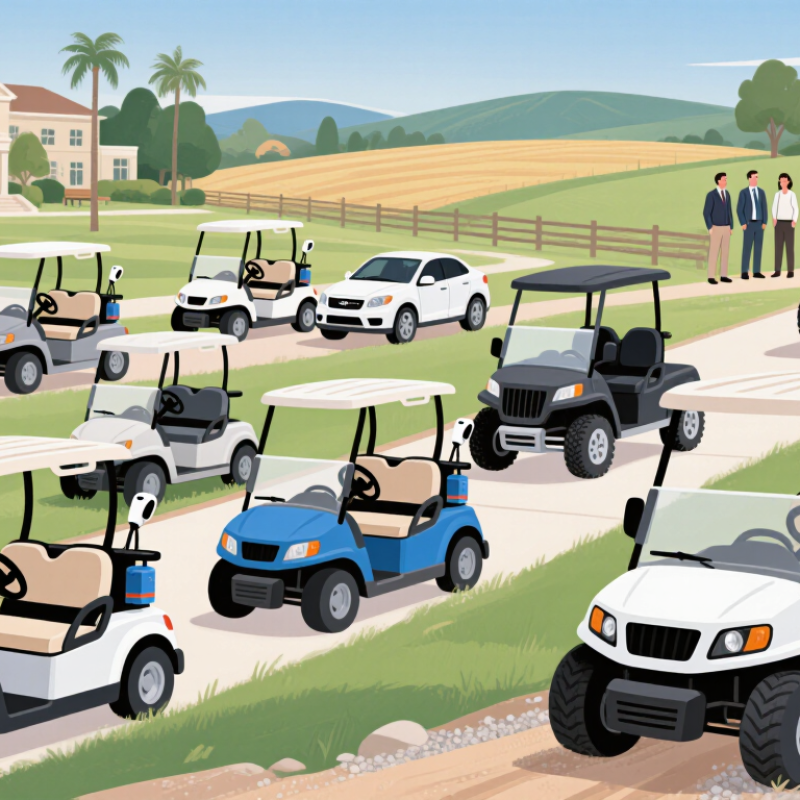
Electric Golf Cart Industry Overview and Manufacturer Categories
The electric golf cart industry now serves more than golf courses. Buyers use these vehicles in resorts, campuses, warehouses, retirement communities, and planned neighborhoods.
Manufacturers usually fall into several categories. Golf-focused producers prioritize quiet operation, compact turning, and course-friendly tires. Utility specialists add cargo beds, towing capacity, stronger suspension, and weather protection. Passenger-transport makers build four-, six-, or eight-seat layouts. Some manufacturers offer street-oriented models, but legal equipment and road access vary by country.
For global buyers comparing ten leading manufacturers, category fit matters more than a polished catalog. Evaluate motor output, battery chemistry, charging time, ground clearance, braking systems, and rated payload. Lithium batteries often reduce weight and charging downtime. Lead-acid systems may remain attractive where purchase budgets and local servicing matter. Ask for test data, warranty terms, spare-parts availability, and maintenance instructions in clear language.
Factory audits can reveal details photographs hide. Check weld quality, cable protection, corrosion resistance, and controller placement. Small defects become expensive in coastal climates. Reliable suppliers document quality checks from battery installation through final road testing. They should explain production capacity, delivery schedules, and service responsibilities without vague promises.
I have seen buyers overlook slope performance and charging infrastructure. That mistake can disrupt daily operations within weeks. A practical evaluation should include loaded driving, repeated stops, uneven surfaces, and cold-start conditions.
Top 10 Electric Golf Cart Manufacturers for Global Buyers - Electric Golf Cart Industry Overview and Manufacturer Categories
| Rank | Manufacturer Category | Primary Production Strength | Typical Buyer Groups | Common Seating | Typical System Voltage | Typical Driving Range* | Common Battery Options | Global Buyer Considerations |
|---|---|---|---|---|---|---|---|---|
| 1 | Large-Scale OEM Platform Manufacturers | High-volume standardized vehicle platforms | Golf resorts, fleet operators, distributors, municipalities | 2–8 | 36–72 V | 40–80 km | Lead-acid or lithium-ion | Dealer support, spare parts availability, homologation, fleet warranty |
| 2 | Lithium-Ion Specialty Manufacturers | Lightweight, low-maintenance electric vehicles | Premium resorts, private communities, rental fleets | 2–6 | 48–72 V | 50–100 km | Lithium iron phosphate and other lithium-ion chemistries | Battery-management system, charger compatibility, thermal protection |
| 3 | Utility and Maintenance Cart Manufacturers | Cargo beds, tool storage and work-duty configurations | Campuses, airports, warehouses, factories, public facilities | 2–4 | 36–72 V | 30–70 km | Lead-acid or lithium-ion | Payload rating, ground clearance, braking performance, serviceability |
| 4 | Street-Legal Low-Speed Vehicle Manufacturers | Road-ready electric carts with safety equipment | Residential communities, resorts, local transport services | 2–6 | 48–72 V | 50–100 km | Lithium-ion or deep-cycle lead-acid | Seat belts, lighting, mirrors, windshield, registration and local road rules |
| 5 | Tourism and Hospitality Cart Manufacturers | Passenger transport and guest-service vehicles | Hotels, resorts, theme parks, visitor attractions | 4–14 | 48–72 V | 40–90 km | Lithium-ion or lead-acid | Passenger capacity, weather protection, accessibility, high-use durability |
| 6 | Golf Course Fleet Manufacturers | Two-seat carts with golf-bag storage and fleet controls | Golf clubs, tournament venues, golf-cart rental operators | 2 | 36–48 V | 40–70 km | Deep-cycle lead-acid or lithium-ion | Fleet charging, hill-climbing ability, tire selection, body-panel replacement |
| 7 | Off-Road and All-Terrain Cart Manufacturers | Suspension, traction and rugged chassis systems | Estates, farms, outdoor venues, security and recreation users | 2–6 | 48–72 V | 35–80 km | Lithium-ion or lead-acid | Motor torque, differential design, water resistance, axle and suspension strength |
| 8 | Custom-Body and Private-Label Manufacturers | Flexible body design, colors and configuration engineering | Importers, rental companies, hospitality groups, regional dealers | 2–8 | 36–72 V | 35–90 km | Lead-acid, lithium-ion or customer-specified packs | Minimum order quantity, tooling ownership, quality control, private-label documentation |
| 9 | Compact Urban Mobility Cart Manufacturers | Small-footprint vehicles for short-distance transport | Urban developments, campuses, gated communities, service contractors | 2–4 | 36–48 V | 30–70 km | Lithium-ion or lead-acid | Turning radius, charging access, maximum speed, local low-speed vehicle regulations |
| 10 | Solar-Ready and Energy-Efficient Cart Manufacturers | Energy monitoring, regenerative braking and solar integration options | Eco-resorts, campuses, parks, sustainability-focused fleets | 2–6 | 48–72 V | 40–90 km | Lithium-ion, commonly paired with roof-mounted solar charging support | Solar output is supplemental; verify charger ratings, energy data and installation conditions |
*Driving range values are typical operating ranges for electric golf carts and low-speed utility vehicles. Actual performance varies with battery capacity, passenger and cargo load, terrain, speed, temperature, tire pressure and driving conditions.
FAQS
They serve golf courses, resorts, campuses, warehouses, retirement communities, and planned neighborhoods.
Compare motor output, battery type, charging time, ground clearance, braking, and payload.
Lithium batteries usually charge faster, weigh less, and need less maintenance.
Entry-level models may cost around USD 5,000.
Useful features include regenerative braking, battery-management systems, diagnostic displays, and weather-resistant wiring.
Request a factory audit or detailed inspection.
Test loaded driving, hill performance, repeated stops, uneven surfaces, and cold-start conditions.
Daily operations can fail when available chargers cannot support the fleet.
Ask for warranty terms, maintenance instructions, spare-parts prices, and delivery schedules.
Compare total ownership costs instead of showroom prices alone.
Conclusion
The global electric golf cart industry is evolving from a niche recreational market into a broader mobility sector serving resorts, campuses, communities, warehouses, farms, and municipal projects. This article examines major manufacturer categories, including established vehicle producers, specialized electric mobility companies, and flexible OEM suppliers. It explains how buyers can evaluate an Electric Golf Cart Manufacturer by reviewing product range, battery systems, driving performance, safety features, manufacturing quality, customization options, warranty terms, and total ownership cost.
The overview also compares leading manufacturers through their market positioning, technology development, production capabilities, pricing structures, and after-sales support without focusing on brand names. For international buyers, export experience, documentation, regional standards, charging compatibility, spare-parts availability, shipping arrangements, and local service networks are equally important. By considering these factors together, buyers can identify reliable suppliers, reduce procurement risks, and select electric golf carts that match operational needs, budget expectations, environmental goals, and regulatory requirements in different regions.