Choosing the right Adjustable StabiliTrak Golf Cart Suspension starts with the ground beneath your tires. A smooth paved path asks less from a cart than a rutted course road or a sloped farm lane. Suspension affects ride comfort, handling, and how confidently the cart responds to uneven surfaces. Small details matter. Tire size, passenger load, and intended use can change which setup feels suitable.
This guide examines ten adjustable suspension options available to buyers in China, with practical comparisons rather than promises of universal performance. It considers adjustability, construction, compatibility, installation needs, and the kind of terrain each option may suit. Product names and specifications can change, so confirm current details with the manufacturer or seller before purchasing. Check your cart’s model, mounting points, and load limits. A part that looks compatible in a listing may not fit your exact configuration.
Comfort is personal. One driver may prefer a firmer ride, while another values softer handling on bumpy paths. The comparison aims to make those trade-offs easier to see, not to declare one suspension best for every cart. Some listings provide limited technical information; that is worth treating as a real drawback. A careful choice begins with verified dimensions, clear product support, and realistic expectations.
What Is Adjustable StabiliTrak Golf Cart Suspension?
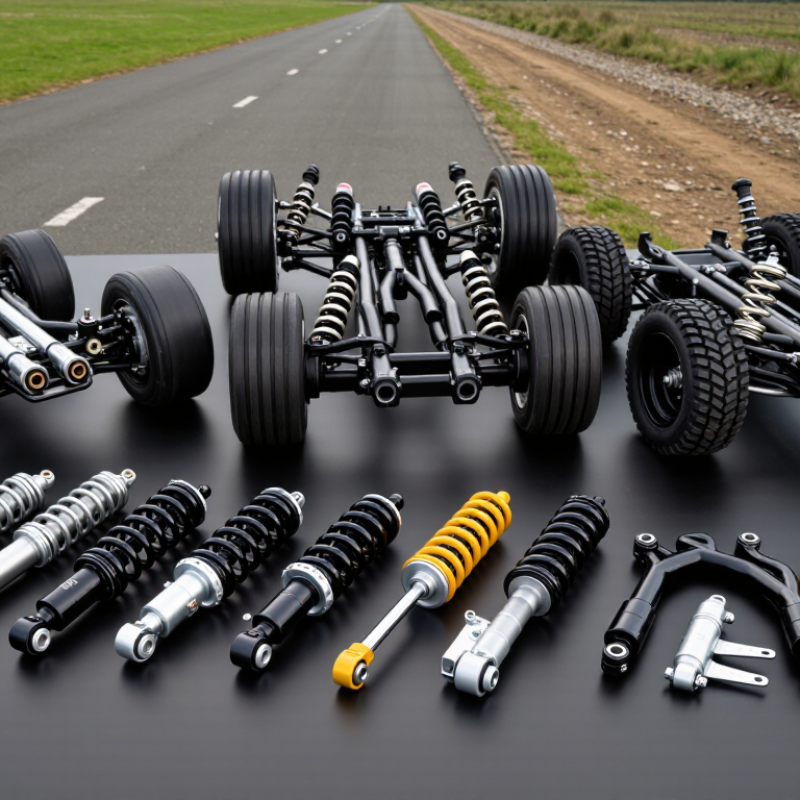
Adjustable StabiliTrak golf cart suspension refers to a suspension setup that lets users alter how the cart responds to bumps, turns, and uneven ground. It may include adjustable shocks, springs, or stabilizing components. The exact design varies, so check the cart’s specifications before assuming what can be tuned.
On a paved path, a firmer setting can help reduce excessive body movement. On gravel or grass, a softer setup may absorb small bumps more comfortably. Changes should be gradual. Park the cart on level ground, use the adjustment method specified by its manufacturer, and test at low speed in a clear area. A seat that feels steadier is useful, but it does not guarantee safer cornering.
Pay attention to load, tire condition, and how the cart is driven. A heavy cargo box can change the way suspension behaves. So can worn bushings or uneven tire pressure. I would avoid chasing a “perfect” setting; real paths vary, and one adjustment may not suit every ride. If the cart pulls, knocks, or feels unusually unstable, have the suspension inspected rather than tightening parts by guesswork.
China-manufactured golf cart suspension systems are shaped by cost, terrain, load, and production scale. The frame, control arms, springs, and dampers must work together over uneven paths, not just smooth test floors. Engineers typically assess wheel travel, ride height, braking stability, and loaded handling. A few millimeters can matter. But a soft ride is not automatically a safe one.
Allied Market Research estimated the global golf cart market at about $1.9 billion in 2021, with a forecast of $3.9 billion by 2031. That growth puts pressure on suppliers to offer durable, adjustable systems at practical prices. Adjustable spring preload can help accommodate changing passenger or cargo loads; it does not change the spring’s basic rate. Factory checks may include repeated compression cycles, fastener inspections, and tests on rough surfaces. Still, real course conditions vary, and a lab result cannot capture every pothole or wet slope. Buyers should compare load ratings, adjustment instructions, and test documentation, rather than relying on “StabiliTrak” in a headline as a technical specification.
| No. | Suspension System Type | Typical Cart Layout | Adjustment Method | Common Spring Design | Typical Travel | Typical Lift Range | Main Stability Benefit | Common Materials | Best-Fit Application |
|---|---|---|---|---|---|---|---|---|---|
| 1 | Adjustable Coilover Independent Front System | Independent front suspension with steering knuckles | Threaded preload collar and adjustable damping on selected designs | Linear or progressive coil spring | Approximately 80–120 mm | Approximately 50–100 mm | Allows ride height and spring preload to be balanced for improved steering control | Coated steel, forged or machined aluminum, elastomer bushings | Street use, moderate lift, and vehicles carrying variable passenger loads |
| 2 | Heavy-Duty Leaf-Spring Stability System | Solid rear axle with semi-elliptic leaf springs | Spring pack selection, shackle position, and optional preload hardware | Multi-leaf steel spring pack | Approximately 50–90 mm | Approximately 25–75 mm | Provides strong axle location and load support with simple maintenance | Heat-treated spring steel, stamped steel brackets, polyurethane bushings | Utility carts, cargo use, and rough low-speed surfaces |
| 3 | Long-Travel Dual-A-Arm System | Independent front suspension using upper and lower control arms | Adjustable coilover preload; camber and toe may be set during alignment | Progressive coilover spring | Approximately 100–150 mm | Approximately 50–125 mm | Maintains better tire contact and suspension geometry over uneven terrain | Welded steel control arms, alloy spacers, rubber or polyurethane joints | Off-road recreational use and lifted carts with larger tires |
| 4 | Air-Assisted Adjustable Rear System | Solid rear axle with leaf or trailing-arm support | Air pressure adjustment through manual or electric inflation hardware | Leaf spring or coil spring with air helper bags | Approximately 60–100 mm | Approximately 25–75 mm | Permits load compensation while reducing rear-end sag | Steel axle mounts, reinforced rubber air sleeves, aluminum fittings | Passenger and utility carts with changing payloads |
| 5 | Progressive Coil-Spring Comfort System | Independent front or four-wheel coil-spring layout | Spring preload adjustment; damping adjustment available on some configurations | Progressive-rate coil spring | Approximately 70–115 mm | Approximately 25–75 mm | Combines softer initial movement with greater resistance near full compression | Spring steel, tubular steel mounts, composite or rubber isolators | Comfort-oriented carts used on paved paths and residential roads |
| 6 | Adjustable Trailing-Arm Rear System | Independent or semi-independent rear trailing arms | Ride-height spacers, adjustable spring seats, and alignment links | Coil spring with separate damper | Approximately 80–125 mm | Approximately 50–100 mm | Controls rear-wheel movement and can improve stability during cornering | Box-section steel arms, forged joints, zinc-coated fasteners | Performance-oriented carts and custom road vehicles |
| 7 | Reinforced Independent Front Lift System | Independent front suspension with extended spindles or knuckles | Preload adjustment and interchangeable lift spacers | Coil spring or coilover assembly | Approximately 70–110 mm | Approximately 50–100 mm | Raises chassis clearance while retaining independent wheel movement | High-strength steel, forged steering components, polyurethane bushings | Lifted carts using larger tires on mixed paved and unpaved surfaces |
| 8 | Torsion-Assist Compact Suspension | Compact independent front or rear module | Torsion-bar preload through indexed adjustment positions | Torsion bar with auxiliary coil or elastomer support | Approximately 40–80 mm | Approximately 25–50 mm | Provides compact load support where installation space is limited | Spring steel torsion bars, stamped steel housings, rubber isolators | Small carts, narrow chassis, and light-duty transport applications |
| 9 | Damped Leaf-and-Shock Hybrid System | Solid rear axle with leaf springs and auxiliary dampers | Shock absorber position, spring pack rate, and shackle length | Multi-leaf spring with telescopic damper | Approximately 50–90 mm | Approximately 25–75 mm | Reduces axle bounce and improves control after bumps | Spring steel, tubular steel dampers, rubber eye bushings | Existing leaf-spring carts requiring improved ride control |
| 10 | Four-Corner Adjustable Utility System | Independent front suspension with supported rear axle | Front preload, rear spring selection, and optional damper settings | Coilover front springs with heavy-duty rear leaf springs | Approximately 60–110 mm | Approximately 25–75 mm | Balances steering response, payload capacity, and low-speed ride comfort | Powder-coated steel, spring steel, rubber or polyurethane mounts | Multi-purpose carts used for passengers, light cargo, and facility transport |
Technical values are representative design ranges for golf-cart suspension assemblies. Actual travel, lift, load capacity, alignment limits, and compatibility depend on the cart chassis, axle design, wheel size, tire diameter, braking system, and installation geometry.
China Top 10 Adjustable StabiliTrak Golf Cart Suspension?
Key Criteria for Evaluating the Top 10 Suspension Systems
Comparing suspension systems starts with the cart’s actual workload. A golf cart carrying two passengers on smooth paths needs different support from one hauling tools over rutted ground. Check the stated load range, adjustment method, and compatibility with the cart’s model and axle setup. Fit matters. A system that looks sturdy may still require extra clearance or professional installation.
Ride quality is more than softness. On a short test drive, listen for clunks, watch for excessive body roll, and notice how the cart settles after crossing a shallow bump. Adjustable preload can help accommodate changing loads, but it does not correct worn bushings or poor alignment. That distinction is easy to miss. Also compare corrosion protection, replacement-part availability, and the clarity of the service instructions.
A useful top-ten comparison should explain how each system was assessed, rather than presenting rankings as universal facts. Look for measured details, such as spring dimensions and adjustment range, alongside practical observations from similar terrain. Claims about stability deserve careful checking; results can vary with tire pressure, speed, and passenger weight. Even a well-reviewed setup may feel firmer than expected. Test cautiously, and reassess after installation.
China’s adjustable, stability-focused golf cart suspension systems vary widely in spring design, damper settings, and installation requirements. A useful top-ten comparison should assess more than price. Check whether each system suits the cart’s axle layout, wheelbase, and intended passenger or cargo load. Fit matters. Look for documented adjustment ranges, clear mounting dimensions, and replacement-part availability.
For the ten candidates, compare damping adjustability, ground clearance, service access, and installation support side by side. Confirm whether the quoted kit includes brackets and hardware, since missing pieces can complicate fitting. Independent measurements are more useful than broad performance promises. One limitation is that published figures may not reflect your exact terrain. A short, controlled test on familiar paths can reveal issues that a specification sheet misses.
Fit starts with measurements, not product photos. Check the cart’s year, model, axle layout, mounting points, and rated load. Then measure tire clearance and suspension travel with the cart carrying its usual passengers or cargo. A kit that fits an unloaded cart may rub when the rear seat is occupied. Record ride height on level ground. I still measure twice; it is easy to miss a few millimeters. For safe selection, match spring rate and adjustment range to the manufacturer’s specifications, not just the desired lift.
Safety needs more than a smoother ride. NHTSA’s 2023 Traffic Safety Facts reported 40,901 U.S. roadway fatalities, but the figure is not golf-cart-specific and does not link crashes to suspension changes. It is a reminder not to treat altered handling casually. After installation, inspect steering joints, brake lines, and tire clearance through full steering movement. Use the service manual’s torque values, then test at low speed on a flat, private route. Get qualified help if mounting points are damaged or measurements are unclear. No guesswork.
For maintenance, check fasteners, bushings, springs, and signs of uneven tire wear at the intervals in the service manual. Recheck after the first few rides, especially if the cart feels tilted or begins to wander. Keep a simple log of ride height and repairs; small changes can reveal a loosening mount. The honest limitation: adjustable settings cannot compensate for worn brakes or overloaded seating.
It is a suspension setup with adjustable shocks, springs, or stabilizing parts. It changes how the cart responds to bumps, turns, and uneven ground.
Yes. A firmer setting may reduce body movement on paved paths. A softer setting can feel more comfortable on grass or gravel. Test slowly.
Park on level ground and follow the service instructions. Make small changes, then test at low speed in a clear area. No guesswork.
Check the cart’s year, model, axle layout, mounting points, and rated load. Measure tire clearance and suspension travel with normal passengers or cargo. Measure twice.
No. A steadier seat does not guarantee safer cornering. Speed, tire pressure, passenger weight, and the path still affect handling.
A heavy cargo box can change ride height and handling. Rear passengers may also cause tire rubbing if clearance was checked only when unloaded.
Check steering joints, brake lines, tire clearance, fasteners, and mounting points. Watch for clunks, excessive body roll, or uneven tire wear. Test slowly.
No. Adjustment cannot repair worn bushings, weak brakes, damaged mounts, or poor alignment. If the cart pulls, knocks, or wanders, arrange an inspection.
This guide explores the essential features of Adjustable StabiliTrak Golf Cart Suspension and how these systems can improve ride comfort, handling, and stability on different surfaces. It explains how China-manufactured suspension systems are designed, including the use of durable materials, adjustable components, reinforced mounting structures, and configurations intended to support various golf cart models and driving conditions.
The article also introduces ten leading China-made suspension options selected according to practical criteria such as compatibility, load capacity, adjustment range, safety design, construction quality, installation requirements, and maintenance convenience. It provides a clear framework for comparing fitment, suspension performance, steering response, ground clearance, and long-term service needs. By reviewing these factors carefully, buyers can make a more informed decision and select an Adjustable StabiliTrak Golf Cart Suspension system that balances comfort, reliability, safety, and ease of ownership.