Designed & Assembled in Idaho, USA 10-Year Warranty · 72V Lithium Standard · Nationwide Dealer Network
0%

Choosing Lifted Electric Golf Carts requires more than comparing tire size, lift height, and paint color. Buyers should connect performance with terrain, passenger weight, battery chemistry, and local operating rules. A cart that looks impressive beside a dealership may feel unstable on a steep, wet path.

Industry data supports careful evaluation. Fortune Business Insights reported that the global golf cart market was valued at approximately USD 1.77 billion in 2023. Its forecast expects continued growth through 2032, supported by resorts, private communities, and commercial facilities. Grand View Research also identifies electric powertrains as a major market direction, driven by lower operating emissions and simpler maintenance. These reports describe broad market activity, however. They do not prove that every lifted model offers equal safety or durability.

Real-world inspection matters. Measure ground clearance beside the exact obstacles you will cross. Check whether the suspension uses adjustable components or basic spacers. Look for sealed electrical connectors, a battery-management system, hydraulic disc brakes, and a clearly documented load rating. Lithium batteries usually reduce weight and charging inconvenience, but replacement costs can be substantial. Lead-acid batteries may cost less initially, yet they demand watering and regular cleaning.

Do not overlook handling. A taller cart raises the center of gravity. Sharp turns can expose poor suspension design quickly. Test drive it slowly, then repeat the route with passengers. Ask for battery warranty terms, charger specifications, service records, and parts availability. Manufacturer claims can be incomplete. Your terrain, climate, and maintenance habits should decide the final choice, not appearance alone.
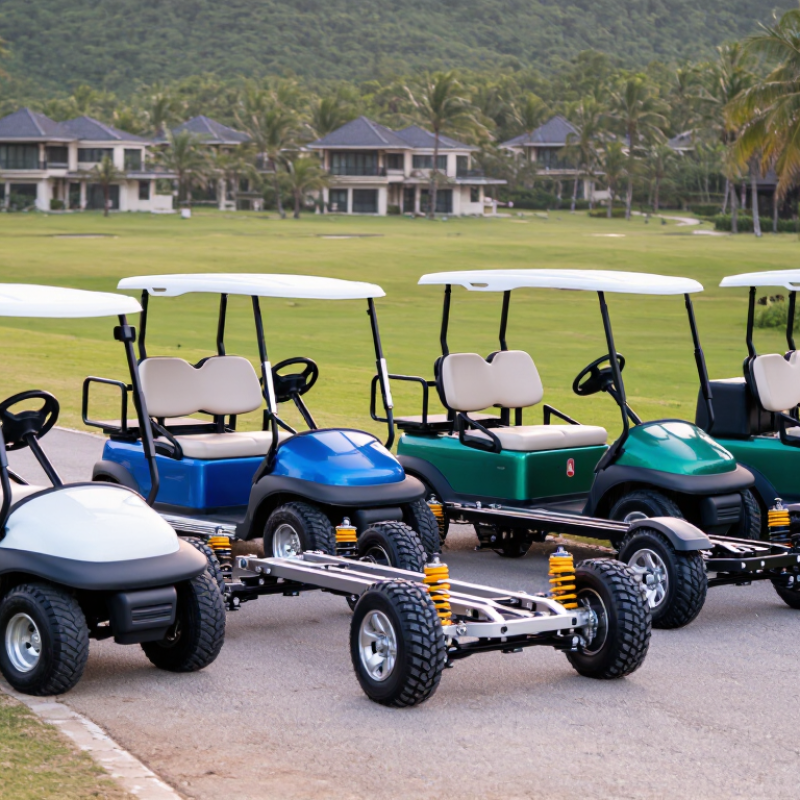
How to Choose Lifted Electric Golf Carts?

Define Lifted Electric Golf Carts: 48-Volt Systems and 4–6-Inch Lift Kits

How to Choose Lifted Electric Golf Carts?

A lifted electric golf cart combines a higher suspension with an electric drivetrain. The common setup uses a 48-volt system and a 4–6-inch lift kit. A 48-volt system may use six 8-volt batteries or four 12-volt batteries. Voltage alone does not measure driving range. The U.S. Department of Energy’s Alternative Fuels Data Center emphasizes battery capacity, charger compatibility, and operating conditions. Check all three.

In practical inspections, I look for clean terminals, equal tire wear, and secure suspension bolts. These small details often reveal poor maintenance.

A 4-inch lift usually improves clearance on gravel, grass, and uneven paths. A 6-inch lift creates more room for larger tires, but it also raises the center of gravity. Steering can feel different. Braking distances may increase. The six-inch option is not automatically better.

The U.S. Department of Energy explains that added mass and rolling resistance can reduce electric efficiency. Grand View Research estimated the global golf cart market at about USD 1.87 billion in 2022, with projected growth near 6.9% annually through 2030. That growth encourages more aftermarket choices, but quality varies.

Measure twice. A suitable cart needs matched lift geometry, correct tire clearance, and a controller rated for the motor. I would also verify the charger’s voltage before upgrading batteries. This is where many buyers rush. A taller stance looks capable, yet everyday stability matters more than appearance.

Match Lift Height, Ground Clearance, and 20–25 MPH Speed Needs

Choosing a lifted electric golf cart starts with the ground beneath your usual routes, not the tallest suspension kit. During test drives, measure ruts, stones, and driveway lips after rain. A modest two- to four-inch lift often adds useful clearance without making entry awkward. Larger lifts may suit rough private trails, but they can raise the center of gravity and change steering feel. Check the actual clearance at the lowest axle or differential point. Tire size can add height, yet oversized tires may reduce acceleration and increase motor load. Measure twice. I learned that catalog dimensions rarely match a cart carrying passengers, tools, and a full battery.

Speed changes the decision. For a 20–25 MPH target, inspect the brakes, steering, tires, suspension, controller, and battery system as one package. At 25 MPH, small errors become obvious. Test the cart on a dry, flat surface before trying uneven ground. Carry the real payload, including passengers and equipment, because weight affects stopping distance and hill performance. Ask a qualified technician to inspect mounting points and wheel alignment after lifting. Confirm that local rules permit that speed where you intend to drive. A reliable setup may require less lift than expected. I would rather accept a slightly lower top speed than chase numbers with unstable handling, although that judgment deserves regular review.

Compare Motor Output, Battery Chemistry, Range, and Charging Time

Choosing a lifted electric golf cart starts with motor output, not appearance. Lift kits add weight and rolling resistance. A 5–7 kW motor usually suits flat private paths. Hilly terrain needs stronger low-speed torque. Look for controller amperage, not motor watts alone. The U.S. Department of Energy notes that vehicle efficiency depends heavily on load, speed, and terrain. That applies here.

Battery chemistry changes the driving experience. Lead-acid batteries generally cost less, but they are heavier and require regular watering. Lithium-ion batteries offer higher usable energy and lower weight. The U.S. Department of Energy’s Vehicle Technologies Office reports typical lithium-ion energy density near 100–265 Wh/kg, compared with roughly 30–50 Wh/kg for lead-acid cells. Real range still depends on tire pressure, payload, hills, and temperature. A practical lifted cart may travel 25–45 miles per charge. Treat optimistic figures carefully. They often come from light-load testing.

Charging time also affects daily usefulness. A lead-acid pack may need 6–10 hours after deep use. Lithium systems commonly recharge in about 4–6 hours, depending on charger size and battery capacity. The U.S. Department of Energy Alternative Fuels Data Center emphasizes matching charging equipment to battery specifications and electrical capacity. Check charger output, circuit protection, and battery-management features. Faster is not always better. I would measure your route, passenger weight, and hill count for one week before choosing. That small test can expose an expensive assumption.

How to Choose Lifted Electric Golf Carts? - Compare Motor Output, Battery Chemistry, Range, and Charging Time

Typical Lifted Cart Configuration Motor Output
Continuous / Peak
Battery Chemistry Nominal Battery Pack Usable Energy
Approx.
Estimated Range
Level Ground
Typical Charging Time
From Low Charge
Best-Suited Use
48 V Lead-Acid Pack 3–5 kW / 8–12 kW Flooded lead-acid 48 V, 170–225 Ah 4.1–5.4 kWh 20–30 mi
(32–48 km)
8–12 hours Budget-focused buyers, regular maintenance, and moderate recreational use.
48 V AGM Pack 3–5 kW / 8–12 kW Sealed AGM lead-acid 48 V, 150–200 Ah 3.6–4.8 kWh 18–28 mi
(29–45 km)
6–10 hours Users who prefer sealed batteries and reduced routine maintenance.
48 V Lithium LFP Pack 4–6 kW / 10–15 kW Lithium iron phosphate (LFP) 51.2 V, 100 Ah 4.1–4.6 kWh 25–40 mi
(40–64 km)
4–7 hours Daily driving, hills, lower battery weight, and frequent partial charging.
48 V High-Capacity LFP Pack 5–7.5 kW / 12–18 kW Lithium iron phosphate (LFP) 51.2 V, 150 Ah 6.1–6.9 kWh 35–55 mi
(56–88 km)
6–9 hours Longer routes, heavier loads, frequent hill climbing, and extended daily operation.
48 V Lithium NMC Pack 4–6 kW / 10–15 kW Lithium nickel-manganese-cobalt (NMC) 48 V, 105 Ah 4.0–4.5 kWh 30–45 mi
(48–72 km)
4–7 hours Buyers prioritizing high energy density and reduced pack weight.
Selection Notes: The figures are typical engineering ranges for lifted 48 V electric golf carts with larger tires. Actual performance varies with tire size, vehicle weight, passenger and cargo load, terrain, temperature, speed, controller settings, battery age, and tire pressure. Estimated range assumes level ground, two occupants, moderate speed, and properly maintained tires. Usable energy is lower than nominal energy because lead-acid batteries are commonly limited to about 50% depth of discharge, while lithium packs are commonly operated at approximately 80–90% usable depth of discharge.

Check Payload, Suspension, Brakes, Tires, and ASTM F2272 Compliance

Choosing a lifted electric golf cart starts with payload, not appearance. Payload means passengers, batteries, accessories, and cargo together. Compare that total with the manufacturer’s rated capacity. The 2024 National Golf Foundation Golf Industry Factbook recorded about 531 million U.S. golf rounds in 2023. That level of use shows why repeated loading matters. A cart carrying four adults needs more than a casual driveway test.

Inspect the suspension closely. Look for compressed springs, loose bushings, uneven ride height, and steering play. Lift kits raise the center of gravity, so suspension geometry deserves careful attention. Check each tire’s load rating, tread condition, pressure, and clearance during full steering movement. Brakes should stop the cart smoothly under its intended load, without pulling sideways. Test them on a controlled, private surface. Do not trust an unloaded brake test. It can feel reassuring and still be misleading.

ASTM F2272 provides safety requirements for electric personal transporters, including braking, steering, stability, and structural considerations. Ask for compliance documentation, not only a printed decal. The CPSC’s National Electronic Injury Surveillance System also tracks emergency-department injury patterns, reinforcing the value of documented inspections. A compliant cart can still be poorly maintained. That is the uncomfortable part. Record tire pressures, brake response, suspension wear, and payload calculations before purchase. Recheck them after several loaded trips.

How to Choose Lifted Electric Golf Carts?

Compare calculated payload margins, then verify suspension, brakes, tires, and ASTM F2272 compliance using documented vehicle specifications.

Payload margin is calculated as GVWR minus curb mass. A higher margin provides more capacity for passengers, batteries, accessories, and cargo. The example values are calculated reference scenarios; always confirm the exact GVWR and curb mass from official vehicle documentation. For a lifted cart, also confirm suspension load ratings, brake performance, tire load ratings and pressure limits, and documented conformity with ASTM F2272.

Calculate Total Ownership Costs, Maintenance Needs, and Local Road Legality

Choosing a lifted electric golf cart requires more than comparing purchase prices. Build a five-year ownership worksheet. Include the cart, lift kit, batteries, charger, tires, brake service, insurance, registration, storage, and electricity. For example, a $12,000 cart, $2,000 battery replacement, and $600 yearly maintenance can exceed $16,000 over five years. Your mileage matters. A short commute may cost less than frequent off-road driving.

Maintenance is usually simpler than gasoline vehicle maintenance. The U.S. Department of Energy’s Alternative Fuels Data Center explains that electric vehicles avoid oil changes and typically use fewer moving drivetrain parts. However, lifted carts place extra stress on bearings, suspension joints, steering components, and tires. Inspect these parts every few months. Battery replacement remains the uncomfortable variable. Lead-acid batteries may need earlier replacement than lithium systems, depending on charging habits, heat, and depth of discharge. I would not trust a seller’s battery-life promise without service records.

Road legality must be checked locally, not assumed from the cart’s speed. NHTSA’s Federal Motor Vehicle Safety Standard No. 500 defines low-speed vehicles as four-wheeled vehicles traveling between 20 and 25 mph, with required safety equipment. States and municipalities may add registration, lighting, insurance, helmet, road-access, or driver-license rules. A lifted cart may also exceed local height or equipment limits. AAA’s 2024 Your Driving Costs report estimates average new-car ownership at $12,297 annually, but that benchmark includes highway vehicles and cannot represent cart ownership accurately. Use it only for perspective. Your local clerk’s office remains the practical authority.

FAQS

Why should payload come before appearance when choosing a lifted electric golf cart?

Add passengers, batteries, accessories, and cargo together. Compare the total with the rated capacity. Four adults need more than a driveway test.

What suspension problems should I inspect before buying?

Look for compressed springs, loose bushings, uneven ride height, and steering play. Lifted carts sit higher and can stress suspension geometry. Small looseness matters.

How should I test the brakes?

Test braking with the intended load on a controlled, private surface. The cart should stop smoothly without pulling sideways. Do not trust an unloaded test.

What tire details require close attention?

Check load ratings, tread depth, pressure, and steering clearance. Turn fully left and right. Watch for rubbing against the body or suspension.

What does ASTM F2272 compliance tell me?

It covers safety areas such as braking, steering, stability, and structure. Ask for compliance documents, not only a printed decal. Documentation can still be incomplete.

How can I estimate five-year ownership costs?

Include purchase price, batteries, charger, tires, service, insurance, registration, storage, and electricity. A $12,000 cart can exceed $16,000 over five years.

What maintenance does a lifted electric cart need?

Inspect bearings, suspension joints, steering parts, tires, and brakes every few months. Lifted designs increase stress. I would not trust battery promises without service records.

Are lifted electric golf carts legal on public roads?

Check local requirements before driving on public roads. Rules may cover speed, lighting, registration, insurance, helmets, access, and licenses. A local clerk’s office is practical.

How often should I recheck a cart after purchase?

Recheck tire pressure, brake response, suspension wear, and payload calculations after several loaded trips. Conditions change. The first inspection is not enough.

Conclusion

Choosing Lifted Electric Golf Carts requires more than selecting a taller vehicle. Start by defining your needs: a 48-volt electrical system and a 4–6-inch lift kit can provide improved ground clearance for uneven paths, while typical speeds of 20–25 MPH should match your intended use and local regulations. Compare motor output, battery chemistry, driving range, and charging time to ensure the cart can handle your terrain and daily schedule efficiently.

Also evaluate payload capacity, suspension quality, braking performance, tire design, and compliance with applicable safety standards such as ASTM F2272. A lifted cart may require more maintenance because of added stress on its drivetrain, suspension, and tires. Before purchasing, calculate the total ownership cost, including charging, battery replacement, service, and insurance. Finally, confirm whether the cart can be operated on public roads in your area and understand all required equipment, registration, and usage restrictions.

Amelia

Amelia

Amelia is a professional marketing specialist dedicated to helping businesses better understand innovative products, practical solutions, and the value they can bring to everyday operations. With extensive knowledge of the company’s product portfolio, she combines market insight, customer-focused......