Choosing a 2 Passenger Electric Golf Cart is less about picking the flashiest model and more about matching the cart to real daily use. Will it carry two adults across a hilly course, move around a community, or handle short trips on private property? Those settings place different demands on range, seating, tires, and storage. A quiet motor is appealing, but it cannot compensate for a battery that falls short of your routine.
The National Golf Foundation’s 2024 Golf Participation Report says 28.1 million Americans played golf on a course in 2023. That figure describes participation, not golf-cart sales, but it shows why comfort and ease of use matter to many golfers. For shoppers, the practical questions are more specific: how far will the cart travel under load, how long does charging take, and what does the warranty cover? Ask dealers for written specifications, then compare them with your routes and local terrain. Range matters.
Battery chemistry, controller design, tire size, and passenger weight can all affect real-world performance. Manufacturer range figures are useful, but they may reflect ideal conditions. A windy, sloped course can tell a different story. Small details matter. Check seat support, braking feel, visibility, charger access, and room for bags before deciding. Also confirm that replacement parts and service are available nearby. There is no universally best cart, and I would not treat a single advertised range as a promise. The right choice is the one whose verified specifications fit your passengers, terrain, budget, and everyday routine.
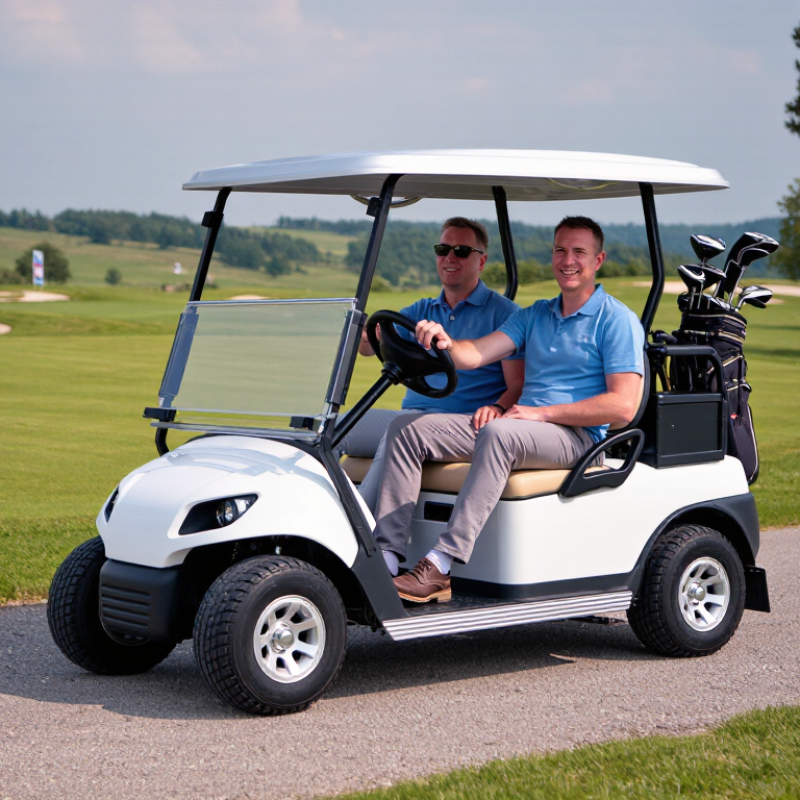
Identify Your Intended Uses and Typical Routes
Before comparing a two-passenger electric golf cart, picture an ordinary day of use. Will it carry two adults around a neighborhood, cross a large property, or move between golf holes? The answer affects the seats, storage space, and driving range you need. A small rear basket may hold a jacket and groceries, but not bulky tools. Check how much room remains when both seats are occupied.
Map the routes, not just the destination. A smooth, flat path with few stops places different demands on a cart than a hilly route with frequent turns. Note steep driveways, loose gravel, narrow gates, and rough patches. Hills can draw more battery power, while repeated starts and stops may also affect how far the cart travels. Range estimates are not guarantees. Passenger weight, temperature, tire condition, and terrain all matter.
Walk or drive your usual route and mark the difficult sections. That simple check helps. Measure tight passages, too; a cart that fits the driveway may still struggle near a shed or between parked vehicles. Think about where you can charge it, and whether the route includes places to turn around safely. One detail is easy to miss: a rarely used shortcut may be muddy after rain. Plans change, sometimes inconveniently, so leave a little room between your expected daily distance and the cart’s stated range.
FAQS
Picture a normal day: two adults, a short neighborhood trip, or travel across a large property. Check whether the rear basket can hold your jacket, groceries, or other regular items.
Look for steep driveways, loose gravel, narrow gates, and rough patches. Measure tight passages, too. A route that fits your driveway may not fit beside a shed.
Treat the stated range as an estimate, not a promise. Hills, passenger weight, temperature, tire pressure, and frequent stops can reduce distance. Leave room for detours and battery aging.
Lead-acid batteries usually cost less upfront, but weigh more and need regular care. Lithium batteries are lighter and charge efficiently. Compare voltage and amp-hour ratings as well as battery type.
Check its continuous rating, not just peak output. Two passengers climbing a slope need sustained power. Test the cart uphill. Notice sluggish starts or speed loss.
Sit for several minutes. Check lower-back and thigh support, knee room, and whether the passenger can enter easily. A firm seat may feel tiring on a longer ride.
Look for secure handholds, clear visibility, reliable brakes, and stable handling. Ask how the seating and restraint setup works. Test the brakes on a safe, level area.
Try a familiar uneven surface with both seats occupied. Listen for rattles and feel for jolts, steering effort, and changes in braking. A smooth showroom ride can be misleading.
Conclusion
Choosing the right 2 Passenger Electric Golf Cart starts with understanding how and where you plan to use it. Consider your typical routes, terrain, and travel distance, then compare battery types, motor power, and expected driving range to find a cart that fits your daily needs. A model suited to smooth paths may not provide the same comfort or performance on uneven ground, so think about ride quality as well as power.
Before deciding, check that the seating is comfortable and that the cart includes practical safety features. Measure its dimensions against your storage space, and review useful features such as cargo capacity and ease of operation. Finally, compare warranty coverage, access to servicing, and the total cost of ownership, including routine maintenance. Weighing these factors together can help you select a cart that offers dependable performance and good value over time.