A 72V 150Ah Lithium Battery Golf Cart is a high-voltage electric vehicle system designed for stronger performance, longer daily use, and steadier power delivery. Its nominal energy equals 10.8 kilowatt-hours, calculated from 72 volts multiplied by 150 ampere-hours. That figure sounds precise. It is not the whole story. Usable energy depends on battery management settings, temperature, age, and discharge limits.
Compared with traditional lead-acid packs, lithium technology usually reduces maintenance and avoids routine watering. It can also provide more consistent voltage while climbing slopes or carrying passengers. BloombergNEF’s 2024 Lithium-Ion Battery Price Survey reported an average global pack price of 115 dollars per kilowatt-hour across electric-vehicle applications. Golf-cart battery pricing can differ significantly because of enclosure design, cells, chargers, safety controls, and low-volume production. Cost comparisons need care.
The International Energy Agency’s Global EV Outlook 2024 highlights continuing improvements in battery technology, manufacturing scale, and electric-mobility adoption. These trends support lithium golf-cart development, but they do not guarantee identical results on every course or private road. Tire pressure matters. So does terrain. A 72V 150Ah Lithium Battery Golf Cart may travel farther on smooth paths than on steep, wet ground with frequent stops. Buyers should verify rated capacity, continuous current, charger compatibility, thermal protection, warranty coverage, and independent testing. Range claims often look attractive, yet real-world testing remains the stronger reference. That is where marketing becomes measurable.
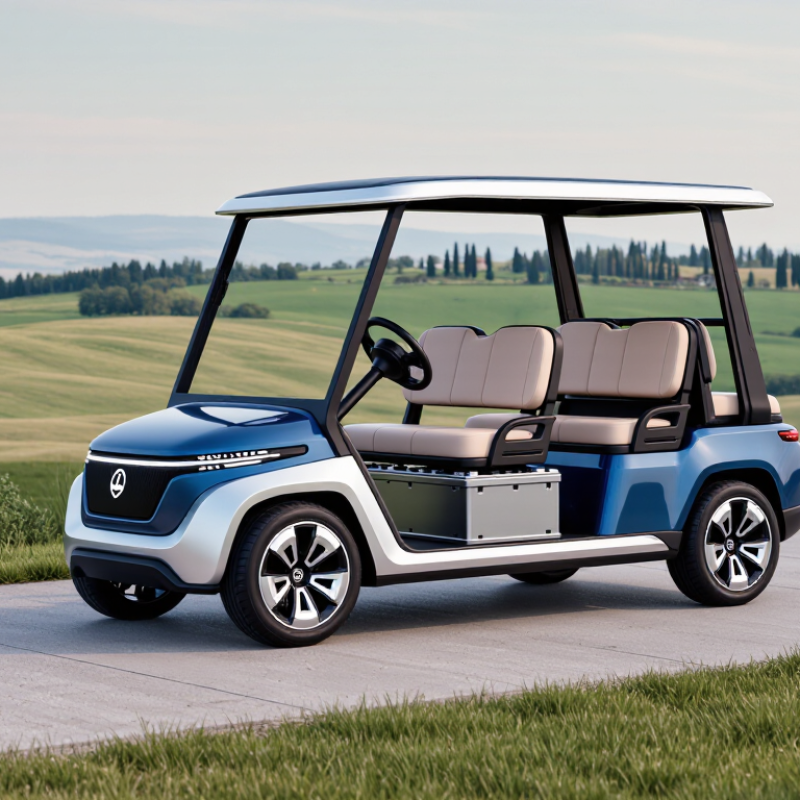
What Is a 72V 150Ah Lithium Battery Golf Cart?
A 72V 150Ah lithium battery golf cart uses a battery pack rated at 72 volts and 150 ampere-hours. Multiplying these figures gives about 10.8 kilowatt-hours of nominal energy. That is a substantial electrical reservoir for a golf cart, supporting longer routes, steeper paths, and repeated passenger trips. The number looks impressive. It does not guarantee a fixed driving distance.
Real-world range depends on vehicle weight, tire pressure, temperature, speed, terrain, and controller settings. A cart carrying four adults on wet hills will consume far more energy than one moving slowly on level paths. Battery age also matters. In practice, a usable energy estimate should allow for reserve capacity and conversion losses. The U.S. Department of Energy reports that lithium-ion systems commonly achieve high round-trip efficiency, but actual results vary with temperature and operating conditions.
The 72V architecture can reduce current for the same power output compared with lower-voltage systems. Lower current may reduce cable heating and voltage drop when the system is correctly designed. However, every component must match the battery voltage, including the charger, motor controller, cables, fuse, and battery-management system. The International Energy Agency reported strong growth in lithium iron phosphate battery adoption during 2023, partly because of its durability and safety characteristics. Chemistry still matters. A careless estimate, or an undersized controller, can make a premium battery perform poorly.
A 72V 150Ah lithium battery has a nominal energy capacity of 10.8 kWh, calculated as 72 volts × 150 ampere-hours. The chart shows estimated operating time at different continuous power loads, using 85% usable battery capacity and 95% system efficiency. Actual results vary with terrain, speed, passenger weight, temperature, and driving conditions.
What Is a 72V 150Ah Lithium Battery Golf Cart?
How Its Voltage and Capacity Determine Performance
A 72V 150Ah lithium battery stores about 10.8 kilowatt-hours of nominal energy. Voltage affects how strongly the golf cart system delivers power. At the same motor output, higher voltage requires less current. For example, a 7.2kW demand draws about 100 amps at 72V, before efficiency losses. Lower current can reduce cable heating and support steadier acceleration.
Capacity affects driving range more directly. A 150Ah rating suggests substantial energy for repeated trips, hills, and passenger loads. Still, the cart cannot use every watt-hour safely. The battery management system may reserve energy to protect the cells. Speed, tire pressure, terrain, temperature, and driving habits also change the result. A flat course feels very different from a steep, grassy path.
In practical checks, a properly matched 72V system can feel responsive when climbing a short hill. The motor and controller must support that voltage. Charging equipment must match the battery chemistry and voltage limits. Never judge range from capacity alone. My first estimate may look precise, but real-world results are less tidy. A cold morning can reduce available performance. So can an overloaded cart. Regularly inspect connections, charge levels, and unusual heat, because small warning signs deserve attention.
A 72V 150Ah lithium battery golf cart uses a high-voltage battery system for steady traction power. Its nominal energy equals about 10.8 kWh, calculated from 72 volts multiplied by 150 ampere-hours. The figure sounds exact, but usable energy changes with temperature, age, speed, and discharge limits. The battery may not deliver every rated watt-hour.
The main component is the cell pack, usually built from many lithium cells connected in series and parallel. A battery management system monitors cell voltage, temperature, current, and balance. It can disconnect the pack during overcharge, deep discharge, or abnormal heating. Contactors act like heavy-duty switches, while fuses provide additional fault protection. The charger follows a controlled current-and-voltage profile. The motor controller then converts battery power into three-phase output for the traction motor. Regenerative braking can return energy, although its effect is often overstated in low-speed carts.
BloombergNEF’s 2024 Battery Price Survey reported an average lithium-ion pack price of 115 dollars per kWh, showing why battery design and thermal control matter financially. The International Energy Agency’s Global EV Outlook 2024 also noted strong growth in lithium-iron-phosphate adoption, partly because of cost and durability advantages. In practical use, a cart drawing 100 amperes could theoretically run for 1.5 hours. Real driving time will be shorter. Hills, passengers, tire pressure, and cold weather expose that gap. A voltage reading alone cannot confirm battery health; technicians should inspect cell balance, cycle history, and loaded voltage.
A 72V 150Ah lithium battery stores about 10.8 kWh of nominal energy. In a golf cart, it can provide strong acceleration and steadier voltage than many lead-acid systems. The cart may climb moderate slopes with less performance drop. It also usually weighs less, creating more room for passengers or equipment. Charging is generally faster, and lithium batteries do not require routine watering. That saves time.
The usable range depends on motor efficiency, terrain, speed, tire pressure, passenger weight, and temperature. A flat course may allow many rounds, while hills can reduce distance quickly. The rated capacity is not the same as usable capacity. That detail matters. A suitable battery management system should monitor voltage, temperature, and current. The charger must match the battery’s voltage and charging profile. Using the wrong charger can cause damage or create a serious safety risk.
This setup also has limitations. A 72V system may not fit an older cart without compatible wiring, controller, motor, and display components. Installation can become expensive. The battery remains heavy, even if it is lighter than an equivalent lead-acid bank. Cold weather can reduce charging performance, and extreme heat may shorten service life. I would check cable size, mounting security, ventilation, and service access before purchase. In real use, advertised range can feel optimistic. Careful testing on the intended course is wiser than trusting one number.
A 72V 150Ah lithium battery stores about 10.8 kWh of nominal energy. That capacity can support long golf-cart routes, but installation must match the vehicle’s electrical design. Secure the battery low and evenly, leaving clearance around terminals and ventilation paths. Use correctly rated cables, fuses, and connectors. An overlooked ground connection can create heat at the terminal.
Charging needs discipline. Use a charger specifically matched to the battery’s voltage, chemistry, and battery-management system. Do not charge after water exposure, visible damage, or unusual swelling. Keep the cart on a nonflammable surface, away from fuel and direct heat. The International Energy Agency reported that global electric-vehicle battery demand exceeded 1 TWh in 2024, showing how quickly lithium systems are scaling. Scale does not remove basic charging risks.
Maintenance is mostly inspection. Check cable tightness, corrosion, casing damage, and error indicators monthly. Record charging behavior and unusual range loss. Store the cart partially charged in a cool, dry area during long breaks. Avoid completely draining the pack. The U.S. Department of Energy identifies temperature control and battery-management systems as important factors in lithium-ion safety and service life. That guidance is useful, but real carts vary. A professional inspection remains wise after an impact or electrical fault. Never guess.
| Category | Data Dimension | Typical Value or Requirement | Practical Guidance |
|---|---|---|---|
| Core Battery Specifications | |||
| Electrical capacity | Nominal voltage | 72 V | The battery is designed for a 72-volt golf-cart electrical system. The exact operating voltage varies with state of charge and battery chemistry. |
| Electrical capacity | Rated capacity | 150 Ah | This represents the approximate charge capacity under the manufacturer’s specified test conditions. |
| Energy storage | Nominal energy | 10.8 kWh | Calculated as 72 V × 150 Ah = 10,800 Wh. Usable energy is lower because the battery management system normally reserves a safety margin. |
| Battery chemistry | Common lithium chemistry | Lithium iron phosphate (LiFePO4) | Confirm the chemistry before selecting a charger, because charging voltage, temperature limits, and service procedures vary by chemistry. |
| Power delivery | Battery management system | Required | A suitable BMS monitors cell voltage, current, temperature, balancing, overcharge, over-discharge, and short-circuit conditions. |
| Expected driving distance | Estimated range per charge | Approximately 40–80 miles (64–129 km) | Actual range depends on cart weight, terrain, speed, tire pressure, temperature, driving style, motor efficiency, and battery age. This is an estimate, not a guaranteed rating. |
| Installation Essentials | |||
| Vehicle compatibility | System voltage | Must match a 72 V drivetrain | Verify the motor, controller, charger, DC-DC converter, display, solenoid, and accessories are rated for a 72 V system before installation. |
| Physical installation | Battery compartment | Measure before purchase | Check length, width, height, terminal position, cable routing, enclosure clearance, mounting points, and access for inspection. |
| Mounting | Vibration protection | Secure, level, and nonconductive support | Use an appropriate tray or brackets. Prevent movement, terminal contact with metal parts, and compression or puncture of the battery case. |
| Electrical protection | Main fuse or circuit protection | Install according to system and cable ratings | Place the main protective device close to the battery positive terminal. The exact rating must be selected using the controller, cable, and battery specifications. |
| Cable selection | High-current conductors | Sized for continuous and peak current | Use appropriately rated cables, lugs, insulation, and connectors. Keep cable runs short and protect them from abrasion, heat, water, and sharp edges. |
| Polarity | Positive and negative connections | Verify before energizing | Incorrect polarity can damage the controller, charger, DC-DC converter, or BMS. Use a properly rated multimeter and follow the battery wiring diagram. |
| Commissioning | Initial inspection | Check terminals, fasteners, cables, and fault indicators | After installation, confirm that all connections are tight, no cable is pinched, the battery is firmly secured, and the cart starts without warning codes. |
| Charging Essentials | |||
| Charger compatibility | Charger type | Dedicated 72 V lithium charger | Do not use a lead-acid charger unless the battery manufacturer explicitly approves it. The charger profile must match the battery chemistry and BMS. |
| Charging voltage | Maximum output voltage | Use the battery maker’s specified limit | A “72 V” label does not by itself define the correct full-charge voltage. Confirm the required voltage from the battery datasheet before charging. |
| Charging current | Recommended charge rate | Often 0.2C–0.5C; approximately 30–75 A for 150 Ah | The permitted current depends on the cells, BMS, charger, wiring, and thermal design. Follow the lower of the battery and charger ratings. |
| Charging time | Approximate time from near empty | About 2.5–5.5 hours | Approximate calculation: 150 Ah ÷ charging current, plus charging losses and the final constant-voltage stage. A 30 A charger may require roughly 5–6 hours; a 60 A charger may require roughly 3 hours. |
| Charging location | Environment | Dry, ventilated, and temperature-controlled | Keep the charger away from rain, standing water, direct heat, flammable materials, and enclosed areas with poor airflow. |
| Charging temperature | Temperature limits | Follow the battery datasheet; never charge a frozen or overheated battery | Many lithium batteries restrict charging near or below 0°C (32°F). A battery with a low-temperature cutoff or heater may have different limits. |
| Charging completion | End-of-charge behavior | Charger should indicate completion or enter standby | Disconnect and inspect the system if the charger repeatedly faults, becomes unusually hot, smells abnormal, or fails to complete a normal cycle. |
| Maintenance Requirements | |||
| Routine inspection | Inspection interval | Monthly and before extended trips | Look for swelling, cracks, corrosion, loose terminals, damaged insulation, water intrusion, unusual heat, or BMS warning codes. |
| Terminal care | Connection condition | Clean, dry, tight, and corrosion-free | Switch off the system before service. Do not overtighten terminals; use the torque specification supplied for the battery and terminal hardware. |
| Cleaning | Recommended method | Dry cloth or lightly damp cloth | Do not spray water directly onto the battery, terminals, BMS, charger, or electrical connectors. |
| Storage | Long-term storage state | Generally 40%–60% state of charge | Store in a cool, dry area, disconnect unnecessary loads, and check the battery periodically according to the manufacturer’s storage instructions. |
| Battery life | Typical cycle-life range | Approximately 2,000–5,000 cycles for many LiFePO4 designs | Cycle life depends on depth of discharge, temperature, charge rate, storage conditions, and the end-of-life capacity definition. |
| Performance monitoring | Useful readings | Voltage, current, temperature, state of charge, and fault history | Use the battery display or approved monitoring system. A sudden voltage drop, reduced range, or repeated cutoff can indicate a wiring, controller, or battery issue. |
| Safety Essentials | |||
| Electrical safety | Service condition | Power isolated before maintenance | Turn off the cart, remove the key, disconnect the charger, and follow the battery manufacturer’s isolation procedure before working on high-current connections. |
| Personal protection | Recommended equipment | Insulated tools, eye protection, and suitable gloves | Remove metal jewelry and prevent tools from bridging positive and negative terminals. High-current batteries can cause severe arc flashes and burns. |
| Physical damage | Impact or puncture | Do not use a damaged battery | If the case is cracked, swollen, leaking, unusually hot, smoking, or involved in a collision, isolate the cart outdoors and contact a qualified battery technician. |
| Fire response | Thermal event | Evacuate and call emergency services | Do not inhale smoke or attempt to move a burning battery. Keep people away and follow local emergency guidance for lithium-battery fires. |
| Water exposure | Flooding or heavy rain | Disconnect and inspect before reuse | Do not charge a wet battery or operate a flooded cart. Have the battery, charger, and electrical system checked by a qualified technician. |
| Transport and disposal | End-of-life handling | Use approved lithium-battery recycling channels | Never place the battery in household waste or general recycling. Protect terminals from short circuits and follow applicable transport and recycling regulations. |
It stores about 10.8 kWh of nominal energy. Usable energy will be lower. That distinction matters.
It can offer stronger acceleration and steadier voltage. The cart may handle moderate slopes with less performance loss. It also weighs less than many lead-acid setups.
Range depends on terrain, speed, tires, temperature, and passenger weight. Flat routes usually provide better distance. Advertised range may feel optimistic.
Not always. The motor, controller, wiring, display, and mounting points must support a 72V system. Installation may cost more than expected.
Use a charger matching the battery’s voltage, chemistry, and management system. An incorrect charger can damage components. Never guess.
Secure it low and evenly inside the cart. Use correctly rated cables, fuses, and connectors. Leave clearance around terminals and ventilation paths.
Inspect cables, connectors, corrosion, casing damage, and warning indicators monthly. Record unusual charging behavior or sudden range loss. Routine watering is unnecessary.
Charge it on a nonflammable surface, away from fuel and direct heat. Avoid charging after water exposure, swelling, or visible damage. Store it partially charged in a cool, dry place.
Cold weather can reduce charging performance and available range. Extreme heat may shorten service life. Temperature control remains important, though real conditions vary.
Check cable size, mounting security, service access, and electrical compatibility. Test the cart on its intended route if possible. One number cannot predict every drive.
A 72V 150Ah Lithium Battery Golf Cart is an electric cart powered by a 72-volt lithium battery pack with a 150-amp-hour capacity. The voltage influences the cart’s electrical power and acceleration, while the capacity affects how long it can operate before recharging. Together, these specifications can support strong performance, efficient energy use, and a practical driving range when matched with a suitable motor, controller, charger, battery management system, and wiring.
This type of golf cart generally offers lower weight, longer service life, faster charging, and more consistent power than many traditional battery systems. However, its range and performance depend on terrain, load, driving habits, temperature, and component compatibility. Proper installation should include secure mounting, correct electrical connections, and adequate protection. Users should follow the charger’s instructions, keep the battery clean and dry, monitor warning indicators, avoid overcharging or deep discharging, and arrange professional inspection if unusual heat, damage, or performance changes occur.