● Designed & Assembled in Idaho, USA 10-Year Warranty · 72V Lithium Standard · Nationwide Dealer Network
0%

Choosing the right Forward Facing 4 Passenger Golf Cart requires more than counting seats. Buyers should examine comfort, stability, range, charging time, and everyday practicality. A cart may look impressive in photographs yet feel cramped on uneven paths. Small details matter.

This guide reviews ten leading four-passenger models with forward-facing seats. The evaluation focuses on real ownership needs, including driveway storage, neighborhood travel, resort use, and light utility work. We consider seat support, legroom, suspension response, braking confidence, and weather protection. Battery type also deserves attention, especially when comparing lithium and lead-acid systems. Lithium packs often reduce weight and simplify maintenance, but they can raise the purchase price.

Our recommendations reflect manufacturer specifications, practical comparison, and common owner concerns. However, no single cart is perfect. Some models offer stronger acceleration but sacrifice quietness or range. Others provide excellent comfort while using more space than expected. That tradeoff deserves honest attention.

Measure twice.

Readers should verify local operating requirements, charging access, warranty terms, and service availability before buying. Specifications can change between model years, and advertised range may vary with terrain, passenger weight, temperature, and driving habits. We also recognize that “best” depends on the buyer. A family may prioritize rear-seat comfort, while a property owner may value cargo capacity and hill performance.

Use this guide as a practical starting point. Compare the details carefully, question impressive claims, and choose the cart that fits your roads, routines, and budget.
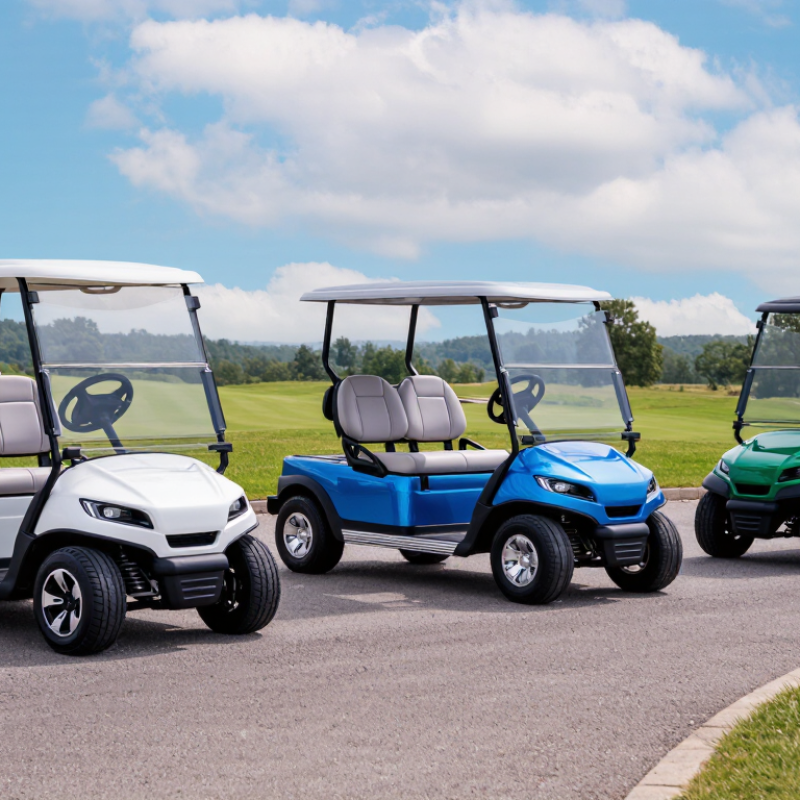
10 Best Forward Facing 4 Passenger Golf Carts?

What Defines a Forward-Facing Four-Passenger Golf Cart?

A forward-facing four-passenger golf cart has two seating rows, with every passenger facing the travel direction. This layout differs from models with a rear-facing bench. It usually provides clearer visibility, easier conversation, and more predictable passenger movement. However, four seats do not automatically mean four adults can ride comfortably. Check the manufacturer’s stated payload, legroom, seat width, and cargo capacity.

Grand View Research estimated the global golf cart market at about USD 1.7 billion in 2023, with continued growth expected through 2030. That growth reflects wider use in resorts, campuses, communities, and private properties. The National Golf Foundation reported approximately 28.1 million on-course golfers in the United States during 2023. These figures show demand, but they do not prove that every four-passenger design suits every route. Uneven paths expose weak suspension quickly. A longer wheelbase may improve stability, yet it can reduce maneuverability in narrow lanes. That trade-off is easy to overlook.

Tips: Measure your storage area first. Compare turning radius, ground clearance, braking performance, and battery range. Look for sturdy handholds and secure seating. A weather canopy helps, but it cannot replace proper visibility. Ask for the tested payload, not just the advertised passenger count. I would also inspect the rear footwell carefully; cramped floor space becomes uncomfortable after a short ride. One detail is often missed: forward-facing seats may feel safer, but driver habits and site conditions still matter. Data sheets help. Real-world inspection matters more.

Key Features to Compare Before Choosing a Golf Cart

Choosing among the 10 best forward-facing four-passenger golf carts requires more than comparing speed and appearance. Start with seating geometry. Each passenger should have knee room, a firm handhold, and a clear view ahead. Forward-facing seats improve conversation and comfort, especially on longer property drives. Check the footwell carefully. Mud collects there quickly.

Battery capacity affects usable range, charging time, and daily reliability. Ask for real-world range, not only laboratory figures. A cart carrying four adults on slopes consumes more energy. Lithium batteries usually reduce weight and simplify maintenance, while lead-acid systems may cost less initially. The charger should match the battery system and include protection against overheating. That detail matters.

Pay close attention to braking, suspension, tires, and frame construction. Hydraulic or well-adjusted mechanical brakes should stop the cart smoothly without pulling sideways. Independent suspension can reduce jolts on gravel, but poor alignment still causes uneven tire wear. Measure the turning radius before buying. Tight garages expose bad designs quickly. Storage space, weather protection, lights, mirrors, and a strong parking brake also deserve inspection. I would test every switch personally, even when the cart looks new. Cosmetic polish can hide loose wiring or weak fasteners. Ask about service records, replacement parts, and the written warranty. Availability matters more than a confident sales promise.

Top Ten Forward-Facing Four-Passenger Golf Cart Options

Top Ten Forward-Facing Four-Passenger Golf Cart Options

A forward-facing four-passenger cart should feel stable, quiet, and easy to enter. The National Golf Foundation reported 28.1 million on-course golfers in the United States during 2023. That participation level supports continued demand for practical passenger transport. For everyday use, the strongest options include a compact lithium model, long-range lithium model, street-ready configuration, weather-protected cart, utility-focused model, high-ground-clearance cart, independent-suspension version, regenerative-braking model, upgraded seating package, and fleet-grade four-passenger design.

Lithium power usually reduces maintenance and provides more consistent performance than traditional lead-acid batteries. Still, battery size alone does not guarantee range. Test the cart on slopes, grass, and loose gravel. A 48-volt electrical system is common, but charging speed and controller quality also matter. The cart should include dependable brakes, bright lighting, seat belts, mirrors, and a clear passenger handhold. Small details matter.

The United States Golf Association’s equipment research emphasizes consistency, durability, and predictable performance across playing conditions. Apply that thinking here. Choose independent suspension for uneven paths, sealed storage for wet weather, and a reinforced frame for frequent passenger use. A roof extension helps protect rear riders, although it can increase wind resistance. Some advertised ranges seem optimistic. Real-world weight, hills, temperature, and tire pressure can reduce them noticeably. That is where careful test driving beats attractive specifications.

10 Best Forward-Facing 4-Passenger Golf Cart Options

The chart compares representative driving ranges for ten forward-facing, four-passenger golf cart configurations. Values are typical published specification figures for comparable vehicle categories and may vary with passenger load, terrain, speed, battery age, temperature, and operating conditions. Gas-powered figures represent approximate range per tank, while electric figures represent approximate range per full charge.

Safety, Comfort, and Performance Considerations

A forward-facing four-passenger golf cart should be judged beyond seating capacity. Stability, restraint design, visibility, and braking matter more than glossy specifications. The U.S. Consumer Product Safety Commission reported about 15,000 golf-cart-related injuries annually in its 2003–2009 review. Falls and ejections were recurring injury patterns. That makes properly positioned handholds and functional seat belts essential, especially on uneven paths.

Performance should feel controlled, not dramatic. The U.S. Department of Energy’s Alternative Fuels Data Center identifies low-speed vehicles as four-wheeled vehicles typically limited to 25 mph. A suitable cart should deliver predictable acceleration, strong hill braking, and consistent steering at that range. Tire pressure, suspension travel, and battery condition can change handling noticeably. I have seen comfortable seats hide poor rear visibility. That is an easy mistake.

Tips: Check the cart with four adults aboard. Test braking downhill. Measure legroom behind the front seats. Confirm every belt latches cleanly. Review the ANSI/ITSDF B56.8 safety standard and the maintenance record before buying. A quiet motor is helpful, but silence does not prove mechanical health. WHO road-safety guidance also emphasizes speed management and occupant protection, yet everyday owners sometimes ignore both during short neighborhood trips. That habit deserves reconsideration.

How to Select the Right Golf Cart for Your Needs

Selecting the right forward-facing four-passenger golf cart starts with your daily routine. Consider who will ride, how far you travel, and where the cart will operate. Four seats provide useful space, but passengers and cargo can quickly increase the total load. Check the manufacturer’s payload rating carefully.

Measure your garage, storage area, and usual turning space. A wider cart may feel stable but become difficult near gates or narrow paths. Small garages need careful planning. Inspect the seat layout, legroom, handholds, and entry points before deciding. Children and older passengers may need easier access and stronger support.

Terrain should guide the power system. Flat pavement may require less climbing ability than grassy slopes or loose ground. Ask a qualified technician to inspect the brakes, steering, tires, lights, and frame before purchase. Battery condition matters too. Request charging time, expected range, replacement cost, and maintenance records. Keep the charger in a dry, ventilated location.

Do not judge comfort from a short showroom ride. Test the cart with realistic weight, including passengers and groceries. Drive slowly over bumps and check body movement, braking response, and visibility. I have seen buyers focus on appearance and overlook poor turning clearance. That mistake becomes obvious at home. Weather protection, seat belts, and local equipment requirements also deserve attention, because practical ownership can differ from a pleasant test drive.

10 Best Forward Facing 4 Passenger Golf Carts? - How to Select the Right Golf Cart for Your Needs

A practical comparison of common four-passenger, forward-facing golf cart configurations. Specifications are typical ranges and may vary by vehicle setup, terrain, battery condition, and local regulations.

Rank Forward-Facing Cart Configuration Best For Typical Powertrain Typical Range Typical Speed Passenger & Cargo Considerations Key Selection Advantage Overall Fit
1 Long-Range Lithium Utility Cart Frequent neighborhood travel and regular daily use 48-volt electric drive with lithium-ion battery 40-70 miles per charge under moderate conditions 15-25 mph, depending on local limits Four forward-facing seats; rear cargo area is useful for groceries, tools, or light equipment Lower battery weight, quick charging, and consistent performance ★★★★★
2 Street-Legal Four-Passenger Cart Low-speed public-road travel where permitted Electric drive with headlights, brake lights, turn signals, mirrors, seat belts, and windshield 25-55 miles per charge is common Usually 20-25 mph; legal limits vary by location Forward-facing seating improves road visibility; safety equipment and registration may be required Designed around road-use requirements rather than golf-course use alone ★★★★★
3 Heavy-Duty 48-Volt Work Cart Properties, farms, campuses, and maintenance work 48-volt electric motor with reinforced suspension 25-50 miles per charge, depending on payload and terrain 15-20 mph Four seats plus a durable rear cargo platform; verify payload and towing limits Better stability and carrying ability than lightweight recreational models ★★★★☆
4 All-Terrain Four-Passenger Cart Uneven lawns, private roads, trails, and large rural properties Electric or gasoline drive with higher ground clearance and all-terrain tires Electric: 25-50 miles; gasoline: dependent on tank size and load 15-25 mph Forward-facing seats improve comfort on longer rides; larger tires can reduce available cargo space Improved traction, approach angle, and ride clearance ★★★★☆
5 Compact Four-Passenger Neighborhood Cart Short trips, retirement communities, and compact residential areas 36- or 48-volt electric drive 20-40 miles per charge 12-20 mph Four forward-facing seats in a shorter wheelbase; limited room for bulky cargo Easy parking, simple handling, and lower operating cost ★★★★☆
6 Gasoline-Powered Touring Cart Longer private-property trips where charging access is limited Four-stroke gasoline engine with mechanical or automatic transmission Typically several hours of operation per tank, depending on engine and load 15-25 mph Four forward-facing seats and useful range; engine noise and exhaust may affect comfort Fast refueling and reduced dependence on charging infrastructure ★★★☆☆
7 Comfort-Oriented Premium Cart Family transportation and extended recreational rides 48-volt electric system with upgraded suspension and hydraulic disc brakes 30-60 miles per charge 15-25 mph Forward-facing seats, padded cushions, windshield, roof, and optional weather protection Better ride comfort and braking confidence for four occupants ★★★★☆
8 Solar-Assisted Electric Cart Owners seeking supplemental charging for low-mileage use Electric drive with roof-mounted solar charging assistance Usually similar to the underlying battery system; solar can add limited energy daily 15-20 mph Four forward-facing seats; solar roof equipment may add weight and cost Can reduce grid charging frequency, but it does not replace regular charging ★★★☆☆
9 Weather-Ready Four-Passenger Cart Seasonal use in areas with rain, wind, or cooler temperatures 48-volt electric drive with enclosed sides or fitted weather curtains 25-55 miles per charge 15-25 mph Forward-facing seating with roof, windshield, doors or curtains, and improved occupant protection More comfortable year-round operation than an open cart ★★★★☆
10 Budget Lead-Acid Electric Cart Occasional short-distance recreational use 36- or 48-volt electric drive with lead-acid batteries 15-35 miles per charge 12-20 mph Four forward-facing seats; battery pack is heavier and requires routine maintenance Lower initial cost and widely available replacement components ★★★☆☆

Selection tip: Before buying, confirm the cart’s actual payload rating, wheelbase, turning radius, braking system, battery warranty, charging requirements, and local rules for public-road operation. A forward-facing layout is most useful when paired with adequate suspension, seat belts, weather protection, and enough range for the intended route.

FAQS

What makes a forward-facing four-passenger golf cart practical?

It should offer stable handling, quiet operation, easy entry, and clear forward visibility.

Is lithium power always the best choice?

Lithium batteries usually need less maintenance and deliver steadier performance.

How can I check the cart’s real-world range?

Drive with four adults aboard, not just an empty cart.

What safety features should a four-passenger cart include?

Choose working seat belts, secure handholds, dependable brakes, mirrors, and bright lighting.

How should I test braking and steering?

Test acceleration gently, then brake downhill on a safe surface.

Is independent suspension worth considering?

Independent suspension can improve comfort on uneven paths, grass, and loose gravel.

What comfort details deserve attention?

Measure rear legroom behind the front seats before purchasing.

What should I review before buying a used cart?

Inspect the maintenance record, frame, tires, brakes, battery condition, lights, and restraints.

Is a street-ready configuration suitable everywhere?

Equipment requirements differ by location and road type.

Conclusion

A Forward Facing 4 Passenger Golf Cart is designed with two rows of seats facing the direction of travel, offering better visibility, communication, and a more natural riding experience than rear-facing layouts. This guide explains what defines this configuration and highlights the main features to compare, including electric or gas power, battery range, charging time, motor performance, suspension, braking, steering, turning radius, storage, weather protection, and overall build quality. It also presents ten practical options that vary in performance, comfort, design, and intended use.

When choosing among these carts, safety should come first. Look for reliable seat belts, stable handling, effective brakes, durable tires, headlights, and clear controls. Comfort features such as supportive seating, legroom, a roof, windshield, and smooth suspension can make every trip more enjoyable. Consider where you will drive, how far you need to travel, the terrain, passenger needs, maintenance expectations, and available budget before making a final decision.

Amelia

Amelia

Amelia is a professional marketing specialist dedicated to helping businesses better understand innovative products, practical solutions, and the value they can bring to everyday operations. With extensive knowledge of the company’s product portfolio, she combines market insight, customer-focused......